PBR Daysheet Guide: How to Find Official PDFs and Read the Draw
Find an official PBR daysheet, check its event and round, read rider and bull columns, and follow re-rides without confusing a planned draw with final results.
To find a PBR daysheet, start with the official event's Daysheet & Results page or its published game notes. Download a PDF when that event supplies one, then confirm the city, competition date and round before following the rider-bull matchups. A daysheet describes the draw; completed results establish what happened.
This guide explains how to find official files, read their columns and handle re-rides or lineup changes. The February and March 2026 PDFs below are dated examples of real documents, not today's draw. For the competition you want to follow now, begin with today's PBR events and select the appropriate official event record.
What a PBR daysheet tells you before the ride
A PBR daysheet helps you identify the riders, bulls and scheduled matchups for a particular competition session. Depending on the event, the information may appear as a downloadable document or an online draw or lineup. Its immediate value is simple: it gives you a way to connect the name called over the arena speakers with the bull leaving the chute.
Begin with the event header. Confirm the city, date, series and round or game. A sheet from the same city last season is still the wrong sheet for tonight. A first-round pairing may also be the wrong reference for a later round. Before comparing any names or numbers, establish exactly which competition the document describes.
A draw is prospective information; a completed result records what happened. An online page can display both as an event progresses, which makes its status label important. On October 1, 2026, the official PBR results landing page displayed upcoming Rattler Days lineups for October 2–4 with unfilled score fields. Those placeholders did not mean every rider had already bucked off or every game had finished tied.
Use the official PBR results area alongside the relevant event date. If you are searching for “PBR daysheet today,” first identify the event using today's PBR schedule. There may be more than one competition to follow, and a search engine's first PDF may be an older document from another tour.
The daysheet is a viewing aid, not a prediction. It tells you which matchup to watch; it cannot tell you whether the rider will make a qualified ride. A familiar rider on a difficult bull can be one of the most interesting rows on the sheet without being the safest assumption for a score. Read it as a set of competitive questions waiting to be answered.
Keep three questions separate while you follow the action: who is scheduled, what happened on the attempt, and where that outcome leaves the rider or team. The sheet addresses the first question. The scoring and result pages answer the next two. Keeping those roles clear makes it easier to notice a changed matchup, a re-ride opportunity or a leaderboard movement without interpreting an old printed row as the final authority.
Find the official daysheet for the correct event
Start in PBR's official results area and select the relevant tour and event. The event name, city and date should agree with the competition you intend to follow. If the page contains multiple rounds or games, choose the matching session before reading the draw. The default event on a landing page is not necessarily the competition you searched for.
Then look at the official event's news or game notes when you need a document. PBR sometimes provides separate links for game notes, the main daysheet and an associated team competition's daysheet. Those are different references. Game notes explain the event's background; the draw identifies matchups; a team document describes its own game structure.
A useful example is the February 2026 Pittsburgh game notes. That page provides distinct downloads for its individual event and Monster Energy Team Challenge. Choosing the wrong link would give you a genuine official document for a different part of the weekend.
Download a PDF only when the event provides one
Follow the event's actual download link rather than constructing a guessed “today.pdf” address. Some events present their useful information online; the absence of an obvious PDF does not make an unofficial copy more authoritative. Nor does a document ranking highly in search establish that it is the newest version.
The linked Pittsburgh worksheet PDF is explicitly a historical example. Its first page identifies Friday, February 13, 2026, Round 1, and the event dates February 13–14. The footer's production timestamp precedes the session. That illustrates why you should read the competition date and round, not treat the document's creation time as its event time.
Documents can also use different titles. This PDF is called a section worksheet, while another official file may be called a day sheet. Focus on the information and event identity rather than expecting every file to use the same visible title. Confirm all pages belong to the same event before printing or saving them.
If you want an offline copy, use the browser or PDF viewer's save function after those checks. Give the saved file a recognizable event and date in your own folder. Before the next session, return to the official event page instead of assuming the copy you saved earlier remains the relevant draw. Keep a live result page available alongside a printed sheet so later changes do not leave you following an outdated pairing.
Read rider, bull and score columns without mixing them up
Identify the rider and the bull in the same row
Read horizontally from the rider's name to the bull, then check the session or section labels. On the Pittsburgh worksheet, the row number, Rank and section sequence are separate columns. The first printed row is not automatically the highest-ranked rider. Likewise, a sequence number that starts again in a later section is not a new championship ranking.
Use the exact bull name as well as the rider's name when following the draw. The rider can appear again in another round with a different bull. A bull can also have a brand or contractor code alongside its name. Those details help identify the animal, but they are not ride scores. Where abbreviated fields are unfamiliar, consult that document's explanation rather than guessing their meaning from their position.
On a narrow phone screen, make sure you are still reading the same row after scrolling across a wide table. It is easy to pair one rider with the next row's bull if you lose the line. Search for the rider, then read the surrounding header and matchup together. A printed sheet or a larger screen can be useful when several columns are needed at once.
Separate ride scores, bull scores and season points
A qualified bull ride requires eight seconds under the applicable rules. PBR's official scoring primer explains the 100-point total: up to 50 for the rider and 50 for the bull. The bull receives its own score even when the rider does not complete a qualified ride. A good bull score therefore does not prove the rider earned a score.
Read each displayed label carefully. A results page's score beside a rider can represent the combined ride score, while a separate bull column measures the animal's performance. Do not add a displayed combined score to the bull score again. If the page separately identifies judging components, follow those labels rather than assuming every number has the same purpose.
Aggregate score and championship points are different too. The 2026 World Finals event results list Hudson Bolton's aggregate as 618.85 and Total Points as 653.50. Those are different columns measuring different things, not two versions of the same ride. The page also breaks out individual round scores.
Use the column that answers your question: the attempt's score, the event's overall result or the season's ranking. A blank field before competition is not a zero; a recorded non-score after an attempt is not proof of a missing entry. Consult the legend for symbols or parenthetical entries. That habit prevents you from converting a time, placeholder or contractor code into a score that was never awarded.
Follow round changes, re-rides and revised lineups
A saved PDF captures the draw when that version was produced. Keep it available for reference, but return to the official event page when an announcer identifies a change. A different bull on the broadcast is a reason to check the updated matchup and the eventual result, rather than assume you opened the wrong event.
Pittsburgh supplies a useful historical example. Its initial February 2026 worksheet pairs Cort McFadden with Hoka. The official February 13 round report records a re-ride and a 90.6-point score on The Player. The initial printed pairing and the later scored attempt describe different stages of the same evening.
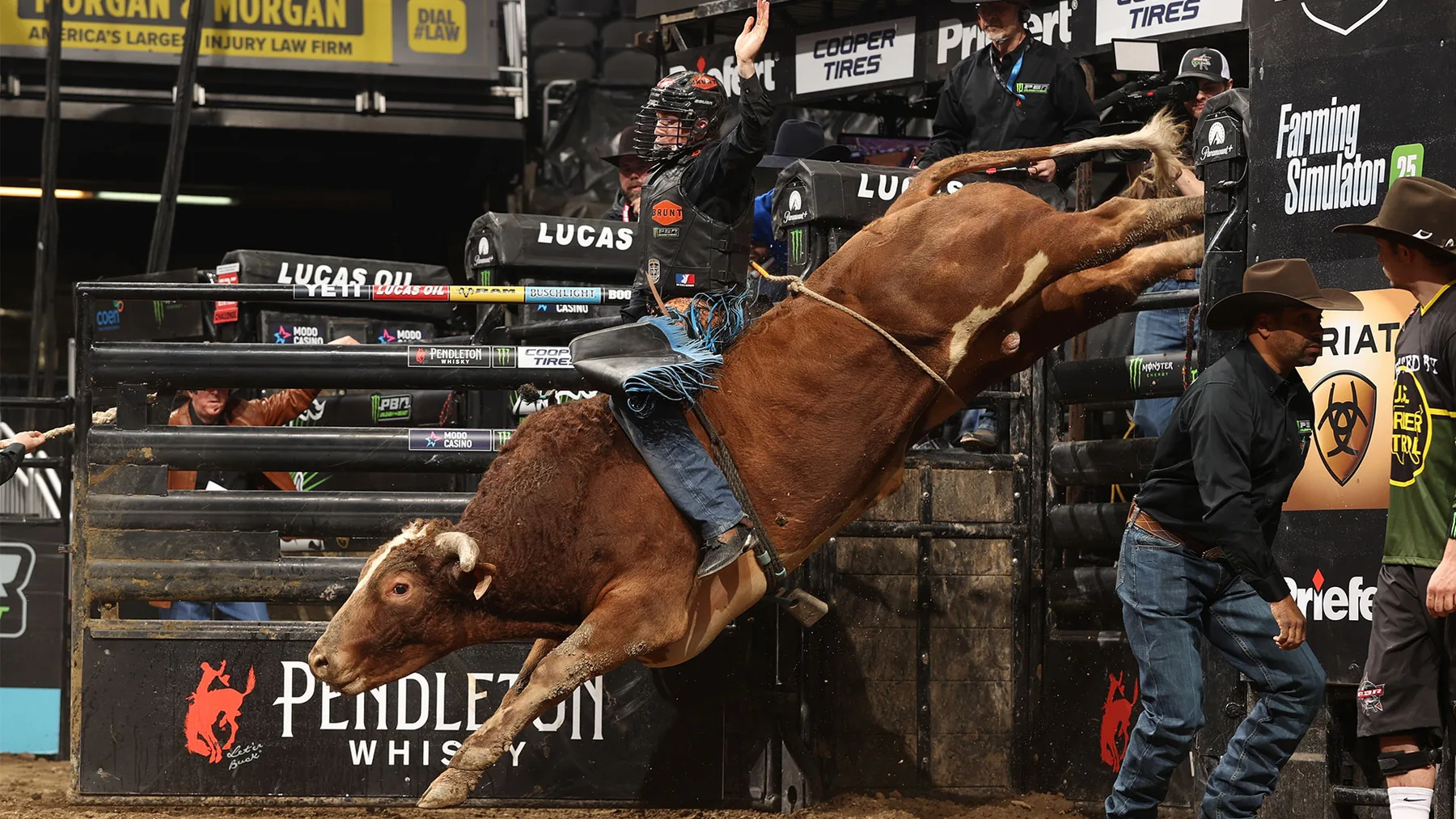
Judges may award another attempt when a bull's performance or a foul prevents a fair opportunity. PBR's rules primer describes situations such as a stumble or a detached flank strap. That general explanation does not establish what happened in every individual case. For a specific ride, use the announcer's explanation, the official record and any published event report.
Do not count a re-ride entry as a second successful ride merely because the rider's name appears twice. Read the attempt status and the score that the official results actually credit. The Pittsburgh report, for instance, uses different symbols for a re-ride attempt and a declined re-ride. A legend matters: a symbol can explain a choice or ruling that an ordinary score column cannot.
Check the round again when competition advances. A long-go sheet belongs to that round. It does not establish a later championship-round draw or guarantee that every listed rider will take another attempt. Where a later round uses a bull draft or publishes a new order, follow that round's official information. Carrying the old matchup forward can leave you watching for an animal the rider is no longer scheduled to face.
If you keep notes, record the original matchup and the change separately. Include the round and the replacement bull, then mark the credited outcome once it appears. That produces a useful account of what happened without quietly rewriting the original draw. When sharing a screenshot, include its date and round so another fan can recognize whether it precedes the revision.
A printed copy remains useful for finding familiar names quickly. Treat it as a reference alongside the current official display and broadcast announcements. The final score belongs to the completed, adjudicated attempt; the original worksheet explains the plan that existed before it.
Distinguish an individual daysheet from a Teams lineup
PBR uses daysheet for individual competition and starting lineup for the corresponding information in its Team Series. Both help you follow rider-bull matchups, but they answer different competitive questions. An individual round places riders against the rest of that field. A Teams game places one club against its opponent.
Read the competition's name before counting the rows. A PDF carrying team names might belong to the Monster Energy Team Challenge rather than the summer Team Series. These events involve familiar clubs, yet the format printed in that event's material can differ. The document's header is more reliable than assuming a format from a familiar uniform or logo.
The official Indianapolis PDF dated March 21, 2026, is explicitly labeled METC. It lists Kansas City against Arizona and Nashville against Carolina, with four scheduled riders per team in each game. Pittsburgh's February preview also describes designated regular-season METC games as four-on-four. Those historical documents do not change the standard five-on-five format described in PBR Teams 101, and METC championship stages can use a different format again.
Read the game rather than a single rider's placing
In a standard Teams game, follow the qualified scores credited to each side and the resulting aggregate. The highest individual ride tells you who produced that attempt; it does not by itself establish which club won. Several scores from the opposition can exceed the total supported by one excellent ride.
Keep the two clubs separate in your notes. Record the rider, bull and credited score beneath the correct team, then compare the official team totals. A zero on one attempt contributes no qualified score, but the remaining lineup can still change the game. Avoid announcing a winner from an unfinished table while outs, rulings or replacements are still being resolved.
Read supporting pages too. Indianapolis's PDF includes a stock-contractor key and a separate re-ride-bull list. Those animal entries are not additional players joining the starting lineup. Likewise, a full club roster and an event's active lineup serve different purposes. Count the opportunities identified for that particular game rather than treating every name on a roster page as a scheduled starter.
For a team-focused evening, keep the game pairing and order visible alongside the individual matchup. Our PBR Teams page can help identify the relevant event. Then use its official lineup and final game result. A rider may have an individual performance worth discussing while the game's decisive number belongs to the club's total.
Use the daysheet alongside live viewing and final results
Before the session, identify the event's tour, city, dates and round. Open the official matchups, check whether a downloadable file is available and look at its production date. Keep the event page bookmarked even if you save the PDF. That gives you a route back to the current information when the printed copy no longer answers a question.
Next, check the viewing listing separately. The draw tells you who is scheduled to face which bull; it does not provide television access or establish that a broadcast is live. Use our PBR TV schedule and confirm the selected session with the official broadcaster. Competition time and coverage time can be different, and the time zone matters when arranging your evening.
During competition, follow the scheduled matchup, the announced attempt and the score actually awarded. Mark a re-ride or a changed bull when the official information identifies it. If a rider's row has no filled score yet, look for the attempt's status rather than turning a placeholder into a prediction. The next rider in the original order is a useful reference, while the arena announcements tell you what is happening now.
When your screen and the telecast differ, first check that both refer to the same round and session. A replay of yesterday's round and today's upcoming lineup can feature the same rider without describing the same attempt. Refresh the official event display as appropriate, and wait for an identified ruling or result before deciding that one number is wrong. A saved page or screenshot may simply reflect an earlier stage.
After the session, use the completed event record in PBR results. Compare the credited round scores and event aggregate with your notes. A round report can explain an unusual attempt or replacement; the final event record is the place to establish the event's outcome. Do not leave a rider's planned matchup labeled as a successful ride after the competition ends.
Then consult rider standings for the season context, selecting the relevant series. A night's result, an event aggregate and a season ranking answer different questions. Read their own dates and labels rather than transferring a position number from one table to another.
For the next event, repeat the identification step instead of reusing yesterday's file because it opens quickly. The most useful daysheet is the one whose event, round and version match the competition you are following. With that match established, the draw, broadcast and completed result form a clear record from planned opponent to credited performance.
Keep reading
Related PBR articles
Rules & Scoring
PBR Teams Re-Ride Rules: Fouls, Keeping a Score and the Gamble on Another Bull
By PBR Schedule Editorial TeamRules & Scoring
PBR Teams Replay Challenges: The 30-Second Clock and Why a Ride Can Be Overturned
By PBR Schedule Editorial TeamRules & Scoring
Join the conversation
Comments
Comments are reviewed before publication. Keep the discussion useful, respectful and focused on bull riding.
Sign in with Google to comment
Your public comment shows your account name. Your email address is not displayed.
Commenting as
Loading comments…