PBR Teams Replay Challenges: The 30-Second Clock and Why a Ride Can Be Overturned
How the PBR Teams challenge clock works, what officials can review and why reaching the eight-second whistle does not guarantee that a ride's score will stand.
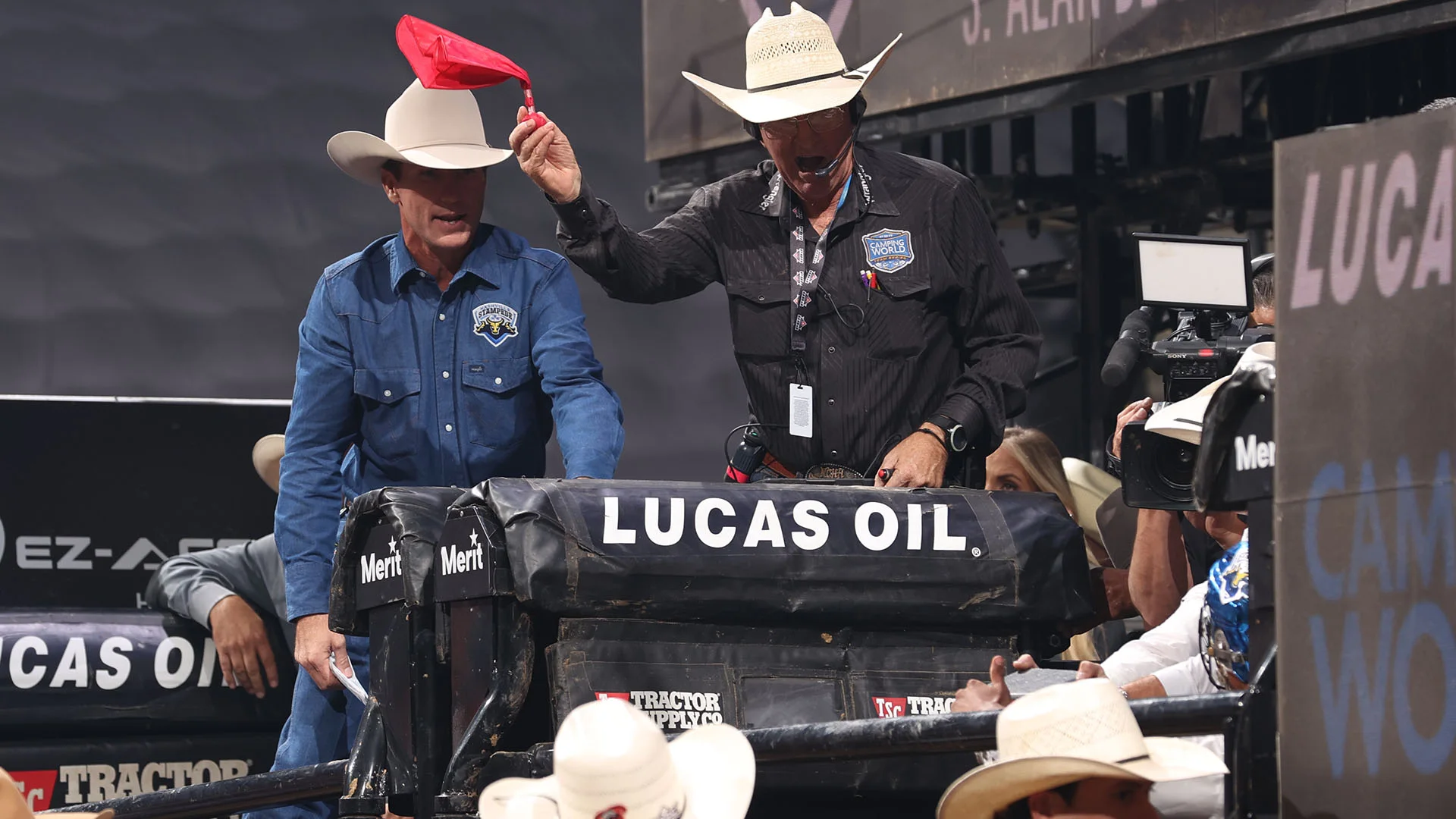
In the 2026 PBR Teams league season, either team has a 30-second window after a ride to initiate a challenge. The whole attempt can then be examined, and two of the three reviewing officials must agree before the original call is overturned. Reaching the whistle is not enough if the evidence establishes an earlier disqualifying action.
Checked on October 31, 2026, this guide explains the request clock, the coach's choices and what a replay decision actually means. It covers the Teams league procedure described in PBR's October explanation, with a brief distinction from the different Monster Energy Team Challenge arrangement. The question is whether an out qualifies, how the evidence is reviewed and why a call can survive even when the pictures leave room for disagreement.
Why the eight-second whistle does not settle every ride
The whistle is the moment everyone waits for, but the competition still requires a legal ride. A cowboy who appears to reach eight seconds may have lost his rope or made prohibited contact just before the signal. If the original ruling missed that moment, a successful review can remove the score. The length of the ride and the legality of the riding are connected requirements, rather than interchangeable descriptions of success.
That distinction explains why a celebration can be interrupted without the judges inventing a new rule after the ride. The question is whether something disqualifying happened during the attempt. A sound heard at the end cannot, by itself, show what every hand and finger was doing throughout the preceding seconds. Close calls are particularly difficult when the bull's movement hides the rider's arm from one side of the arena.
A legal ride needs more than the right time
PBR's basic riding explanation requires the riding hand to remain in the bull rope. Losing that hold ends the clock. Contact with the rider, bull or ground by the free arm before eight seconds also ends the attempt. Being physically above the bull when the buzzer sounds is therefore not the complete test.
Consider a hypothetical rider whose rope leaves his hand just before the whistle while his body remains over the bull for another fraction of a second. A spectator following his hips or helmet might believe he completed the ride. A camera with a clear view of the riding hand could answer a different, decisive question. This example illustrates the rule; it is not a claim about a particular rider's result.
The same separation applies to a spectacular bull and an impressive-looking performance. Difficulty can create the opportunity for a large mark, but it cannot make an illegal ride count. First establish whether the ride qualifies; then discuss how strongly the rider and bull performed. Otherwise, an argument about a disqualification can become confused with an argument about whether the ride deserved a higher score.
The 2026 scoring refinement concerns marking performances, while the replay procedure concerns whether the original ruling should change. Our scoring guide explains the numerical side. Neither a more precise decimal mark nor a loud arena response supplies independent proof that every part of the ride was legal.
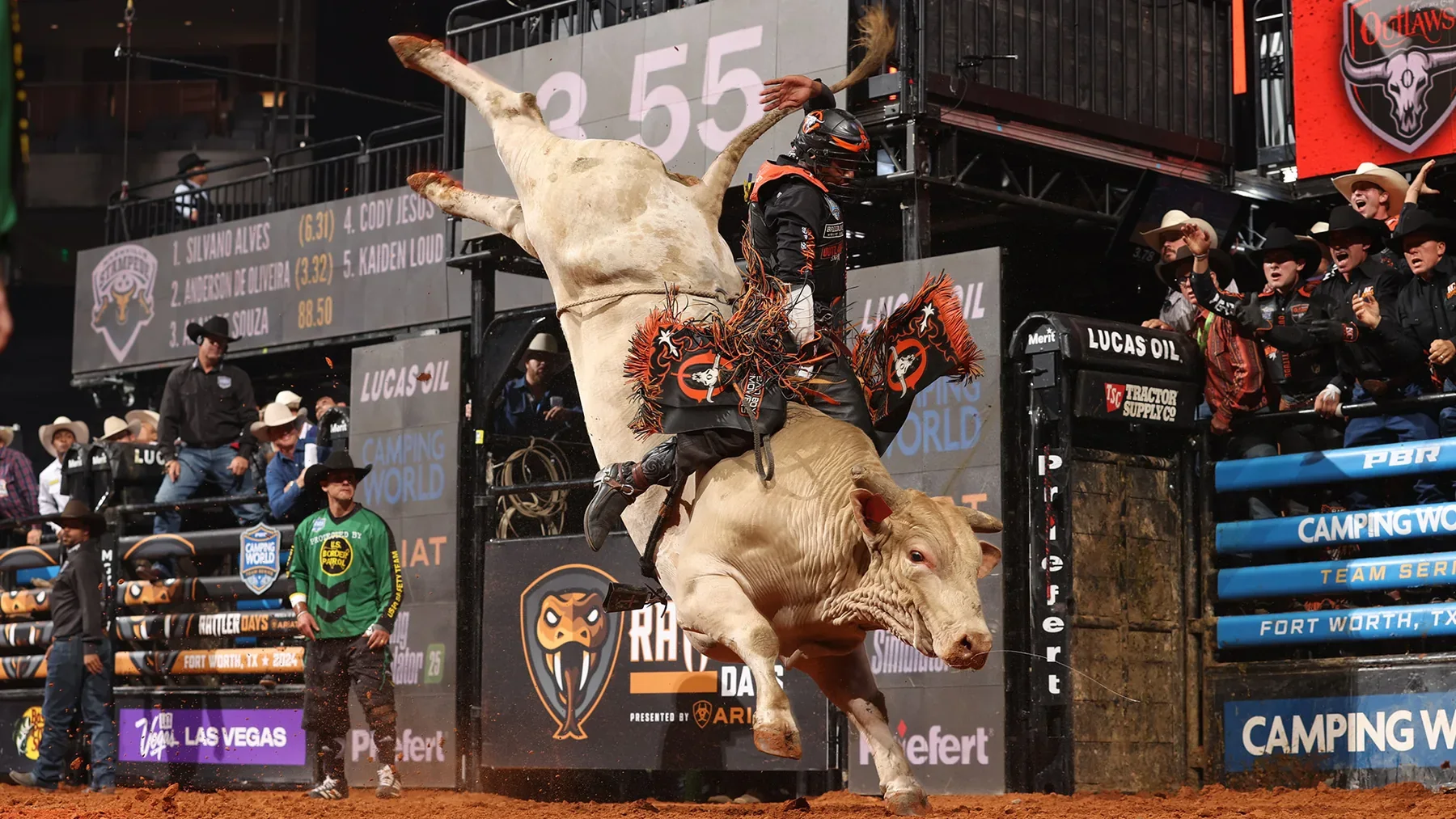
How the 30-second challenge window works
A Teams challenge begins with a decision made quickly by a coach. It is not a request that can be saved until a convenient replay appears later in the broadcast. The team must act while its request window remains open, using the information it can gather at the chutes. That creates a different task from the slower examination that follows inside replay.
When the request clock starts
PBR's October 2026 explanation gives either team 30 seconds after the ride to challenge; after a qualified ride, the window starts as the eight seconds finish. The request clock is therefore separate from the clock that determines whether the cowboy stayed on legally for the required duration.
For a viewer, the distinction is useful whenever the broadcast is still showing a celebration. The fact that the programme has not yet presented the best slow-motion angle does not mean the coach's decision period has not started. Nor does a later clip create a fresh request window. A television audience can receive a revealing picture after a team has already had to make its choice.
The 30 seconds govern initiating the challenge. They should not be mistaken for a promise that the crew will inspect every useful view and announce its decision within 30 seconds. Those are different stages. A review lasting longer than the request window is not, by that fact alone, evidence that the coach challenged late.
How a coach tells the officials
The current account allows a coach to notify the back judge verbally, throw the yellow flag or press the challenge button. The Teams glossary identifies the yellow flag as a coaching signal to initiate a challenge. For supporters accustomed to football, yellow cloth here does not automatically mean an official has penalised a rider.
The important practical point is communication to the officials. A gesture that is clear in a crowd member's video is not necessarily evidence that replay received a timely request. PBR's account notes the difficulty of seeing the clock from some coaching positions and relaying a flag signal into the booth. That explains why visibility and acknowledgement can become part of the frustration, even before anyone examines the ride itself.
Older instructions need their date attached. PBR's August 2024 button announcement stressed physically pressing the button. It is useful history, but its narrower wording should not replace the later description of the current process.
What happens to the team’s remaining challenge
A successful challenge preserves the team's opportunity to challenge again; an unsuccessful one leaves it without another challenge in that game. This is why a coach does more than decide whether the original call looks questionable. He also decides whether the evidence is strong enough to risk losing a tool that may be needed later.
In a hypothetical game, a coach may be doubtful about an early attempt yet expect more close calls among the remaining riders. Using the challenge now has potential value, but losing it changes his options afterwards. That is a strategic inference from the procedure, not a recommendation to ignore a particular rider's claim. A retained successful challenge also should not be confused with unlimited unsuccessful requests.
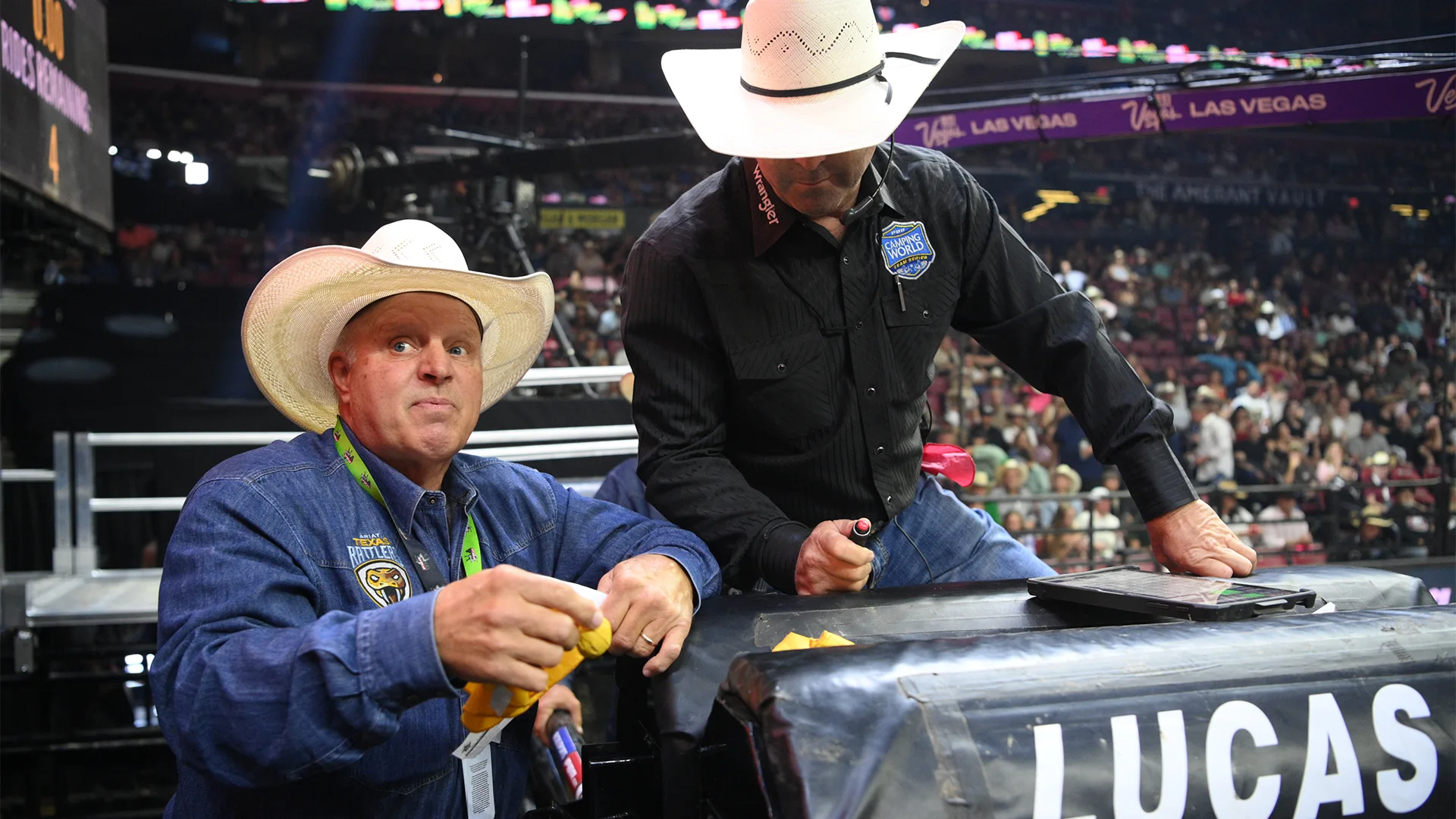
What the replay crew can examine after a challenge
A coach does not reserve a private review of only the instant he thinks proves his case. Once a challenge is initiated, the whole attempt can be examined. Clearing the moment that prompted the request does not guarantee that the final ruling will favour the challenging team. Another part of the ride may provide the decisive evidence.
Imagine, for example, a team disputing an apparent early free-hand touch. An angle might show separation at that instant, answering the coach's first concern. If a different view then clearly establishes that the riding hand left the rope before eight seconds, the qualification problem has not disappeared. This is an illustrative sequence, not a report of a named rider's out. It explains why a challenge should be understood as opening the attempt to scrutiny.
The practical value of multiple views is that a bull ride is not a flat picture. The bull turns, the rider counterbalances and equipment moves across the line of sight. A camera facing one side can lose the hand at the exact instant another camera sees it. The fact that one view looks dramatic does not make it the view best suited to deciding contact. A wide angle may explain the movement while a closer or elevated angle answers the narrower question.
The current replay report describes roughly ten feeds available to the crew, including elevated views. That is a set of possible observations, not a promise that ten unobstructed pictures exist for every disputed instant. A bull's body can hide the same crucial area from several positions. Counting cameras is therefore less useful to a supporter than identifying what the selected view actually establishes.
There is also a difference between slowing an image and adding information to it. Repeatedly watching an obscured hand does not reveal its position. Changing to an angle that exposes the hand can. A small movement may be significant when the relevant surface is visible; an indistinct shape should not acquire certainty merely because it has been magnified. These are limits on interpreting pictures, rather than reasons to assume either the coach or the arena judge must be wrong.
Recorded replay also has value after the live decision. PBR's 2025 Teams media guide describes the Dreamcatcher recording system, while the current account explains that challenged attempts are saved for later examination. A later review can help explain a ruling. It should still be identified as later analysis, rather than confused with the coach's limited opportunity to request a live challenge.
How three officials decide whether the call changes
The review is a decision about whether the ruling made in the arena should be changed. It is not a fresh popularity contest about which team deserves the points. Nor is it an average of three numerical ride marks. Understanding that purpose makes the final announcement easier to interpret, particularly when the original call survives despite pictures that remain debatable.
What changed at Anaheim in 2026
The October replay report says that, beginning in Anaheim, J.J. Quintana's review was joined by Royd Doyal and Justin Maples. Two of the three officials must agree to overturn the arena call. PBR's Anaheim event notes place that stop at Honda Center on September 11–13, 2026.
This was a change in who participates in the examination, rather than a reduction of the required eight seconds or a replacement of the scoring system. Three officials sharing a review can test one another's interpretation of an angle. Their involvement does not mean three cameras must show identical pictures, or that a call can change only if every official agrees.
It also helps distinguish preparing evidence from deciding the case. Selecting useful footage while other officials get into position is not the same as making a final ruling without them. For a television viewer, activity at one monitor does not reveal the whole decision process. The important conclusion is the announced ruling, not an inference drawn from which person appeared on screen first.
Why an inconclusive review leaves the original ruling in place
When the video is insufficient to overturn, the original decision stands. That result can occur without unanimity. PBR describes a two-to-one position in favour of insufficient evidence as one possible route to leaving a call unchanged. It does not routinely announce the voting split to the arena, so supporters should not invent one for a particular challenge.
There is a useful logical distinction here. An official might be satisfied that the original decision was correct. Another might think the available view cannot establish enough to change it. Both positions can lead to the same outward result: the call remains. Hearing that result does not tell the audience which reasoning every member used.
That is why an unsuccessful challenge does not necessarily mean the coach imagined the issue. He may have spotted a genuinely difficult moment. The missing step is sufficient evidence to alter the ruling. Equally, a close-looking clip does not compel a reversal merely because supporters can construct a plausible alternative interpretation.
The length of the review is a poor substitute for the evidence. A long discussion does not automatically mean a violation occurred, and a quick decision does not establish that officials failed to look. Assess what the final explanation identifies: the relevant action, its timing and the reason the original outcome changes or survives. Those details matter more than guessing confidence from the pause.
What to watch while a coach’s challenge is being resolved
Start by identifying the competition. This guide explains the coach's challenge in the 2026 PBR Teams league season. The related Monster Energy Team Challenge, staged within Unleash The Beast events, has a different arrangement: PBR's January 2026 METC explanation says challenges there are rider-initiated, with teams prohibited from initiating or controlling them. Similar team names do not make the procedures identical.
For a Teams league game, keep track of the original ruling before deciding whether replay has changed anything. Was the attempt initially qualified, or was it already a no score? Which team requested the review? What action is being questioned? A later announcement that the call stands has very different scoring consequences depending on the starting position. The word “stands” alone is not a substitute for that context.
Do not assume the request came from the team whose rider is on screen. Either side can have a reason to ask for examination. An opponent may be trying to remove a qualified score, while the rider's own team may be trying to correct a no-score ruling. Identifying the requester helps explain the reaction at each set of chutes. It also keeps a supporter from calling a review unsuccessful for the wrong side merely because the broadcast remains focused on the rider rather than the coach who acted.
Next listen for the decisive action and its timing. A finding about the riding hand before eight seconds is different from a discussion about how well the bull performed. A ruling granting another attempt is different again. The official glossary distinguishes qualification from a re-ride opportunity. Another bull being prepared does not automatically mean the original ride was reinstated with a score.
Then return to the game situation. If qualification changes, check the updated result before calculating what the remaining riders need. In a hypothetical close game, restoring one legal ride may change the target for the last man; disqualifying a ride may change whether a team has any points on the board. Those are consequences of the decision, not evidence that officials should favour the outcome that creates the most exciting finish.
Our results page helps locate the relevant event, while the daysheet guide explains how to identify the rider, bull and session. For an upcoming broadcast, use the TV schedule and verify the particular event. A clip separated from its original session may omit the initial call and final announcement needed to understand the challenge.
There is room to question an explanation without treating every unsuccessful challenge as proof of favouritism. The productive question is what the available evidence established about the ride. Watch the request, the relevant instant and the final ruling as connected stages. That makes it possible to enjoy the immediate excitement of the eight-second whistle while understanding why the result can still change once a timely challenge is resolved.
Keep reading
Related PBR articles
Rules & Scoring
PBR Teams Re-Ride Rules: Fouls, Keeping a Score and the Gamble on Another Bull
By PBR Schedule Editorial TeamRules & Scoring
PBR Scoring Changes in 2026: Decimal Scores, 90-Point Rides and What Judges Assess
By PBR Schedule Editorial TeamRules & Scoring
Join the conversation
Comments
Comments are reviewed before publication. Keep the discussion useful, respectful and focused on bull riding.
Sign in with Google to comment
Your public comment shows your account name. Your email address is not displayed.
Commenting as
Loading comments…