PBR Scoring Changes in 2026: Decimal Scores, 90-Point Rides and What Judges Assess
Understand the 2026 PBR scoring refinement, how .05 totals are formed, and how to separate ride marks from event aggregates and standings points.
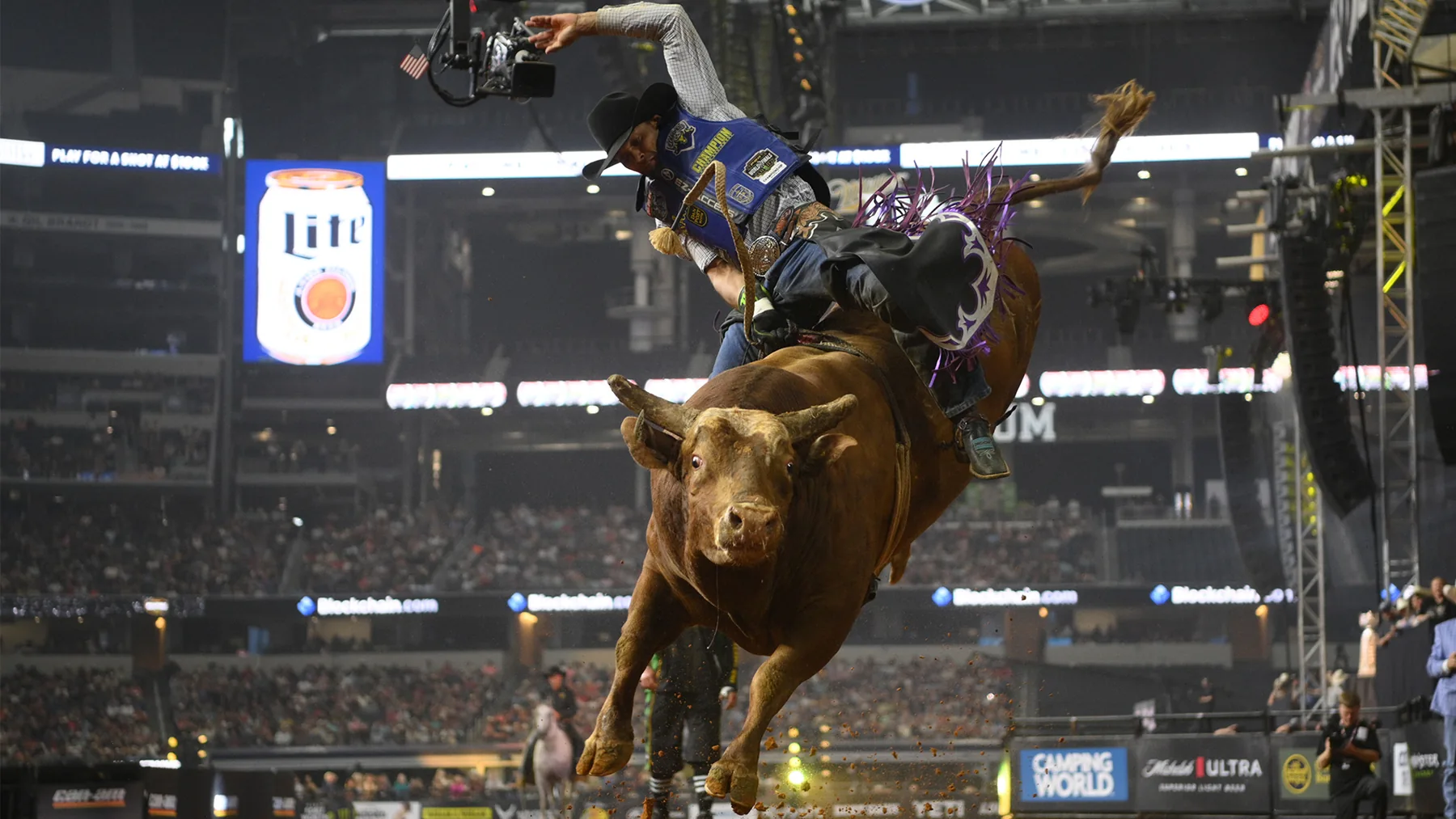
PBR scoring changed for the 2026 season: judges can mark both riders and bulls in tenths of a point, giving closely matched performances more room for separation. The new precision helps explain scores such as 87.05, but it does not turn the displayed number into a rider-only grade.
This guide follows the number from the live performance to its place in a competition, using component arithmetic and actual results to explain what fans see. It also addresses the rider-to-bull scoring restriction and the debate over 90-point rides. When you follow a broadcast, the useful questions are whether the ride qualified, how the bull and rider contributed, and which competition table the number affects. Understanding those steps makes a close round easier to follow without needing to guess what every decimal means.
What changed for the 2026 PBR season
PBR announced its revised judging format on November 18, 2025, for implementation in the 2026 season. The central change allows judges to mark riders and bulls in increments of 0.1 rather than 0.5. The official announcement describes a finer distinction between performances while retaining the traditional scoring foundation. This was a season change already in effect, rather than a new rule introduced in September 2026.
The practical difference is the room between the old marks. If two performances deserved slightly different assessments, a half-point step gave the judge fewer choices for expressing that distinction. Tenths provide more choices within the same range. They do not add a separate precision bonus to the result. A fan should therefore read an unfamiliar decimal as a mark produced by the revised process, rather than assume that the rider received extra credit simply because the score has more digits.
PBR Canada's 2026 Red Deer game notes also explain the move to tenths. That reinforces an important distinction between judging and tournament structure: a shared method of assessing a bull ride does not make every tour's advancement rules or championship points identical. Always identify the competition before interpreting the table surrounding a score.
PBR says greater precision is intended to separate performances and reduce ties. A tie can still occur. Those are different statements from a guarantee that every result will become unique or that every close comparison will satisfy every spectator. The useful viewing question is how the rider and bull earned their components, followed by how the resulting mark affects that particular competition. More detail in the number helps describe a decision; it does not replace the need to understand the ride.
How judges turn an eight-second ride into a score
Three separate decisions sit behind the number on the screen: whether the rider qualifies, how the bull performs and how the rider responds. Reading them in that order makes the new decimals much less mysterious.
Qualification comes before the rider's mark
The official qualification rules require eight seconds and one hand on the rope. A prohibited free-hand touch disqualifies the attempt; an early buckoff earns no rider score.
That distinction matters when comparing highlights. A spectacular opening jump may be memorable even though the rider fails to qualify. Watch the entire attempt before treating its difficulty as evidence that the rider should have received a large credited score.
The bull and rider contribute different halves
Up to 50 points come from the bull and 50 from the rider. Bull assessment considers movement and difficulty, including spin, direction changes, front-end drop and rear-end kick. Rider assessment considers control, position and matching the bull's movements. The bull receives a mark even when its rider fails to qualify. A displayed 90-point ride therefore describes the successful partnership, rather than 90 points awarded solely to the person.

When reviewing a replay, separate the two tasks. First follow what the bull does through the attempt; then watch how the rider maintains position through those movements. This is a better basis for discussing the mark than judging difficulty solely by whether the rider appears calm.
Why tenths can produce totals ending in .05
PBR's published Unleash The Beast calculation combines four judges' marks and divides their sum by two. Each judge can award 25 for each component. The table below is an invented arithmetic example of that calculation, not a scorecard from a real ride.
| Judge | Bull component | Rider component | Combined |
|---|---|---|---|
| 1 | 21.1 | 22.3 | 43.4 |
| 2 | 21.0 | 22.4 | 43.4 |
| 3 | 21.2 | 22.5 | 43.7 |
| 4 | 21.2 | 22.4 | 43.6 |
The combined sum is 174.1. Dividing by two produces 87.05; the corresponding bull component is 42.25 and rider component 44.80. Every input uses tenths, yet the final division creates a half-tenth. A .05 ending is therefore compatible with tenth-point judging. It does not show that a judge secretly used a hundredth-point increment. Our daysheet guide helps distinguish the displayed columns.
Understand the rider-to-bull scoring limit
The precision change also includes a limit on the relationship between the rider and bull assessments. PBR's published announcement says the rider's mark cannot exceed the bull's by more than 3.0 points, while the rider can be assessed any amount below the bull. The 2026 Bridgeport game notes repeat that balance provision.
This is a restriction, rather than an instruction to award every successful rider the bull's mark plus three. A rider who completes the time still has to be evaluated for the performance delivered. Qualification and excellence remain separate questions.
What the limit does and does not establish
Be careful about the scale of the numbers you compare. Individual judges' component marks and the combined components shown in a results table are different stages of the calculation. The announcement's cap paragraph does not explicitly identify that calculation stage. It therefore does not justify simply adding three to a televised bull component and declaring that number the maximum permitted final rider component. That shortcut could create an accusation from mismatched scales.
For viewers, a useful discussion starts with the particular performance, then asks whether the claimed explanation fits the numbers actually being compared. The provision does not guarantee a 90-point total, eliminate disagreement between judges or prove that a particular score was correct. When discussing a specific ride, start with its credited result and the relevant judging components. A convincing explanation must account for what the bull did and how the rider responded, rather than treat a limit as an automatic reward.
Read a 90-point ride in its competition context
A score above 90 still describes an excellent combined performance, but the two components reveal more than the headline. In PBR's September 22 review of outstanding Teams rides, Macaulie Leather's Anaheim ride on King Tut scored 93.35, including a 45.10 bull mark. Subtracting the reported bull component from the total gives a rider component of 48.25. That arithmetic explains the displayed result; it does not recreate the individual judges' cards. PBR's official retrospective described it as the season's highest Teams ride at that point.
King Tut subsequently received 46.70 against Sandro Batista, who bucked off, in a different out two days later. Putting that later bull mark beside Leather's 93.35 would construct a score breakdown that never occurred. Bull names recur across days, riders and events, so the matchup and date belong alongside the number whenever you compare performances.
Older highlights also need their original context. The same PBR review revisits Cassio Dias's 98.25 on Man Hater at Rattler Days in 2024. That exceptional ride predates the 2026 change. It offers a historical comparison without telling us how any particular 2026 judge arrived at a mark.
Separate one ride from the event and season totals
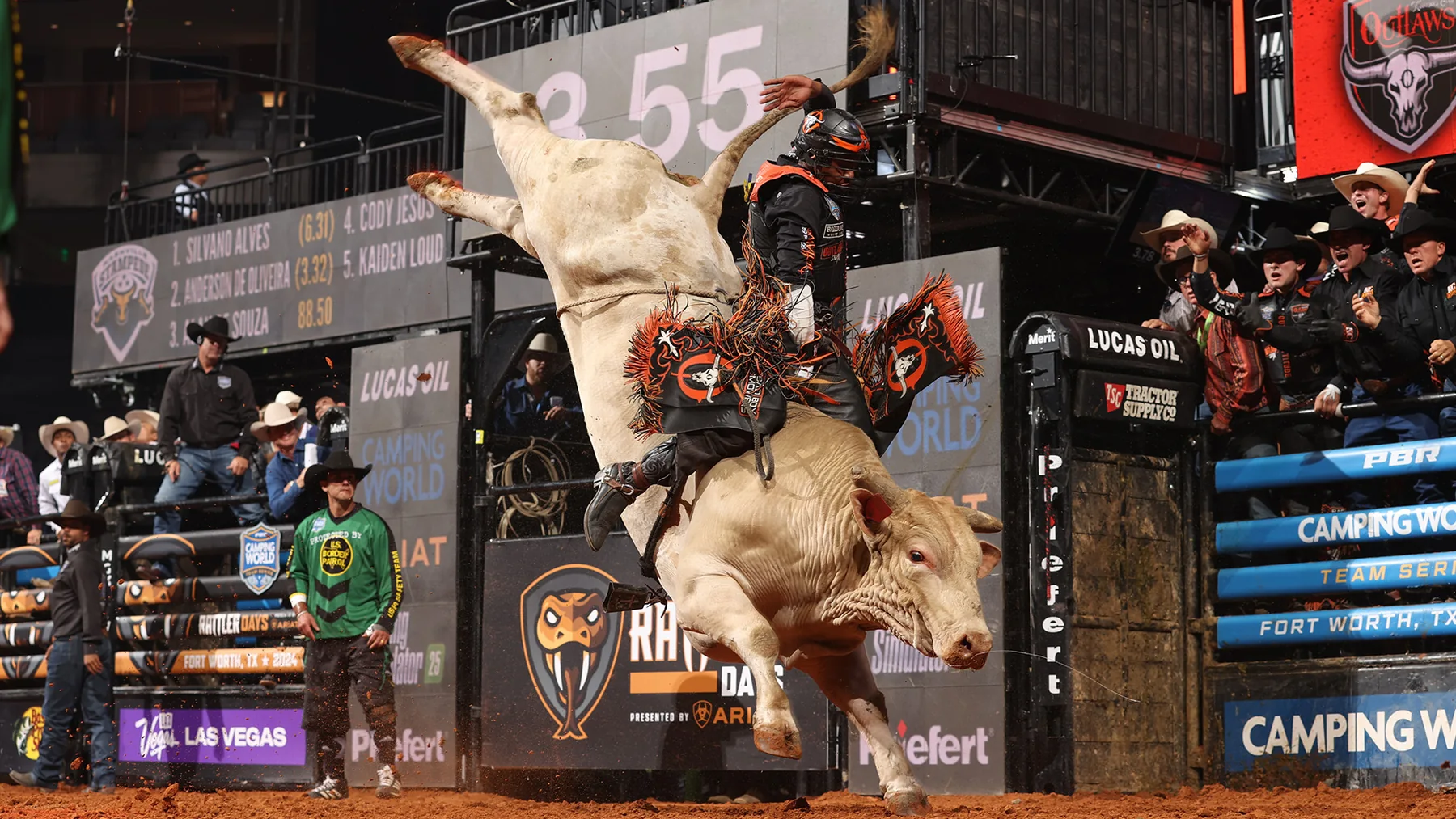
An event result can contain several kinds of numbers on the same row. At the 2026 Albuquerque Ty Murray Invitational, Kaique Pacheco's published results included rides of 86.75 and 87.05, an aggregate of 173.80, and 23 Unleash The Beast points. The two ride scores add to the aggregate. The 23 points belong to the tour's standings system; adding them to 173.80 would have no competitive meaning. These figures appear together in PBR's official Albuquerque results.
Before calling somebody the leader, identify the column and stage. A rider can have the best score on one bull while another has accumulated more across the event. A season ranking measures a wider stretch of competition again. Comparing a single out with a multi-round aggregate makes the smaller number look weak for a reason unrelated to riding quality. Read the label first, then compare competitors within that same table.
Do more decimal scores prove that judging became generous?
No. More possible marks establish finer resolution, while generous judging would concern how high judges place performances on the scale. Those are different questions. Suppose two hypothetical bull performances previously received 21.0 because half-point increments offered limited separation. Scoring them 20.8 and 21.2 creates a distinction while keeping their average at 21.0. Finer increments can move an individual mark down as readily as up.
PBR presented the change as a way to distinguish closely matched performances. That rationale appears in its 2026 Pittsburgh game notes. An intended improvement is still different from a measured outcome across a complete season. Neither a compelling highlight nor a frustrating decision can settle whether the whole distribution of marks changed.
A useful comparison starts with the population being counted. Ten 90-point rides among a hundred qualified rides represent a different share from ten among fifty. Counting only highlights removes the lower scores that would be needed to interpret the average. Counting attempted rides answers another question, because buckoffs influence that denominator without producing a rider score. Even the official Manchester opening-weekend report records different numbers of qualified rides between rounds. A selected set of successful outs can give a misleading impression of the field.
When a particular score looks surprising, compare the performances rather than the fame of their riders. Watch the bull's motion, how the rider answers it, and whether the other ride used for comparison came from a similar competitive setting. Separate criticism of the bull component from criticism of the rider component. A powerful bull with a less controlled rider and a more manageable bull with a polished rider can produce similar totals through different combinations.
Fans can disagree with a mark while acknowledging what the decimal change actually does. A 90.05 is not evidence of misconduct because it barely crosses 90, just as an 89.95 does not prove somebody was deliberately held below a milestone. The narrower gap makes the ordering more precise; judging still asks people to assess a live performance.
Follow the score from the chute to the official result
Start a live session by identifying the tour, round and matchup. Write down both rider and bull if you want to revisit an out later; a rider's name alone may retrieve another performance from the same weekend. The PBR events today page provides a starting point for locating the competition you are following.
During the ride, watch qualification before predicting the number. Afterward, read the bull component and combined ride score together when both are available. If the rider did not qualify, a bull mark can still tell you something about the animal's performance without creating a credited ride for the cowboy. For a successful attempt, compare its result with the current round's scores before switching to an aggregate or season table.
A real opening-weekend example shows why that sequence matters. Julio Cesar Marques's 89.55 won the Manchester championship round, while Dalton Kasel scored 89.50 in that round and won the event. The gap between their final-round rides was 0.05. The event outcome considered the wider competition rather than simply awarding the buckle to that round's best ride. Both outcomes are recorded in PBR's Manchester report.
Re-rides and different competition tables
A re-ride can change what appears in a result. PBR's official introduction to the rules allows judges to offer another attempt for a substandard bull performance or a foul. A low score alone does not establish entitlement to another bull. Listen for the ruling and follow the resulting attempt before treating an early number as the rider's final contribution.
For 2026 Teams, regular-season MVP uses aggregate ride score and Great 8 uses riding percentage; both require 20 outs. See PBR's regular-season award criteria.
Consequently, a highlight can help a rider's aggregate without settling a percentage race, and a single excellent ride cannot establish eligibility for a season award. Follow the table named in the broadcast or official result. When saving a score for later discussion, include the date, matchup, tour and round alongside the number. Those details keep a decimal score attached to the performance and competition it actually describes.
Keep reading
Related PBR articles
Rules & Scoring
PBR Teams Re-Ride Rules: Fouls, Keeping a Score and the Gamble on Another Bull
By PBR Schedule Editorial TeamRules & Scoring
PBR Teams Replay Challenges: The 30-Second Clock and Why a Ride Can Be Overturned
By PBR Schedule Editorial TeamRules & Scoring
Join the conversation
Comments
Comments are reviewed before publication. Keep the discussion useful, respectful and focused on bull riding.
Sign in with Google to comment
Your public comment shows your account name. Your email address is not displayed.
Commenting as
Loading comments…