PBR Rattler Days 2026: Texas Cup Preview and What to Watch in Fort Worth
A source-checked October 1 preview of the October 2–4 Fort Worth homestand, Saturday's Texas Cup matchup and the decisions to follow across all three games.
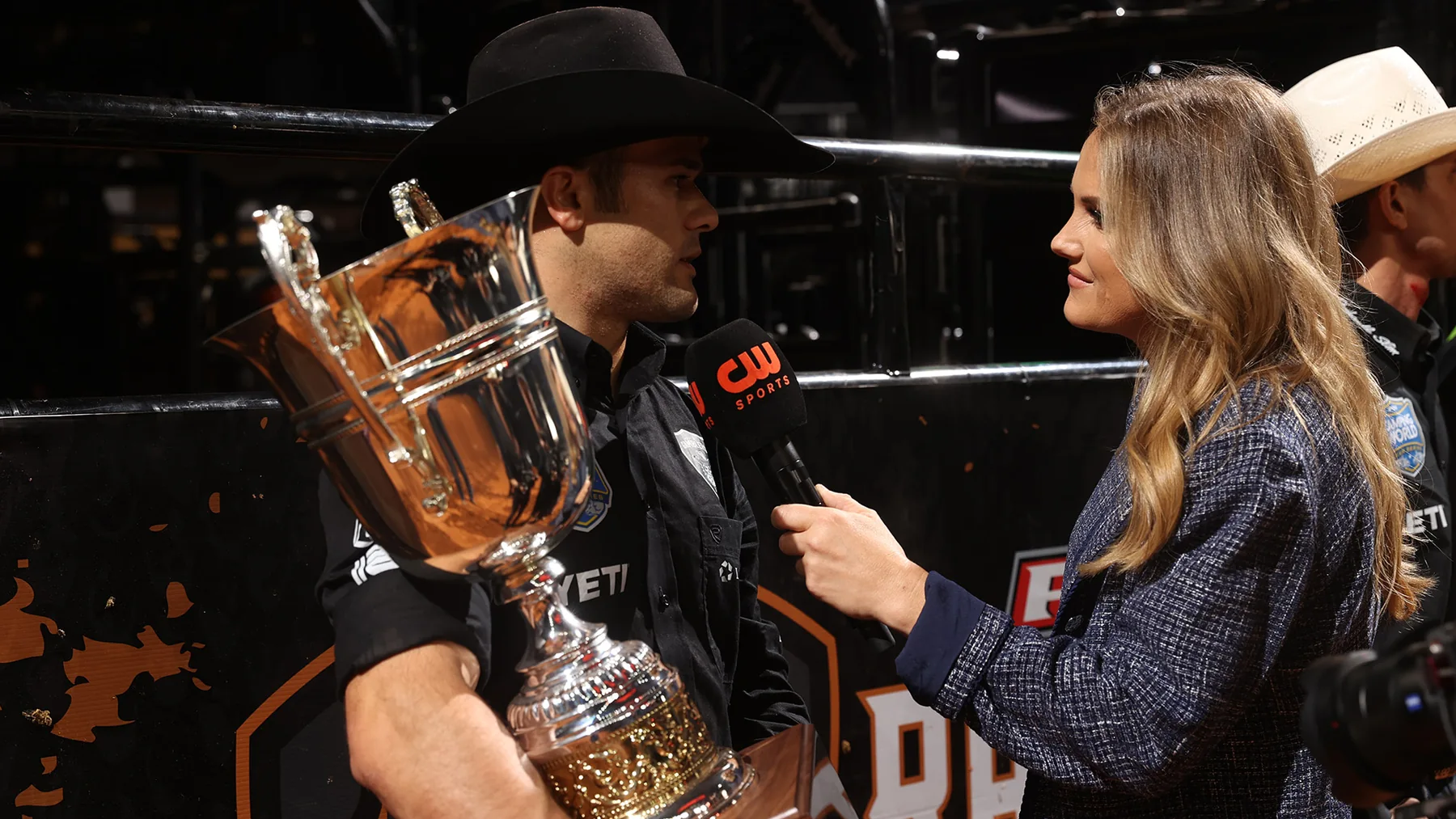
PBR Rattler Days 2026 runs October 2–4 at Dickies Arena in Fort Worth, with Texas facing Oklahoma, Austin and Arizona on successive days. Saturday's Texas Cup game puts the Rattlers' 2–0 rivalry lead against a Gamblers team that sits one win ahead in the league standings as of October 1. The three performances start at 7:45 p.m., 6:45 p.m. and 1:45 p.m. Central Time, respectively.
This preview explains what the two earlier derby results reveal, which lineup decisions matter and why Friday and Sunday can change the meaning of Saturday. All October game outcomes remain to be decided.
Rattler Days dates, start times and the three-game assignment
Rattler Days presented by Germania Insurance takes place October 2–4, 2026, at Dickies Arena in Fort Worth. The Texas Rattlers face Oklahoma on Friday, Austin on Saturday and Arizona on Sunday, according to PBR's September 28 preview. The October 3 meeting with the Gamblers is the third regular-season installment of the Land.com Texas Cup. As of October 1, all three games are still upcoming.
The venue's event listing distinguishes doors from showtime. All times below are Central Time in Fort Worth. The showtime belongs to the whole performance, rather than the individual Texas matchup.
| Date | Texas opponent | Doors | Performance starts |
|---|---|---|---|
| Friday, October 2 | Oklahoma Wildcatters | 6:15 p.m. CT | 7:45 p.m. CT |
| Saturday, October 3 | Austin Gamblers | 5:15 p.m. CT | 6:45 p.m. CT |
| Sunday, October 4 | Arizona Ridge Riders | 12:15 p.m. CT | 1:45 p.m. CT |
Plan around the performance, not just the Texas game
Texas is scheduled in the fifth and final matchup of each performance. That matters if you are arranging a trip or setting a viewing reminder around the home team. Saturday's 6:45 p.m. start does not mean the Texas Cup begins at 6:45. Four other games come first, and their progress determines when the last matchup reaches the chutes. No fixed Texas-game start minute is established by the published performance time.
Watching those earlier games also supplies sporting context. On Saturday, Missouri and Nashville are scheduled to meet before Texas and Austin. Their result may change the picture at the top of the league while the Rattlers and Gamblers wait for their own matchup. A fan who follows the full performance gets to see how the evening's standings pressure develops rather than encountering the derby in isolation.
Sunday is an afternoon assignment, following two evening performances. Keep that change in your travel and viewing plans. The official PBR event page confirms the three dates and arena. Check that page and the venue listing again before departure, especially if you are choosing only one session. A Saturday-only ticket plan targets the rivalry game; a three-day plan follows Texas's complete home weekend.
What Texas's 2–0 Cup lead actually tells us
Texas won the first two 2026 regular-season meetings, but those victories came through different scoring patterns. Reading both game sheets is more useful for Saturday's preview than treating a two-game record as a prediction. The first meeting rewarded three strong conversions; the second rewarded producing a second score when Austin could supply only one.
July was a three-conversion contest decided by score quality
At Canvas Stadium in Fort Collins on July 12, Texas beat Austin 265.55–257.45. Both teams finished three-for-five. PBR's opening-weekend report records Texas scores of 88.30 from Brady Fielder, 86.85 from Daniel Keeping and 90.40 from Jean Carlos Teodoro. Austin's three scores were 83.40, 87.55 and 86.50.
The 8.10-point margin came with the conversion count level. Texas did not win simply by riding more bulls. Teodoro's fourth-frame ride on Yosemite Sam delivered the largest score among those six conversions, while the other two Texas scores gave it enough support to turn that mark into the winning aggregate. That is the pattern to watch if Saturday develops into another three-score contest: the combined quality of all the conversions can become decisive.
August showed the limits of one outstanding ride
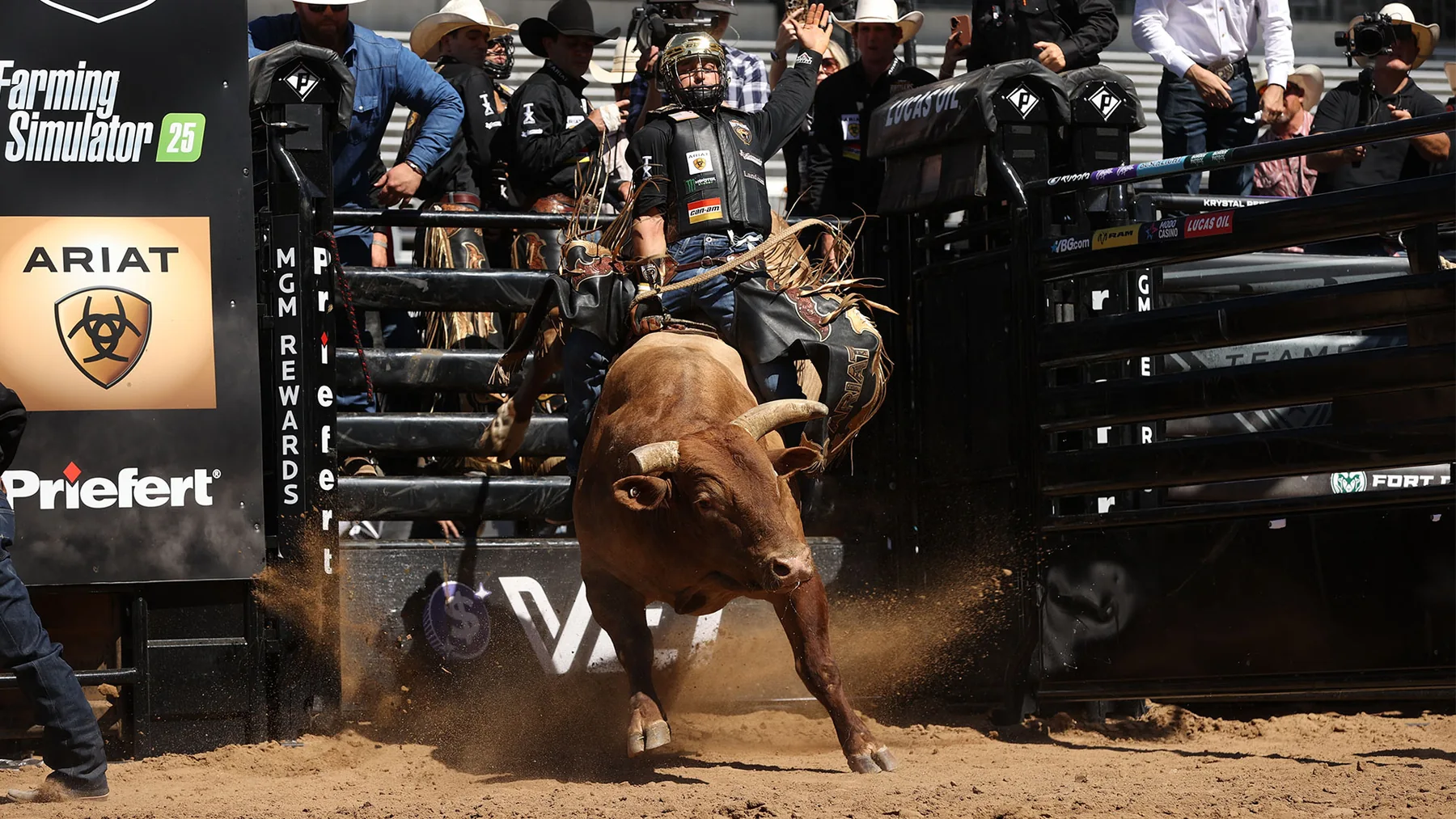
At Moody Center on August 22, Texas won 176.85–91.45. This time, Fielder's 87.20 on Snappy and Keeping's 89.65 on Cherry Chew gave the Rattlers two scores. Leme recorded 91.45 on Up The Ante, but it was Austin's only qualified ride. Those details come from the official August 22 report.
Leme's mark exceeded either individual Texas score. It still could not match two completed rides added together. For the next derby, that makes the supporting outs essential viewing. A star can give his team a valuable opening or response, but another qualified ride may decide whether that score becomes a winning total.
The two earlier outcomes therefore suggest different tests, depending on how Saturday unfolds. If both clubs convert the same number, compare the scores they combine. If one club converts more, assess the actual aggregate and the remaining outs before looking for an individual highlight to rescue the game. These are lessons from completed matchups, not a claim that the same riders, bulls or result will recur in Fort Worth.
Why Saturday matters beyond the Texas Cup
Austin arrives fourth in the league at 13–10; Texas is fifth at 12–11 on the October 1 official standings. The Gamblers have a one-game advantage even though the Rattlers won both of their earlier meetings. The Cup record answers who won this season's rivalry games. The full league record includes everything each club has done against the other eight teams.
That makes Saturday unusually direct for Texas's pursuit. When Texas wins against a different opponent, Austin can win elsewhere and preserve the gap. In their own matchup, a Texas victory also hands Austin a loss. It reduces the separation between their win totals by one from the position they occupy entering that game. An Austin victory moves that separation the other way.
The starting position on Saturday must still be checked after Friday. Texas faces Oklahoma, while Austin faces Carolina. Their October 1 one-game difference is a preview baseline, rather than a promise that exactly the same difference will exist when the derby starts. Friday can narrow it, preserve it or widen it before the clubs meet. A same-record scenario also requires checking the official ranking, rather than assuming the Texas Cup head-to-head record automatically determines the order.
There is room above both clubs to pursue. Carolina stands third at 14–9, while Missouri and Nashville have 16–7 records at the top. Texas enters four games behind those leaders. Moving past Austin would be an immediate step; it would not, by itself, catch the league lead. The value of a strong home weekend is that it can improve Texas's position while there are still several stops left to build on the result.
PBR's 2026 season announcement gives each club 35 regular-season games and places all ten teams in the November 6–8 Championship in Las Vegas. Rattler Days begins the final four-event stretch, with 12 games remaining for Texas before Fort Worth action starts. The sporting stakes are improving the regular-season record and eventual championship position. One October result should not be described as eliminating a club from a tournament the current announcement says includes all ten.
Saturday is also not the last scheduled regular-season Texas Cup meeting. The September 28 preview lists a fourth installment on October 25 at Outlaw Days in Kansas City. Fort Worth can change the rivalry's story and the league gap, but the later game remains on the calendar. Follow what this derby actually changes in both records before assigning broader significance to the Cup lead.
The decisions to follow when the draw and lineups appear
A preview can identify the important questions before it can identify all the matchups. The actual starting lineup and bull assignments provide the missing detail. PBR's Teams explanation says coaches pair their selected riders with bulls from their team's drawn pen. The clubs receive separate pens; Leme and Fielder are not competing against the same bull merely because their teams meet.
Watch the supporting riders after Fielder and Leme
Start by confirming which five riders each team actually selects. Keeping contributed to both earlier Texas Cup victories, and Teodoro delivered July's biggest Texas score. Those completed results make their roles worth following if selected again. They do not establish the October 3 lineup. An earlier-season game sheet records who competed then, rather than guaranteeing who takes the next five outs.
Once the game starts, follow each supporting conversion alongside the stars' scores. Austin's August problem was the absence of a second qualified ride. Texas's July advantage included a strong third score. If a leading rider converts early on Saturday, the question becomes whether his teammates can build on it before the opponent answers. An early advantage can be important without being decisive.
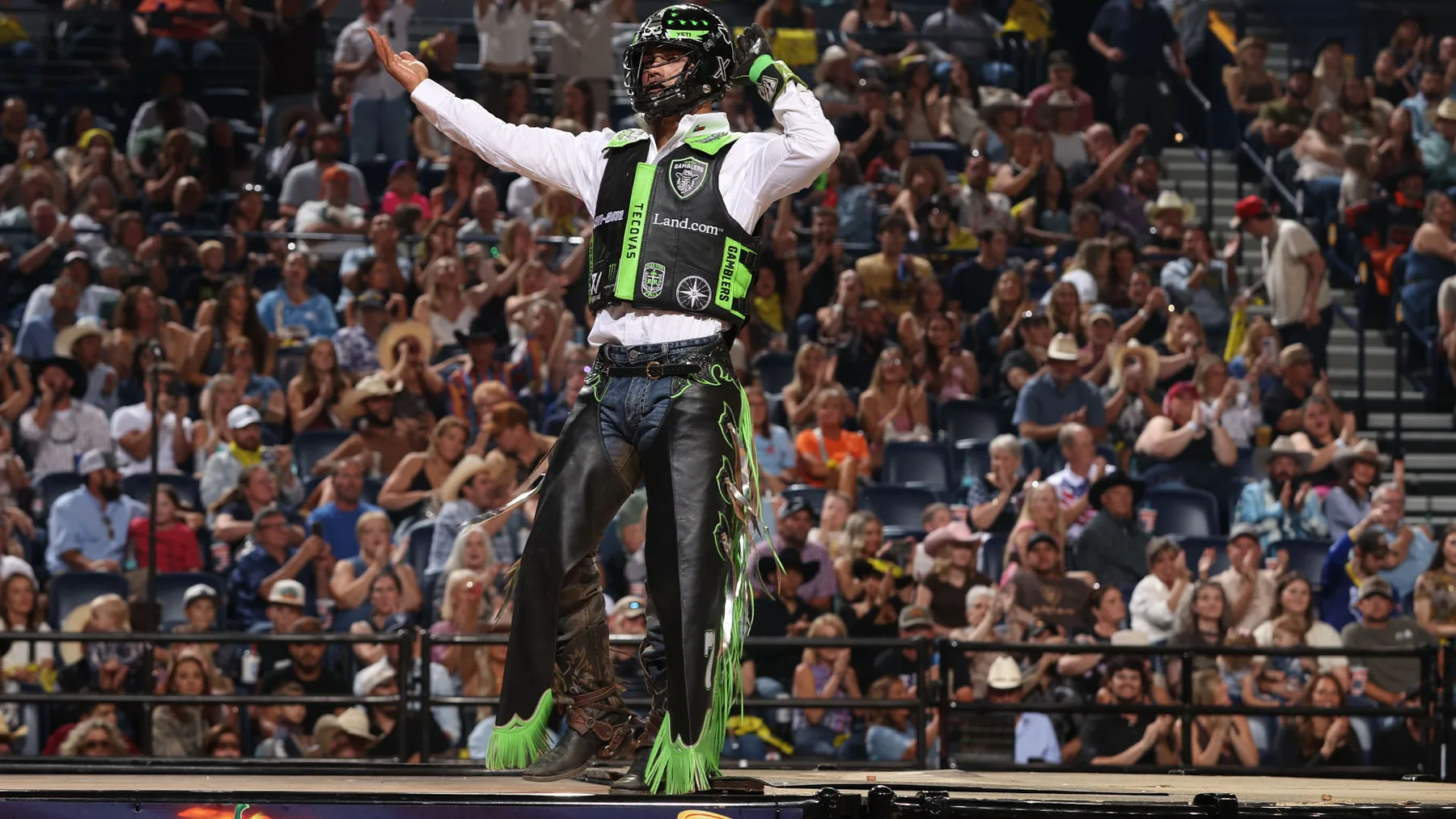
Keep the current aggregate and remaining outs visible together. For example, two scores totaling 175 against one score of 90 create an 85-point lead. That is a hypothetical illustration, not a predicted Saturday scoreboard. Another 90-point conversion for the trailing club would change the position substantially, while a buckoff would leave the score unchanged. The remaining opportunities tell you how much of the game is still unresolved.
Read re-rides and substitutions in their game context
A re-ride or an announced substitution can alter the sequence you expected from the first lineup. Follow the official decision and the rider who ultimately takes the out. A reserve being part of a roster does not establish that he will compete in this particular game. PBR's dated 2026 roster rundown confirms that reserve riders can be selected for Teams competition; the announced game selection remains the relevant evidence for this weekend.
When the result sheet marks an out with RR, check its final recorded outcome. Do not treat every number associated with the original attempt and the replacement as separate additions to the team total. The official aggregate is the final reference. If a broadcast review is still underway, wait for the ruling before declaring a winning score or deciding that the coach's move succeeded. Those small pauses preserve the difference between a live impression and the completed game.
Friday and Sunday can change the meaning of the derby
Texas begins its homestand with opponents positioned close enough to matter in the standings. Oklahoma is eighth at 9–14, three wins behind the Rattlers on October 1. Arizona is sixth at 10–13, two wins behind. Friday and Sunday are opportunities for Texas to keep those clubs at a distance. They are also opportunities for the visitors to take a win directly from the team above them.
The last completed Sunday in Greensboro provides useful evidence about both opponents. In PBR's September 20 game report, Oklahoma produced two scores totaling 176.40 while losing to Kansas City, which converted three times for 260.40. The Wildcatters recorded points through Eduardo Matos and Winy dos Santos. Texas should not be analyzed as though its Friday opponent cannot assemble multiple conversions.
Arizona's last game was much tighter. Everton Natan da Silva scored 88.35 on The Heat, but Carolina's late 88.70 from Adriano Salgado on UB Smooth gave the Cowboys a 0.35-point victory. Each club had one final scoring conversion. Arizona left with a loss, but the completed score illustrates how close a game can remain when one ride on either side determines the aggregate.
Those examples support watching the entire match rather than relying on rank as a shortcut. Oklahoma's two-score result and Arizona's narrow loss do not predict what either club will produce in Fort Worth. They establish recent ways those opponents put points on the board, and why a Texas lead still needs to be assessed against the remaining outs.
The weekend's overall record may also challenge the first impression made by Saturday. A Texas derby win followed by losses in the other two games would produce a 1–2 homestand. A derby loss alongside victories Friday and Sunday would produce a 2–1 homestand. Those are hypothetical combinations, but they show why rivalry satisfaction and progress across three league games should be evaluated together.
Austin arrives with six wins from its last seven games, while Texas went 1–2 at Cowboy Days. That recent contrast makes Saturday compelling; it does not remove Friday and Sunday from the task. Texas's strongest weekend case is to combine its rivalry performance with successful games against the clubs chasing it, then assess the updated table after every team has completed the Sunday session.
How to attend or watch all three performances
For tickets, begin with the official PBR event page or Dickies Arena's listing, which links to Ticketmaster. Choose the correct date before comparing seats: a Friday listing targets Oklahoma, Saturday targets Austin and Sunday targets Arizona. The venue lists prices as variable, so this preview does not attach a single fixed ticket price to the whole weekend. Check the current checkout total and what each offer includes.
The arena's event page also directs groups of nine or more to its group-sales team. A group planning to follow the Texas Cup should specify the Saturday performance, while a group following the full homestand should clarify coverage for all three dates. Premium options on PBR's event page should be evaluated by their actual seat location and included benefits, rather than assumed to be the same as a general ticket.
Before attending, review the arena guest guide. Its current bag policy sets a maximum size of 12 by 6 by 12 inches, and its entry policy says re-entry is not permitted. Allow time for parking and entry so the performance start, rather than an estimated Texas-game time, guides your arrival.
For United States viewers, the dated PBR preview schedules Friday and Saturday on Paramount+ and Sunday on The CW. PBR's official viewing guide places Paramount+ live Teams coverage in the United States and U.S. territories. For Sunday, check your local CW station; receiving a local broadcast with an antenna depends on reception. The guide describes CW App event replays as available the following day, which is a different option from watching Sunday live.
Use the current TV schedule and PBR's event-specific tune-in listings before each session. A broadcast start can differ from arena showtime. The PBR App's scoring and selected content are useful companions, but the existence of a free app does not establish that it carries every U.S. live Teams game. Fans outside the United States should follow PBR's geographic viewing information for their location.
Check the finished game before drawing a weekend conclusion
After each performance, use the results page to confirm the final Texas aggregate and opponent score. Then review the updated league picture through the Teams page. The final game record, the rivalry record and an individual highlight answer different questions. Saturday will supply a new Texas Cup result; the complete three-day record will show how much progress Texas made at home.
Keep reading
Related PBR articles
Events & Schedules
PBR Challenger Series Explained: Riders, Format and the 2026 Championship
By PBR Schedule Editorial TeamEvents & Schedules
PBR World Finals 2027: Dates, Glendale Tickets and Fort Worth Rounds
By PBR Schedule Editorial TeamEvents & Schedules
Join the conversation
Comments
Comments are reviewed before publication. Keep the discussion useful, respectful and focused on bull riding.
Sign in with Google to comment
Your public comment shows your account name. Your email address is not displayed.
Commenting as
Loading comments…