PBR Challenger Series Explained: Riders, Format and the 2026 Championship
Understand Challenger's individual competition, qualification stakes and rider pathways, then plan for the November 4–5, 2026 championship at South Point.
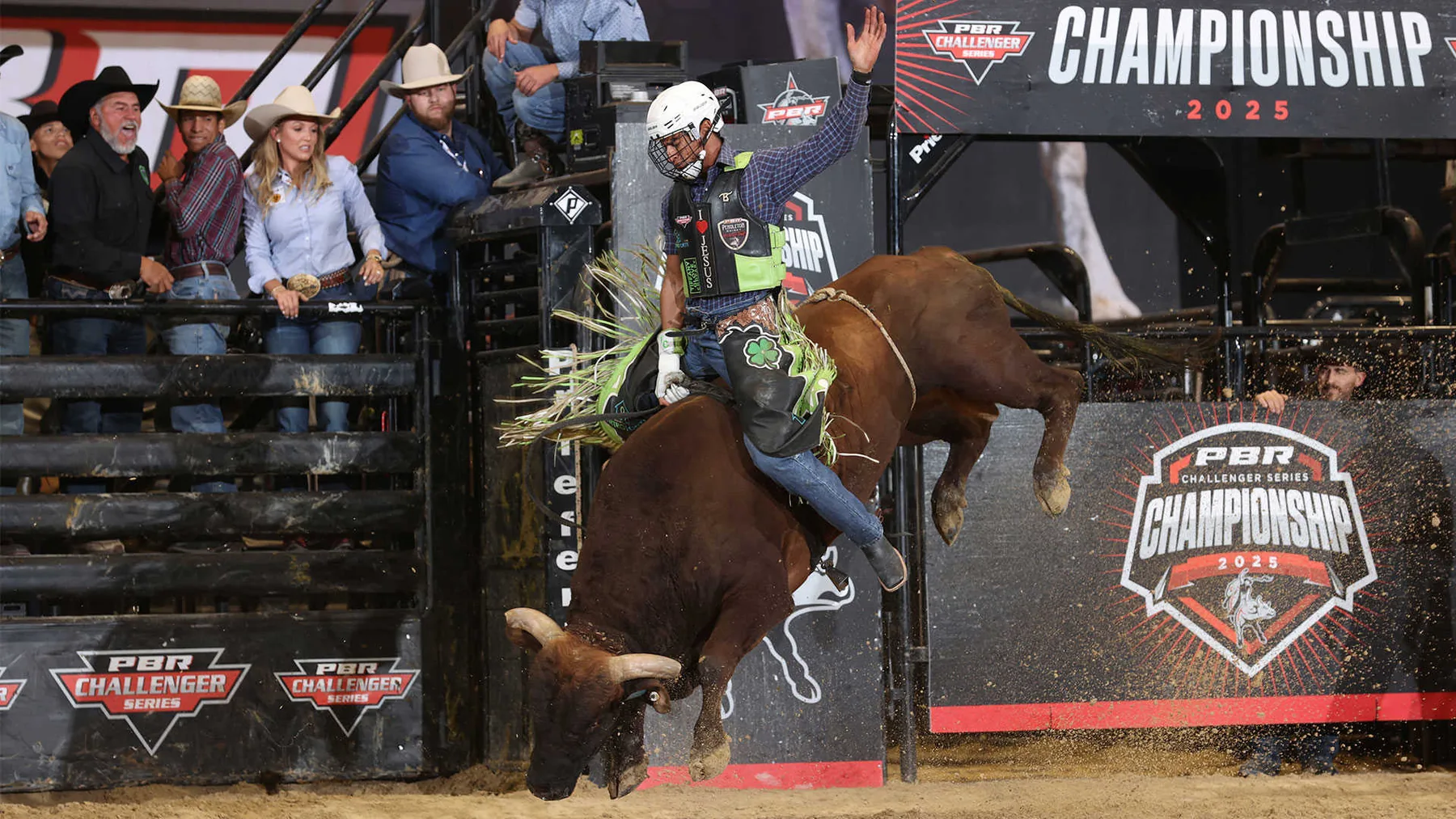
The PBR Ram Challenger Series is an individual bull riding competition for riders with and without PBR Teams affiliations. It runs alongside the Teams portion of the calendar, maintains its own standings and offers a route toward future Unleash The Beast opportunities. For 2026, its championship is scheduled for November 4–5 at South Point Arena in Las Vegas, with both performances beginning at 7 p.m. Pacific time.
That makes Challenger useful to follow whether you recognize an established rider in the draw or discover a new name at a local arena. It also creates some easy misunderstandings: a team jersey does not turn the event into a Teams game, a ride score is different from season points, and the South Point championship is separate from the Teams tournament at T-Mobile Arena.
This guide explains the competition, the qualification stakes and the November championship using information checked on October 20, 2026. The rider examples describe documented performances; the actual championship draw will determine who competes.
Where Challenger fits in the PBR season
The PBR Ram Challenger Series gives bull riders an individual competition during the part of the calendar when PBR Teams is also on the road. It launched in 2022, alongside the team league, and its role remains useful: a rider can build a body of work without needing to occupy one of a club's starting places in a five-on-five game. Challenger has its own events and standings. A strong night belongs to the individual rider, even when fans recognize the club colors on his riding vest.
Team riders and independent riders share the draw
PBR explicitly describes Challenger as open to riders both affiliated and unaffiliated with Teams organizations. That makes the draw interesting beyond a simple list of future prospects. A rider already connected to a team can be competing beside someone trying to establish himself in the professional ranks. Their routes into the arena differ, but each still has to solve the bull in front of him.
For a fan, the practical distinction is where the score goes. A qualified ride in a Challenger event contributes to that rider's individual result under the event's rules; it does not add points to his club's next Teams game. Nor does wearing a team's shirt promise a starting assignment the following weekend. The PBR Teams guide explains the separate game and roster context.
Challenger, Velocity and Unleash The Beast have different jobs
Unleash The Beast is PBR's premier individual championship tour. The Pendleton Whisky Velocity Tour runs alongside the individual season and provides another route toward the sport's top competition. Challenger complements the Teams portion of the calendar while preserving an individual contest. The names therefore describe different competitive settings, rather than three labels for the same event.
For 2026, PBR announced a Challenger season from May 21 through November 5, with more than 50 events in 30 cities. That scale gives fans opportunities to see individual bull riding beyond the major Teams weekends. Use the PBR schedule to identify the series attached to your local stop. The useful question is which competition you will see, followed by who has actually entered it; a familiar arena alone does not answer either question.
How an individual Challenger event is decided
An eight-second ride earns a score, not an automatic win
A qualified PBR ride requires eight seconds with the riding hand in the rope and without a disqualifying free-hand touch. Reaching the buzzer is the first task. Judges then evaluate both athletes: the bull contributes up to 50 points and the rider up to 50, producing a possible combined score of 100. A bull still receives its own mark when it bucks the rider off; that mark is not a consolation ride score for the cowboy.
This creates two different things to watch. The bull supplies the difficulty through its bucking performance, while the rider must stay in position and respond to the movement. Surviving a challenging jump is important, but control across the whole qualified ride also matters. The 2026 scoring explanation covers the added precision introduced for the season. Decimal scores do not change the need to qualify.
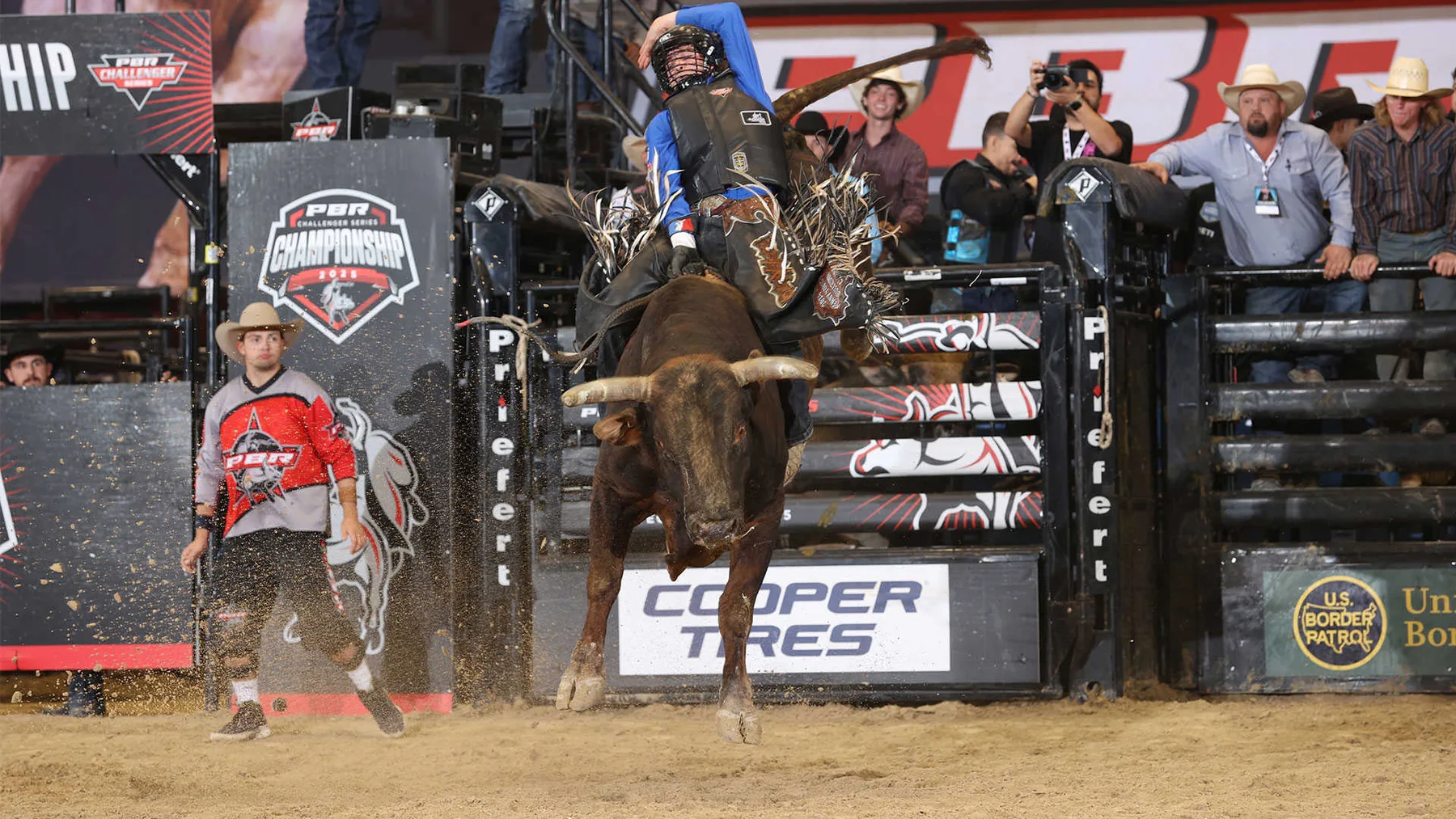
Use the announced rounds rather than one universal format
For its October 17 Lincoln event, PBR advertised 35 riders attempting a bull in Round 1, with ten advancing to a championship round. That is a concrete example of how an opening round can narrow the field and create a second opportunity to change the event standings. It should not be applied automatically to every stop on the tour.
Tryon in August provides a different example: its published results contain Round 1, Round 2 and a championship round. Marcus Mast's scores of 88 and 87 gave him a 175-point aggregate and the event victory, despite his absence from the final round after an injury. The central lesson is how the successful rides accumulate. One spectacular score and two qualified rides answer different competitive questions.
Read the announced format before deciding a rider has been eliminated or has already secured an event win. The daysheet guide helps distinguish an opening-round score, an aggregate and a season-points award. Those columns belong together in the story of the evening, but they are not interchangeable measurements.
What Challenger standings can earn a rider
The season table measures a different achievement from the best ride of the evening. A ride score evaluates a qualified matchup, an event aggregate combines the rider's successful scores across that competition, and standings points place the performance inside a longer campaign. Seeing those numbers next to each other does not make them equivalent. A 90-point ride is not automatically a 90-point deposit into every season table.
That distinction changes how to assess a contender. A rider near the qualification boundary needs results that improve his standing, while someone already comfortably inside the field can still be chasing a higher season finish. A single round highlight may be impressive without explaining the entire move in the standings. Check the event's published awards and the relevant series table before calculating what a result means.
Championship qualification and future UTB places are separate rewards
For 2026, PBR's season announcement says the top 40 riders after the regular season qualify for the Challenger Championship. It separately says selected leading finishers in the final standings earn automatic positions in 2027 Unleash The Beast events. Reaching South Point and earning a future premier-tour opportunity are therefore related objectives with different thresholds.
The detail must be attached to the correct year. For the opening events of the 2026 UTB season, PBR's Chicago competition notes described five qualifying positions from the previous Challenger standings for riders not already qualified through higher criteria, including a roll-down when necessary. That document concerned the first four UTB events. It does not, by itself, establish the invitation count or duration for 2027. The June 2026 Challenger announcement uses the broader wording about selected top finishers.
There is also an event title to win at the championship. Lauro Nunes Vieira's 167.50-point aggregate won the 2025 championship event, while PBR reported the season championship separately. When following November, keep those awards distinct. The results page is the useful starting point for the finished event; the season table answers who prevailed across the campaign. Neither award should be treated as an automatic Teams contract.
The 2026 championship at South Point
Two evenings in Las Vegas, with a different ticket from Teams
The official 2026 Challenger Championship event page lists Wednesday, November 4, and Thursday, November 5, at South Point Arena in Las Vegas. Both performances are scheduled for 7 p.m. Pacific time. South Point's own arena calendar corroborates the two dates. These are the dates to use for an individual Challenger championship visit, as checked on October 20.
The PBR Teams Championship follows November 6–8 at T-Mobile Arena. The connection makes an extended Las Vegas bull riding trip possible, but the events take place in different venues and award different titles. A ticket for South Point should not be assumed to admit you to a Teams session, or the reverse. The Las Vegas Teams Championship guide covers that later competition.
A workable itinerary starts with the sessions you want to attend. Someone interested in individual careers may value both Challenger nights; a club supporter may prioritize the Teams tournament. If you choose both, allow for moving between venues and retain the correct tickets for each evening. The fact that the competitions share a host city does not make them one continuous session.
Buy admission for the correct date and competition
Begin with the ticket links on PBR's event page or South Point's calendar. The official ticket listings include individual nights and a two-day package. Compare the dates covered before comparing prices: one evening and two evenings are different products. A package listing can display a midnight administrative date marker; the official individual performance listings show the actual 7 p.m. start times.
Use the final purchase total for your chosen seats and party size. A quoted price can change with location, availability and the product being offered, so this guide does not present a single ticket price as universal. The PBR ticket guide explains how to make equivalent comparisons.
Before paying, check the event name, South Point venue, performance date, seat selection and admission inclusions together. Use the seating map attached to that performance when choosing a chute-side view or a broader look across the dirt. That small check is particularly useful during a week with multiple PBR championships and several ticket products carrying similar names.
The riders who make Challenger more than a prospect tour
Marcus Mast entered his successful 2026 Tryon weekend as the reigning 2025 Velocity Tour champion. His presence shows why Challenger should not be described as a competition reserved for beginners. An established individual-tour winner can still have something substantial to gain from another series, and fans can see experienced competitors alongside riders seeking a breakthrough.
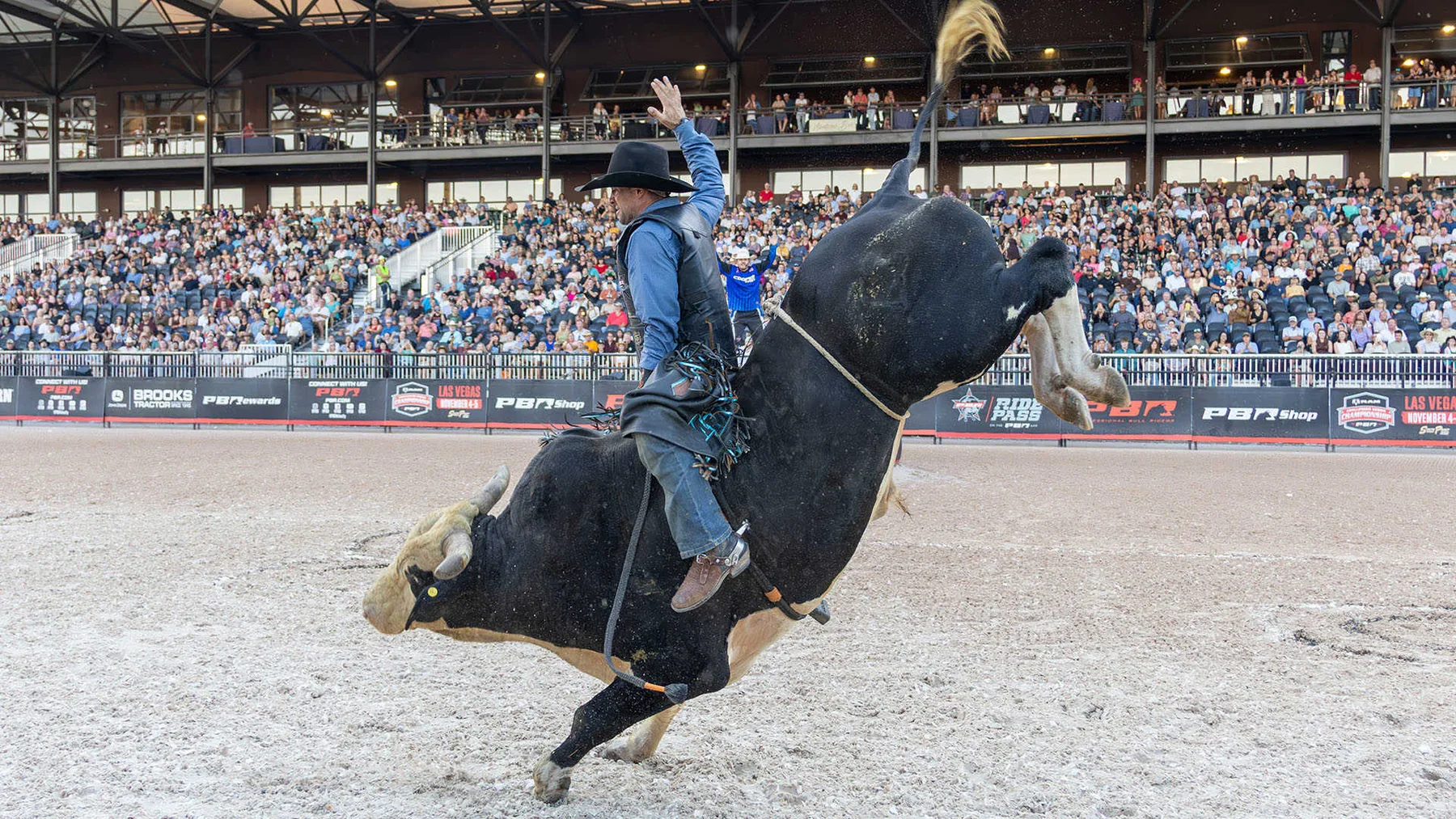
Boston Leather supplies another revealing 2026 example. The 2024 PBR Australia champion won in Rochester in September with a 165.80-point aggregate, combining rides worth 84.80 and 81 points. In its September 30 feature, PBR reported that his Challenger performances helped attract Kansas City's attention before the Outlaws signed him as a free agent midway through the month. That is a documented career connection rather than a claim that every event winner receives a contract.
What made the Rochester result useful was completing both rides. A scout or supporter could look beyond the highlight and see a weekend converted into an event victory. The later team opportunity added another chapter, but the individual result already stood on its own. Following the draw closely can reveal that sort of development before the rider becomes a familiar Teams starter.
The standings can also tell an international story. Cody Coverchuk won the 2024 Challenger Series title after competing exclusively in Canada during that campaign, according to PBR's records guide. His four event wins helped him finish with 746 Challenger Global points, 34 ahead of Nick Tetz. That historical result is a useful reminder that the word “Global” in a table heading matters: an American event list alone may not explain the complete race.
These examples describe careers and completed results, not a confirmed entry list for the November 2026 championship. Mast's tour experience, Leather's transition and Coverchuk's Canadian campaign give fans different reasons to pay attention to the same competition. Use the 2026 rider guide for broader context, then check the actual event draw before expecting a particular name in the chutes.
Follow the draw, the broadcast and the final result
Start with the current event identity: Challenger, the correct city and the correct season. PBR's results navigation retains older championship pages, which are useful for history but can be mistaken for the approaching competition. A result from October 2024 is not a 2026 rider list, and a past finalist is not automatically entered this November. The today's events page helps identify what is actually taking place on a chosen date.
Once the draw is available, look at the rider and bull together, then identify the round. Follow qualified scores, official re-ride decisions and the aggregate as the evening develops. A revised assignment can change the matchup you expected from an earlier list. Keep the daysheet explanation nearby if you are learning to read those changes.
Check the event feed before choosing a stream
As checked on October 20, the championship event page confirms the November 4–5 performances but does not establish a specific television or streaming outlet for both nights. Use the PBR TV schedule and PBR's official tune-in listings close to the event. The 7 p.m. Pacific arena start is not a promise that a broadcast begins at exactly the same time.
PBR distinguishes its app, which includes access to selected live events and on-demand material, from RidePass, its programmed 24-hour channel. A classic event playing on that channel can be real PBR without being the live championship you want. Confirm the event title, live or replay label and viewing region before settling into a feed. Older guides naming a broadcaster for the 2024 championship describe that earlier year.
After the final out, read the completed results before judging the whole weekend from a clip. Note the event winner, then check the season standings and the confirmed future qualification announcement separately. That sequence preserves Challenger's best story: individual performances can matter tonight, across the season and at the next level, with each achievement earning its own description.
Keep reading
Related PBR articles
Events & Schedules
PBR World Finals 2027: Dates, Glendale Tickets and Fort Worth Rounds
By PBR Schedule Editorial TeamEvents & Schedules
PBR Townsville 2026: Grand Finals Tickets, Prices and Venue Guide
By PBR Schedule Editorial TeamEvents & Schedules
Join the conversation
Comments
Comments are reviewed before publication. Keep the discussion useful, respectful and focused on bull riding.
Sign in with Google to comment
Your public comment shows your account name. Your email address is not displayed.
Commenting as
Loading comments…