2026 PBR Teams Championship Seeds: Byes, the Ride-In Game and Opening Matchups
The final 2026 PBR Teams seeds determine three byes, a three-team Ride-In and two opening matchups. Follow each route through championship weekend.
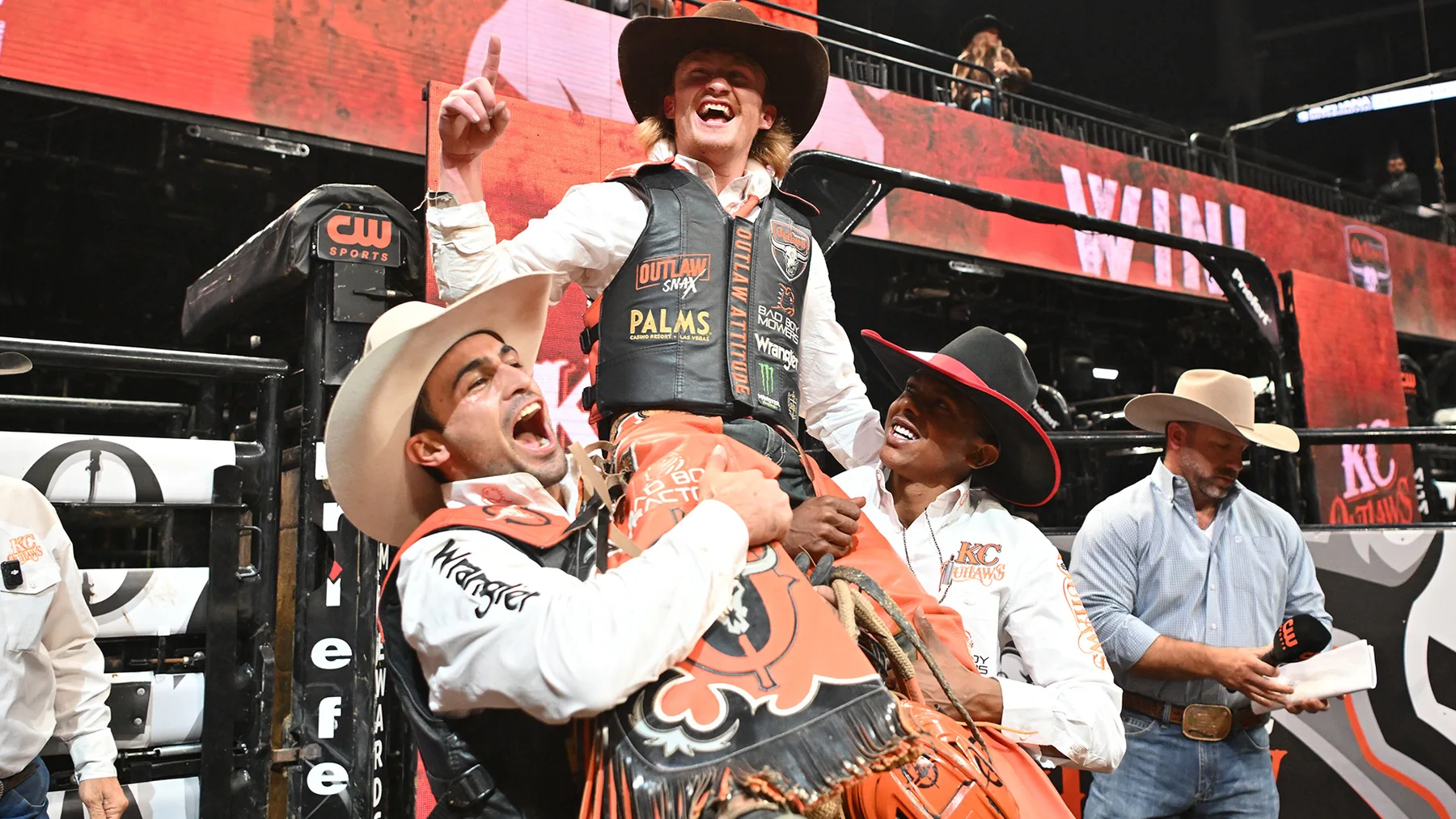
Missouri, Austin and Nashville have the three byes for the 2026 PBR Teams Championship. Carolina faces New York and Texas faces Kansas City in Friday's opening two-team matchups, while Arizona, Florida and Oklahoma must first contest the Ride-In Game. Those routes follow the final regular-season standings, with Nashville taking the third seed ahead of Carolina on season aggregate after both finished 19-16.
The championship runs November 6-8 at T-Mobile Arena in Las Vegas. As of October 31, the seeds are settled and the championship games remain ahead. The important distinction is between earning a place in the weekend, entering directly on Saturday, and surviving each stage once competition begins. Here is what each seed actually earns, why Nashville's final afternoon mattered, and how to follow the draw without confusing an opening loss with immediate elimination.
The final 2026 seeds and what each position earns
Missouri Thunder finished first, Austin Gamblers second and Nashville Stampede third in the 2026 PBR Teams regular season. Those are the three clubs that enter the November 6–8 championship at T-Mobile Arena on Saturday, November 7, after a first-day bye. The other seven clubs begin on Friday, with different routes according to their final positions.
The official 2026 standings place the ten clubs in the order below. All completed 35 games. The score column is their accumulated regular-season ride score, rather than a prediction of how many points they will earn in Las Vegas.
| Seed | Team | Record | Season score |
|---|---|---|---|
| 1 | Missouri Thunder | 24–11 | 7,389.10 |
| 2 | Austin Gamblers | 22–13 | 7,177.40 |
| 3 | Nashville Stampede | 19–16 | 6,689.40 |
| 4 | Carolina Cowboys | 19–16 | 5,984.05 |
| 5 | Texas Rattlers | 17–18 | 6,110.25 |
| 6 | Kansas City Outlaws | 16–19 | 6,162.40 |
| 7 | New York Mavericks | 15–20 | 5,774.35 |
| 8 | Arizona Ridge Riders | 15–20 | 5,603.95 |
| 9 | Florida Freedom | 15–20 | 4,727.55 |
| 10 | Oklahoma Wildcatters | 13–22 | 4,943.60 |
There are three useful groups. Seeds one through three have the bye. Seeds four through seven have identified head-to-head opponents on Friday. Seeds eight through ten must first survive the Ride-In Game. Calling all ten championship participants does not mean that all ten start in the same round or have the same number of obstacles between them and Sunday.
Read the record before comparing the season score. Texas ranks above Kansas City despite the Outlaws accumulating a slightly higher score, because the Rattlers won one more game. Likewise, Oklahoma's larger aggregate than Florida's does not erase the difference in wins. The numerical columns describe related parts of a season, but they are not interchangeable rankings.
For returning readers, this is the completed regular-season order. Our earlier October standings analysis describes a race still in progress. The final seeds answer a new question: where each club enters the championship. They preserve the value of the season without carrying a team's accumulated points into a new elimination-game score.
Missouri's first place is therefore an advantage to examine, not a title already delivered. Austin and Nashville have also earned a shorter opening route. Below them, a losing regular-season record does not automatically end a club's chances: the published tournament still gives that team a competitive path. What changes is where it starts and what it must survive.
Why Nashville gets a bye and Carolina does not
The final afternoon created the tie
Nashville needed a result of its own and help elsewhere. On October 25, the Stampede beat Missouri 262.10–177.70. Carolina then lost the regular season's final game to Kansas City, 180.15–176.00. The combination left Nashville and Carolina with the same 19–16 record. Nashville's victory alone did not guarantee the third seed while the Cowboys still had their game to play.
The decisive Kansas City game also shows why a team result cannot be reduced to the number of successful rides. Both clubs recorded two qualified rides. The Outlaws' pair accumulated the higher score, with Hayden Welsh's 91.35 on Humdinger providing the major contribution. The difference between the team totals was only 4.15 points, yet it changed which club received the last bye.
PBR's final-day report explicitly identifies the aggregate-score tiebreaker as the reason Nashville finished above Carolina. A tense final game created the opportunity to use that tiebreaker; the tiebreaker itself measured the longer season.
Season aggregate broke it
Nashville finished with 6,689.40 accumulated points to Carolina's 5,984.05, a difference of 705.35 points. Those are season totals, not the score of a game between the clubs. The gap placed Nashville third once their win-loss records were equal. Carolina did not lose the bye through an extra playoff game, and Nashville was not granted it through a judgement about which team looked stronger.
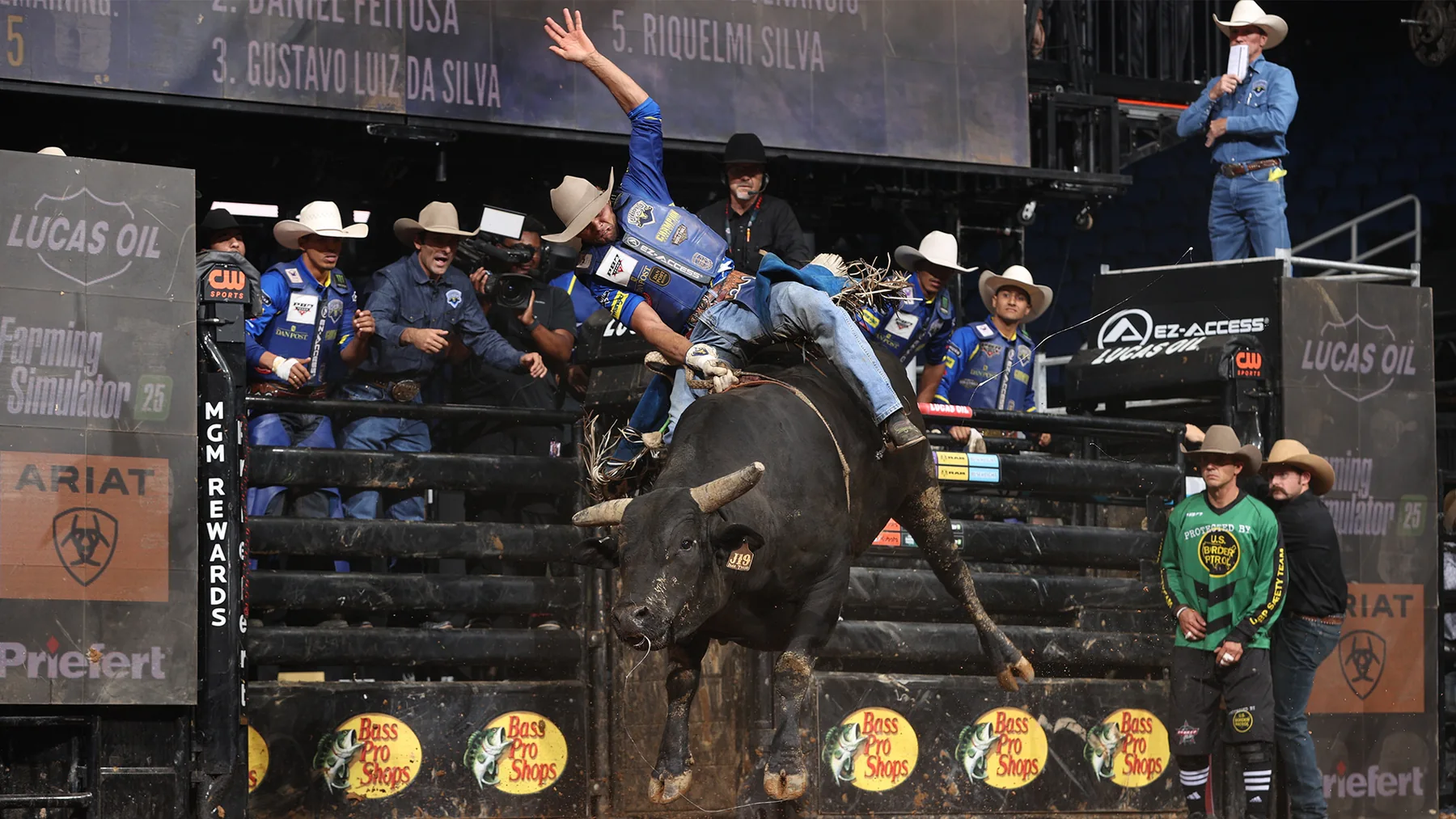
The distinction is useful for understanding the incentive through a season. Winning the immediate matchup remains the first task. Once clubs finish with equal records, their accumulated scores can decide a consequential position. A ride that adds points in an earlier game can therefore remain relevant to the final order, even though that old ride does not become a head start in a future championship game.
For Nashville, the reward is a different Friday: its first championship game comes on Saturday. Carolina must compete on the opening day. That gives the Stampede less early elimination exposure, but it does not make the Cowboys incapable of winning a later matchup. The season-long gap is not an amount Carolina must somehow repay on the dirt in Las Vegas.
It also explains why the records can look deceptively equal on a short standings graphic. A supporter seeing only “19–16” is missing the column that settled the order. Add the season score and the third-seed decision becomes clear. The remaining question is competitive rather than administrative: which team converts its next assigned bulls when the championship begins?
The Ride-In Game gives three clubs one way forward
Arizona, Florida and Oklahoma occupy the bottom three positions, but they still travel to Las Vegas with a route to the title. The Ridge Riders, Freedom and Wildcatters contest a three-team Ride-In Game at the beginning of Friday's programme. One advances. Arizona's eighth place is a seed for that contest, not an exemption from it.
The distinction is confirmed in PBR Brazil's October 26 championship preview: the bottom three play a preliminary phase on the first day, with one place in the next phase that same day. All three clubs therefore participate in the championship occasion, while only one survives this first cut.
That is why the Ride-In deserves attention even from supporters of teams elsewhere in the draw. It determines the identity of an opponent in a later game. A casual description of an eight-team bracket can hide that first contest, while a description of ten participating clubs can hide the elimination facing these three. Both numbers make sense once the entry stage is identified.
Winning the Ride-In is only the first step
The official 2026 bracket sends the Ride-In winner into a later Friday three-team game alongside the losers of Carolina–New York and Texas–Kansas City. The winner of that later contest advances to meet Missouri on Saturday. Surviving the opening Ride-In is consequently not the same achievement as reaching Day 2.
For a hypothetical Arizona run, the sequence matters more than the label “eighth seed.” The Ridge Riders would first have to beat Florida and Oklahoma in their opening contest. They would then need to survive the later Friday game before earning a matchup against the top seed. Florida or Oklahoma would follow that same published route if either won the Ride-In instead.
The competitive challenge is changing opponents while continuing to produce credited scores. A team that has just survived is not given its next game through reputation or its season aggregate. It must answer another set of attempts. A strong early performance may encourage a supporter, but it does not remove the next contest from the bracket.
Watch the confirmed advancement rather than assuming every Friday loser is immediately out. The two opening head-to-head losers have the later route just described; the Ride-In losers do not appear on that onward branch. These are different consequences within the same evening. For the underlying team-scoring basics, our PBR Teams explainer supplies the broader introduction without replacing the season-specific championship draw.
Friday’s opening matchups offer two different tests
The fourth-through-seventh seeds begin in ordinary two-team games: Carolina against New York, and Texas against Kansas City. Both offer a direct route into Saturday for the winner, with a later Friday recovery opportunity for the loser. That makes the first game consequential even though losing it does not immediately end a championship bid.
Carolina Cowboys against New York Mavericks
Carolina brings a four-win regular-season advantage into the fourth-versus-seventh matchup. Its 19-16 record represents a better season than New York's 15-20. The question on Friday is whether that advantage becomes enough qualified rides in this particular game. A season record helps establish expectations; it does not supply any points when the chutes open.
New York's October 18 win over Texas illustrates how little room there can be between advancing and losing a game. The Mavericks won 263.75-263.30 at Maverick Days, with three qualified rides on each side. That 0.45-point margin was decided by the quality of the scores once both teams had matched the other's ride count. It is evidence of New York winning a tight contest, rather than a previous result against Carolina.
For spectators, the useful comparison is therefore both the number of successful rides and the running aggregate. Three rides do not automatically beat another three rides. A modest difference in a judged score can decide an otherwise balanced game, which is why a final attempt can remain meaningful even when the teams already have the same number of scores.
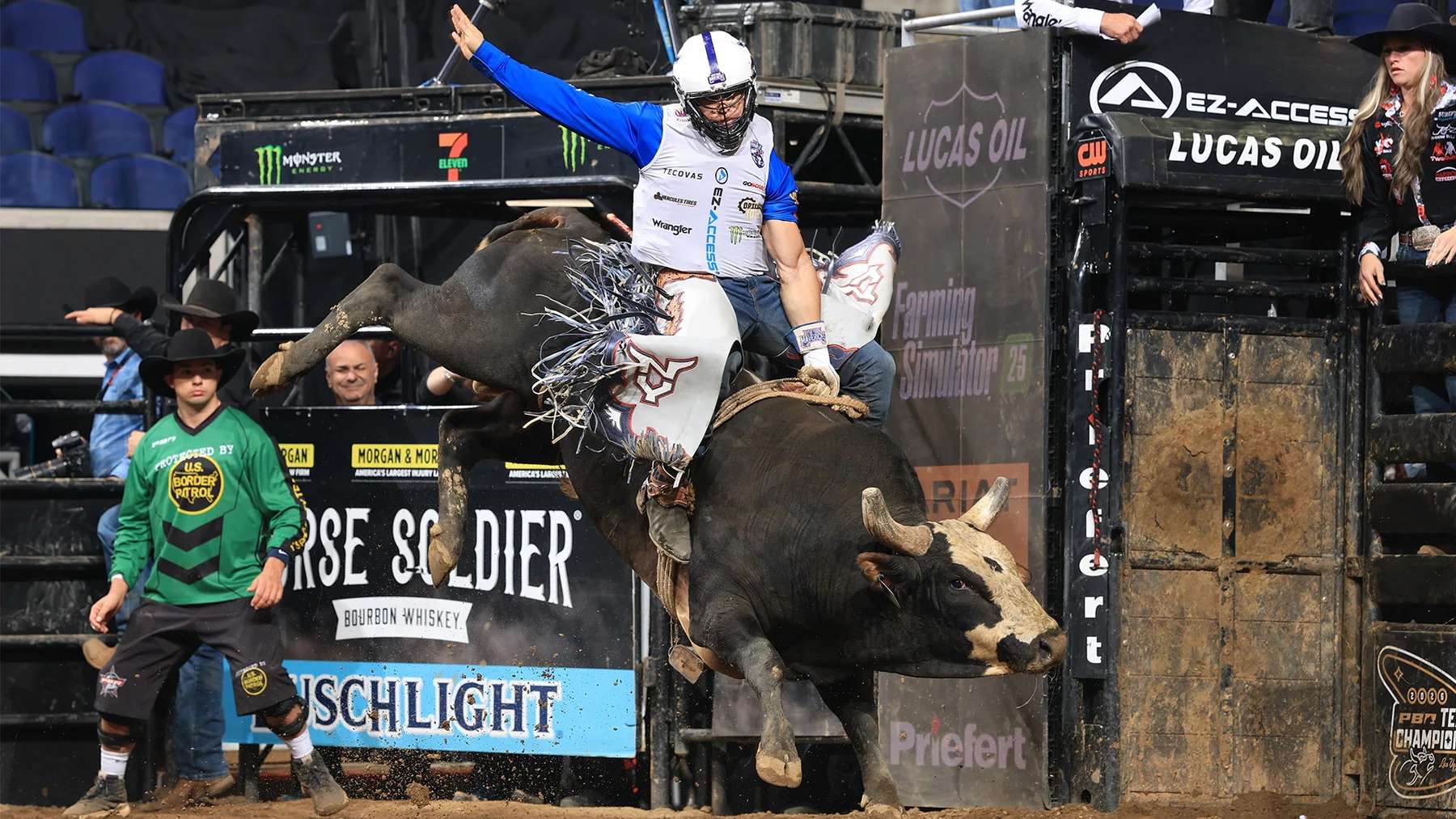
Texas Rattlers against Kansas City Outlaws
Texas and Kansas City are separated by only one win in the final standings. The fifth-seeded Rattlers finished 17-18; the sixth-seeded Outlaws finished 16-19. Yet Kansas City's season aggregate of 6,162.40 exceeded Texas's 6,110.25 by 52.15 points. Texas earned the better seed by winning more games, while Kansas City's cumulative scoring gives a reason to look beyond the seed number alone.
That is a useful distinction when assessing the matchup. Aggregate rewards the accumulation of scores across the season, while the win column rewards beating the particular opponent in each game. A club can pile up points on one successful night without those extra points rescuing a narrow defeat on another. Neither column should be presented as a guarantee about a single championship game.
Watch the confirmed lineup and bull draw before turning those team totals into rider-specific predictions. A regular-season preview is not a November lineup announcement. The immediate reward is already clear from the draw: the Texas-Kansas City winner meets Austin on Saturday, while the Carolina-New York winner meets Nashville. Those are two separate paths, not a reseeding based on Friday's score.
How the bracket changes on Saturday and Sunday
Saturday introduces the three clubs that earned byes. Missouri faces the survivor of Friday's later three-team game. Austin faces the Texas-Kansas City winner, and Nashville faces the Carolina-New York winner. The first task for a supporter following the draw is identifying which Friday result fills the relevant place, rather than assuming that every team is matched again by its seed.
The three Saturday winners move on to Sunday. Saturday's three losing teams then contest a three-team recovery game for the remaining semifinal place. A loss in the first Saturday game therefore changes the route and adds another contest; it does not itself settle that club's final championship position. Once again, the later game has a different consequence from the earlier one.
The published championship diagram also changes the game size: Friday and Saturday are marked five-on-five, Sunday's semifinals six-on-six, and the championship final seven-on-seven. The familiar five-man regular-season format should not be carried unchanged into the title game. Sunday's extra opportunities make the depth of the available lineup especially relevant.
A bye reduces exposure without guaranteeing a title
The clearest benefit of finishing in the top three is avoiding Friday's competition entirely. Missouri, Austin and Nashville do not need a Friday win to remain in contention. Clubs below them have to negotiate that day's route before they can meet one of the rested seeds. That is a concrete bracket advantage, independent of any claim about which roster is strongest.
It still creates no points advantage within the next game. Missouri's 24 regular-season wins earned the first seed, but they do not become a starting score on Saturday. Nashville's late move into third changes the day on which it enters; it does not decide its game against Carolina or New York. The opposition must still be beaten when the championship begins.
There is also a difference between needing fewer games and knowing exactly how many rides a particular athlete will face. The former follows from the bracket. The latter depends on lineup decisions and how the competition unfolds. Before confirmed daysheets are available, a precise workload forecast for an individual rider would go beyond what the seeds establish.
Read the bracket as a sequence of earned opportunities: a direct place on Saturday, a second route after a loss, and ultimately a place in Sunday's expanded games. That approach explains why the top three celebrated their seeds, while leaving room for a lower-seeded club to build a title run. Regular-season position determines the starting route; the games determine who stays on it.
Follow the right session and the confirmed lineup
As checked on October 31, the championship organizer and T-Mobile Arena list Friday, November 6 at 7:45 p.m.; Saturday, November 7 at 4:45 p.m.; and Sunday, November 8 at 2:30 p.m. All three are local Pacific times in Las Vegas. These are session starts, rather than a promised start time for each individual team game.
Arizona, Florida and Oklahoma supporters should follow Friday from the beginning because the Ride-In is their first hurdle. Carolina, New York, Texas and Kansas City fans have reason to follow the whole Friday programme: a first-game defeat can send their club into the later recovery contest. Missouri, Austin and Nashville enter on Saturday, but Friday decides who they will face.
For viewing from home, check the appropriate country and the specific day's listing in the PBR TV and streaming guide. An arena session time and a broadcaster's coverage window answer different questions. Do not assume that a listing for one part of Sunday includes every semifinal and the final, or that coverage available in one country is available everywhere.
Finally, distinguish a team's qualified seed from its confirmed lineup. The seed and route are settled; the daysheet and named bull matchups add the detail needed for a rider-by-rider assessment. Start with the route in this guide, then use the announced lineup to judge how that team might execute it. That keeps a championship preview grounded in the games the club actually needs to win.
Keep reading
Related PBR articles
Teams & Standings
PBR Teams Standings October 2026: Why Missouri Leads and What Can Change
By PBR Schedule Editorial TeamTeams & Standings
PBR Teams MVP Race 2026: Leme vs. Rossetto After a Record-Breaking September
By PBR Schedule Editorial TeamTeams & Standings
Join the conversation
Comments
Comments are reviewed before publication. Keep the discussion useful, respectful and focused on bull riding.
Sign in with Google to comment
Your public comment shows your account name. Your email address is not displayed.
Commenting as
Loading comments…