PBR Teams MVP Race 2026: Leme vs. Rossetto After a Record-Breaking September
An October 1 analysis of the Teams MVP standings, Rossetto's record-breaking September and the score changes that could reshape the pursuit.

Jose Vitor Leme leads the 2026 PBR Teams MVP race by 95 points over Paulo Eduardo Rossetto as of October 1. Leme has 1,770.3 aggregate points; Rossetto has 1,675.3, with Brady Fielder third on 1,332.8. Rossetto broke the consecutive-ride record with his 14th conversion on September 18, extended the run to 15, and saw it end on September 20. That record-breaking September gives this October pursuit its context, but the award comparison rests on the season aggregate.
Here is how the standings, conversion rates and remaining schedule fit together, with completed September results separated from the games still to come.
Where the MVP race stands on October 1
The official MVP standings, checked on October 1, establish the starting comparison for the next performances. Read the aggregate column first, then note the attempts behind each total. That keeps the lead and the opportunities already used in the same view.
Rossetto is the immediate challenger, while Fielder has a substantially larger deficit in third. The pursuit therefore has two different scales. A performance that makes second place much closer to the leader may leave third needing a sustained run of favorable exchanges. The sections below examine those situations separately so an excellent ride is assessed against the gap it actually changes.
This is a dated snapshot before the October games, rather than an award already decided. Aggregate scores can change when riders complete more qualified attempts. The useful question is how much each contender adds relative to the other, because the leader can score on the same event day that the challenger does.
September's headlines explain how the contest became so compelling, but their margins belong to their own dates. After Anaheim, the published difference was only 2.55 points. That was the position described in the September 14 report, not the current October 1 gap. The later 95-point margin shows why a historical race feature and the present table should be read together.
Rossetto's consecutive-ride record is another part of that story. It tells us about an exceptional run of completed attempts, while the MVP table credits the whole regular-season scoring campaign. A record-breaking stretch can transform the chase without cancelling points that the leader accumulated earlier or afterward.
For fans, those distinctions make the next game easier to read. Watch the credited ride score and then the difference between the contenders' totals. A club victory, a spectacular individual ride and a new MVP position can happen together, yet none automatically proves the other. Our PBR Teams page helps locate the next session in which those stories can move forward.
How the consecutive-ride record moved from 13 to 14
The record changed hands through two distinct stages in September. In Anaheim, Leme extended his run to 13 consecutive qualified Teams rides with an 86.80-point effort on Young Buck. Chewy ended that streak the following night, bucking him off in 4.23 seconds. The completed sequence remained a benchmark even though the streak had stopped.
Rossetto reached the same number by the end of the Honda Center weekend. His Sunday ride on Me More Cowboy earned 87.70 and completed his 13th straight conversion. That tied Leme's mark; it did not yet break it. Both men left Anaheim with 17 qualified rides from 20 outs, and their season aggregates differed by just 2.55.
The next milestone arrived on September 18 in Greensboro. PBR's official Cowboy Days report records Rossetto's 87.85 on UB Smooth as his 14th consecutive qualified Teams ride. That moved the reported league record beyond the 13-ride benchmark.
The immediate scoring response explains why a record and an MVP lead are different. Rossetto briefly moved ahead in the aggregate race during that game. Leme then answered with 87.05 on White Out and reclaimed the top position. The record belonged to Rossetto, while the running season total again favored Leme.
Missouri won the September 18 game 262.30–176.25. That was the club outcome around the two individual performances, not the score of their personal MVP contest. Other lineup contributions helped settle the team matchup. The records, individual aggregates and game totals each describe a different part of the same competition.
A consecutive-ride record measures a chain of success without an intervening non-score. Its value does not depend on every ride being a career-high performance. It rewards repeating the difficult basic task of staying qualified across changing matchups. The streak's length and the points earned during it are therefore related but separate measures.
The September 20 report records the streak ending at fifteen when EmmDee bucked Rossetto off. Fourteen was the breakthrough beyond Leme's benchmark; fifteen was the completed run. Keep both milestones dated when explaining why the record changed hands.
What the numbers say about Leme and Rossetto
Compare conversions before comparing the averages
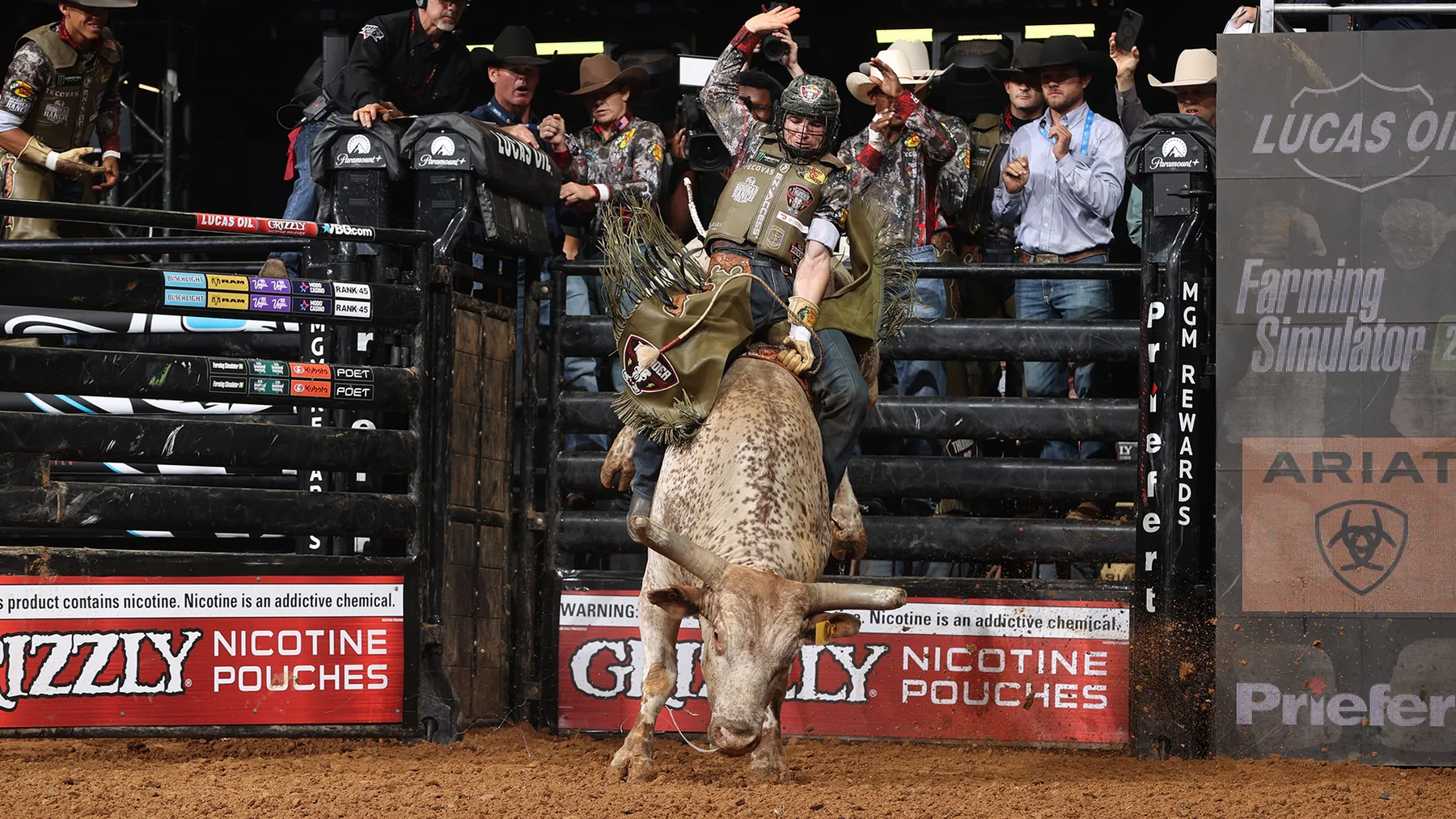
The October 1 table gives Leme and Rossetto the same number of outs: 23. Leme has converted 20 and Rossetto 19, corresponding to the listed 86.96% and 82.61% ride percentages. With their opportunity counts equal, Leme's one additional qualified ride is an important part of the comparison.
Dividing aggregate by qualified rides gives a useful second view. Leme's average across his 20 scoring rides is approximately 88.52; Rossetto's across 19 is approximately 88.17. These are calculations from the published totals, not separately published official rankings. They exclude non-scoring attempts and should be labeled accordingly.
That modest difference in average explains why the extra conversion matters so much. Using Leme's average as a comparison, one additional scoring ride accounts for about 88.5 of the 95-point separation, with the remaining difference reflecting the averages across the other 19 scores. This arithmetic describes the totals; it does not identify one particular ride as the sole cause of the lead.
For a fan watching the next matchup, the practical implication is clear. A qualified ride in the high 80s can have more effect on this contest than a small increase in the average of rides already completed. Both riders have shown strong scoring quality, so the ability to keep adding credited attempts deserves as much attention as the next 90-point highlight.
Distinguish a streak from a season-long total
The MVP aggregate counts the credited season scores. Conversion percentage measures how often a rider has succeeded in his listed outs. A streak measures the length of an uninterrupted sequence. The three numbers answer different questions, even when an exceptional run improves all of them.
A rider can set a consecutive-ride record and still trail someone who has more successful attempts elsewhere in the season. Conversely, the aggregate leader can suffer a buckoff without losing every point already earned. The new attempt changes the total by what is credited; it does not reset the scoring campaign.
Ride scores combine rider and bull judging; avoid adding the bull score twice when reading an aggregate.
Read the current table alongside the dated record reports. That avoids making the longest streak the automatic winner or treating ride percentage as the award's sole deciding metric. The aggregate race rewards the accumulated scoring performance, while the other measures help explain how each contender produced it.
Why a 95-point lead is meaningful without settling the race
The October margin is large enough that an ordinary scoring ride from Rossetto, by itself, would not necessarily erase it. A 90-point conversion against a Leme non-score would reduce a 95-point deficit to five. The challenger would have made a major gain without yet moving ahead.
That hypothetical shows why the deficit is meaningful, but it also shows why the race remains active. After the same 90-to-zero change, another hypothetical 88-point Rossetto ride against another non-score would reverse the position. These are arithmetic examples based on the October 1 margin, not forecasts of either rider's upcoming attempts.
The combined ride score has a 100-point maximum. A scheduled out is an opportunity, not a fixed deposit of 90 or 100 points. Projecting a final total by assigning the same score to every remaining game disguises the central uncertainty of bull riding.
Follow the net change after both riders have an out
If Rossetto scores 90 while Leme scores 88, the net gain is only two points. The starting 95-point deficit becomes 93, despite Rossetto producing an impressive ride. The leader's response matters just as much as the challenger's headline score.
This is why temporary positions during an evening need context. One contender can ride before the other. The displayed lead at that moment reflects attempts already credited, not necessarily the complete day's comparison. The September 18 sequence, when Rossetto moved ahead before Leme answered, provided a real example of that timing.
For a clear watch-night calculation, note the opening difference, each contender's credited score and the difference after both have competed. If one is not in the starting lineup, that also changes the opportunities available that day. Use the actual lineup and result rather than assuming an attempt merely because the rider is high in the MVP standings.
Neither the 95-point lead nor Rossetto's record-setting September supplies a probability of winning the award. They identify the present advantage and an exceptional historical run. The next useful evidence is what each rider earns from the matchups he actually receives. Successive net changes, not isolated highlights, will decide whether the challenger closes, holds position or falls farther behind.
Where Brady Fielder fits in the chase
Brady Fielder entered the break with three conversions from three outs at Greensboro. The official Cowboy Days result records list 86.00 on Night Fury, 89.00 on Down Payment and 89.00 on Enter Sandman across the three days. Texas lost Sunday's game to New York, 267.20–89.00, with Fielder supplying its only qualified score. Those completed outs demonstrate individual consistency within a weekend that ended differently for his club.
For the MVP pursuit, the relevant next step is repeating those conversions while gaining on both leaders. On October 1, Fielder's 1,332.8 aggregate put him 437.5 behind Leme and 342.5 behind Rossetto. He had converted 15 of 23 outs, a 65.22% riding percentage. The same 23-out denominator makes the conversion totals informative: Leme had five more completed rides and Rossetto had four more.
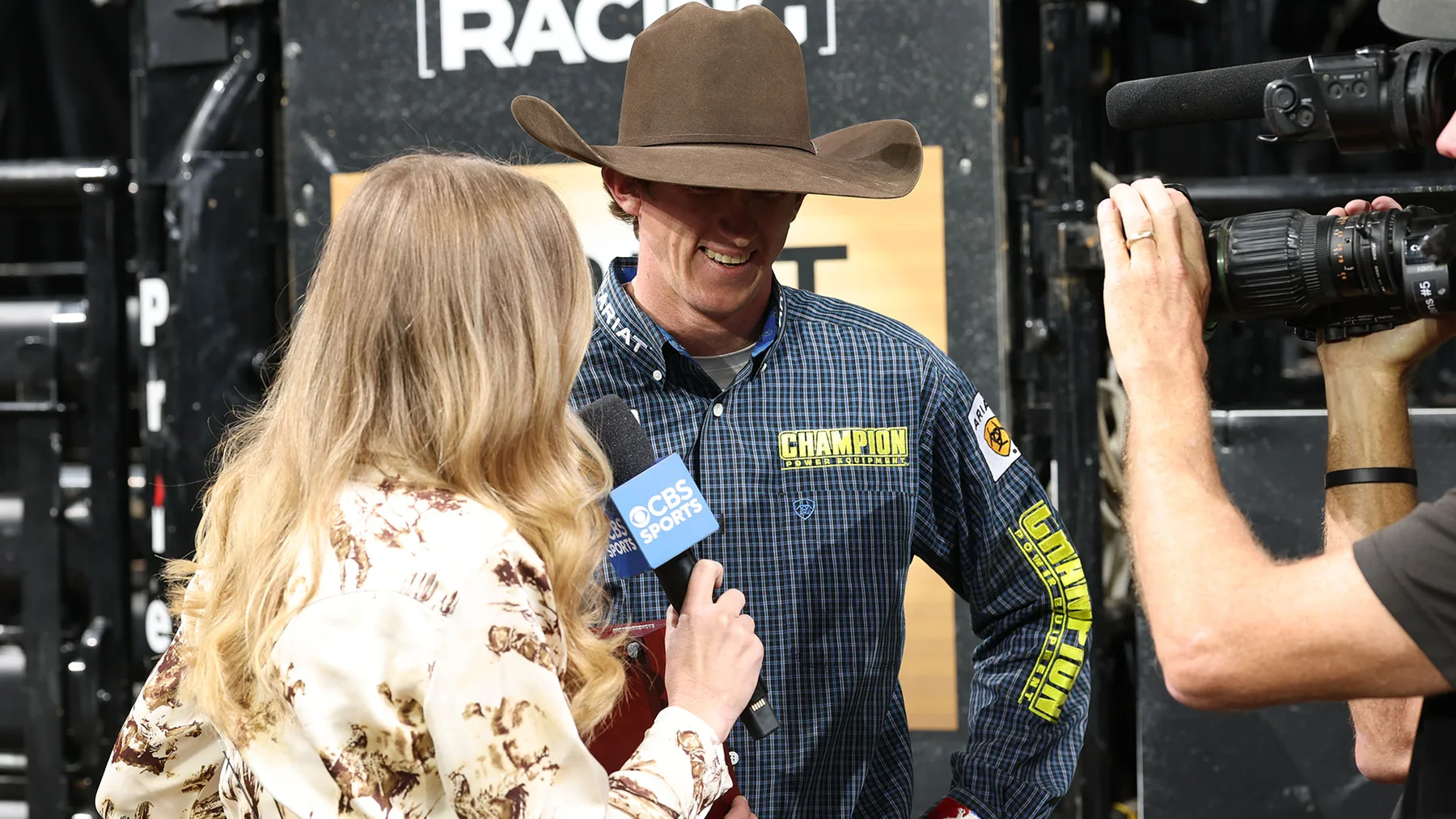
Dividing his aggregate by his 15 qualified rides gives approximately 88.85 points per conversion, slightly above either leader's corresponding average. That supplies a more specific diagnosis than saying he needs bigger scores: his completed rides have already delivered substantial marks, but fewer outs have produced them. The calculation describes recorded scores across different draws. It does not prove that the three riders faced equivalent bulls or that Fielder will reproduce that average in October.
The Greensboro result records provide a concrete starting point for watching him at the next stop. Follow whether his conversion run continues, then compare what Leme and Rossetto actually add. His three credited scores supply a recent standard to track; the current deficit shows why consistency still needs favorable relative results to change the race. The comparison becomes most useful once all three contenders' available outs are complete.
Fielder needs gains against two riders, rather than a single exchange with Leme. If he scores 90 while Leme scores 88, he closes only two points on the leader. If Rossetto also scores 89, Fielder closes just one on second place. A successful weekend can therefore improve his aggregate substantially without changing the order. A stronger catch-up scenario requires Fielder to keep converting while the men above him leave multiple outs without scores.
His deficit calls for a sustained change in relative results. The October 1 snapshot supports identifying him as an important pursuer; it does not justify assigning a numerical chance of winning or a guaranteed number of remaining attempts. The first test is whether he can extend the conversion form shown in Greensboro. The second is whether those scores produce net gains against Leme and Rossetto once their games are also complete. Keep all three results together when assessing whether that pursuit is gaining traction.
What to watch during the October finish
The remaining calendar gives this pursuit a clear rhythm. PBR's official event schedule lists Rattler Days in Fort Worth on October 2–4, Ridge Rider Days in Glendale on October 8–10, Maverick Days at UBS Arena on October 16–18 and Outlaw Days in Kansas City on October 23–25. Those are the final four regular-season stops identified in the September 28 preview. That report states that Texas has 12 regular-season games remaining.
A club's available games are a useful measure of the remaining runway. They are not a personal guarantee of 12 additional outs for Leme, Rossetto or Fielder. The actual starter list matters. Coaches select the five riders for a game, and availability can change. Check the announced lineup before treating a particular matchup as a confirmed head-to-head exchange between MVP contenders.
For each performance, begin with the today page and confirm the relevant Teams event. Then follow the named rider's completed out rather than a placeholder in a pregame draw. After both contenders have ridden, compare their new totals with the previous completed performance. The results page helps keep the actual scores alongside the standings. That habit makes a narrow change in the gap easier to recognize without overreacting to whichever rider competes first.
Keep the MVP race separate from the club championship
PBR's 2026 rulebook rundown defines the Regular Season MVP by the highest aggregate ride score across regular-season events, with a minimum of 20 outs. Outs are attempts, rather than qualified rides; Leme, Rossetto and Fielder each have 23 outs on the October 1 table and meet that threshold. The Championship MVP is a separate award based on aggregate ride score across Championship games.
The November 6–8 PBR Teams Championship at T-Mobile Arena in Las Vegas is the club-title destination on the current calendar. The MVP table discussed here measures the regular-season individual aggregate. A team's push for its best place in the standings can share the same games with its rider's MVP pursuit, but the two questions still require different results: the rider needs his score, while the club needs the combined game total to beat its opponent.
That difference is especially useful late in a close game. A contender may put up an excellent score before another club's remaining riders decide the match. The score remains relevant to the individual pursuit even if his own team loses. Conversely, a team can win after its MVP contender bucks off because other riders supply the winning aggregate. Watch the entire five-rider game to understand the club result, then return to the individual table for the award comparison.
Use the current viewing schedule for the correct session and platform. Going into October, Leme has a meaningful cushion, Rossetto has demonstrated a record-setting conversion run, and Fielder has recent perfect-weekend form. Their next completed outs will supply the evidence that changes this race; the October 1 standings provide the starting comparison.
Keep reading
Related PBR articles
Teams & Standings
2026 PBR Teams Championship Seeds: Byes, the Ride-In Game and Opening Matchups
By PBR Schedule Editorial TeamTeams & Standings
PBR Teams Standings October 2026: Why Missouri Leads and What Can Change
By PBR Schedule Editorial TeamTeams & Standings
Join the conversation
Comments
Comments are reviewed before publication. Keep the discussion useful, respectful and focused on bull riding.
Sign in with Google to comment
Your public comment shows your account name. Your email address is not displayed.
Commenting as
Loading comments…