PBR Australia 2026 Title Race: Shephard, Hall and the Run to Townsville
Shephard leads Hall by 156.50 points before Clermont. Understand the current field, dated injury update, recent results and remaining route to Townsville.
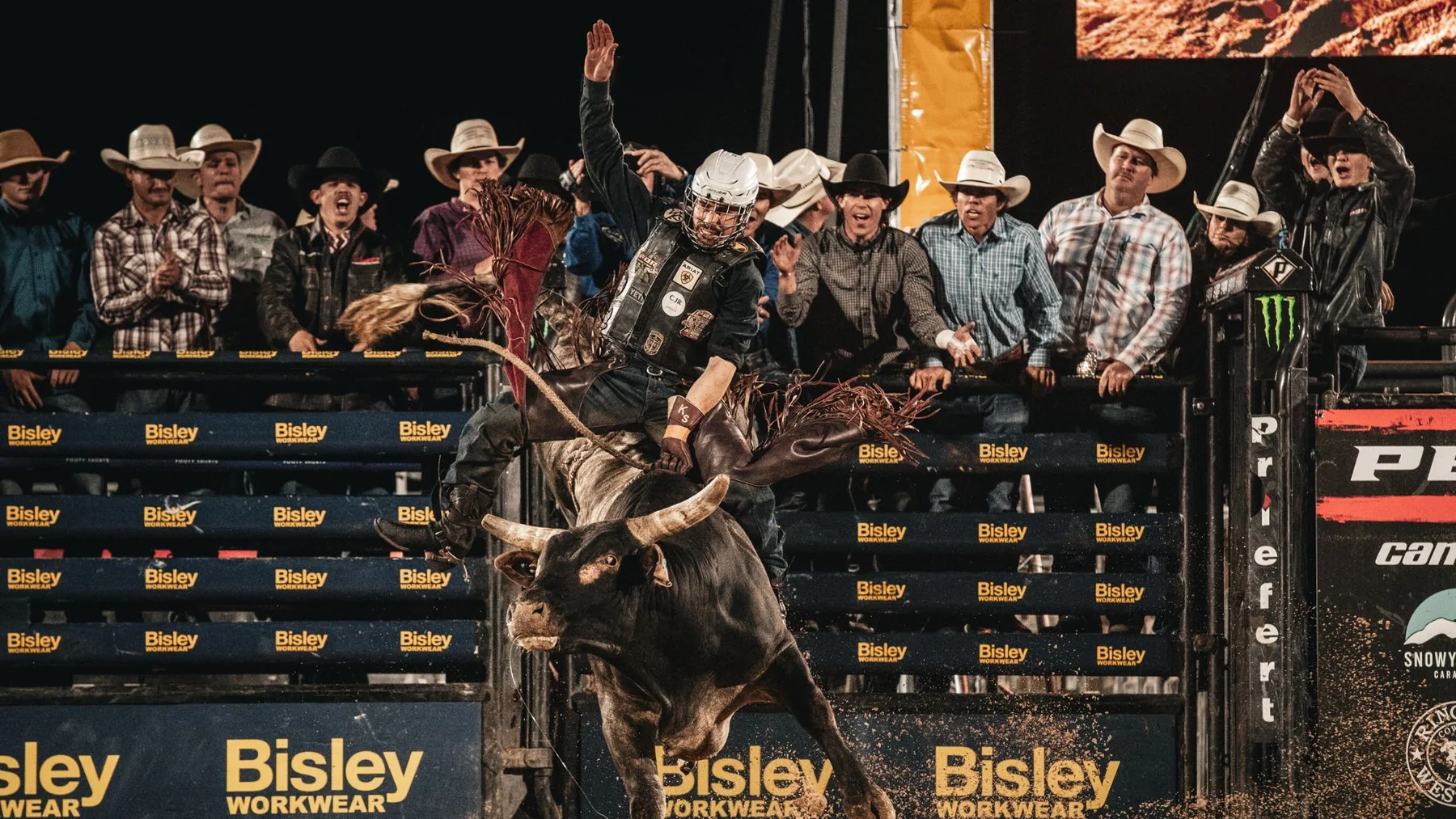
Kurt Shephard leads Zane Hall by 156.50 points in the 2026 PBR Australia national title race, with 2,785 to Hall's 2,628.50. This guide reflects the morning of October 31 in Queensland, before Clermont's scheduled evening competition. Hall cut the gap at Tamworth, and the current Clermont daysheet lists both contenders with no completed rides at the time checked.
The race needs those dates attached to it. September reports of Hall leading, Shephard's larger advantage after Mackay and the October 22 injury update describe different moments. None should be treated as the whole current picture. With the Grand Finals in Townsville on November 13-14, the questions are how the final regular-season event changes the gap, what Shephard's latest participation listing establishes, and how event scores translate into the championship points that decide the buckle.
Where the title race stands before Clermont
Kurt Shephard leads the official 2026 Australian national standings with 2,785 points. Zane Hall is second on 2,628.50, leaving a 156.50-point gap. This is the position checked on the morning of October 31 in Queensland, before that evening's Clermont Cattle & Coal event.
| Rank | Rider | National points | Behind leader |
|---|---|---|---|
| 1 | Kurt Shephard | 2,785 | 0 |
| 2 | Zane Hall | 2,628.50 | 156.50 |
| 3 | Keny Roger de Oliveira | 1,970 | 815 |
| 4 | Kelsey Pavlou | 1,512.50 | 1,272.50 |
The date matters as much as the subtraction. A headline describing Hall as the leader in September can be accurate about that weekend while giving the wrong impression of the race now. Equally, Shephard's 316-point cushion after Mackay was a previous position. It should not replace the smaller gap displayed in the national table before Clermont.
The official Clermont listing schedules the main event for 7:00 p.m. AEST on October 31 at EH Faint Memorial Showgrounds. At the 10:48 a.m. AEST check used here, that start was still ahead. These numbers consequently describe the race going into Clermont, rather than a result from a competition that had already finished.
For Hall, second place is a position from which to attack a measurable deficit. For Shephard, first place supplies a cushion but does not remove the need to account for what his challengers can still earn. The national title follows the season's championship points, so watching the movement between the two totals is more useful than simply counting which rider has the most recent event buckle.
The third and fourth rows also help put the duel in perspective. Hall is much closer to Shephard than Oliveira is, while Pavlou faces a substantially larger task again. That difference should shape expectations without turning a standings snapshot into a prediction. The remaining events still have to produce their own scores, placings and points awards.
Mackay explains why Shephard still sets the pace
The strongest recent case for Shephard is a specific performance rather than a general claim about experience. He won the Mackay Invitational with two successful rides from three attempts. A weekend containing a buckoff still became a victory because he reached the final round and delivered the score that the event required.
A winning ride after a failed attempt
PBR Australia's October 18 Mackay report records an 86.10-point opening ride on Aussie Gangster, a Round 2 buckoff and an 89.90-point championship-round ride on Last Post. Those two scores added to 176. Shephard selected Last Post with the fifth pick in the final-round draft, making the deciding matchup a choice as well as an athletic test.
That sequence matters to the title discussion. Completing every attempt would be ideal, but an aggregate event can still reward a rider who recovers after a failure and qualifies for another opportunity. Shephard did not need the story rewritten as a perfect weekend to make it impressive. His final ride supplied a large enough addition to the aggregate to win the competition he was actually riding.
It also cautions against treating any bull assignment as an automatic score. Earlier in the season, Last Post had beaten Shephard at Burnett Heads in 4.58 seconds. Mackay produced the opposite outcome. A previous buckoff is useful matchup history, but it cannot settle the rematch in advance; the bull's trip and the rider's response still have to happen.
The event score and the title points are different
Shephard's 176-point event aggregate produced 274 national championship points, according to the same report. Those figures measure different things. The aggregate totals his judged ride scores within Mackay. The championship award is what the weekend contributes to his season standing. Adding an 89.90-point ride directly to the national table would mix the two calculations.
The Mackay event preview set out two opening rounds followed by a championship round for the top twelve, with awards for round wins and the overall event. This creates several ways for a productive weekend to matter. Winning the aggregate and winning an individual round are related achievements, but they are not interchangeable labels.
For fans comparing Shephard with Hall, the practical question is how many national points each rider adds after the placings are decided. The most spectacular individual score helps explain the performance, while the awarded championship total explains its effect on the season. Keep both figures in view without assuming that one is a simple percentage or copy of the other.
Hall has already shown he can change the lead
Hall's case is stronger than simply being the nearest rider in the table. He has already put together a result that moved him to No. 1 this season. More recently, his Tamworth performance removed a substantial part of Shephard's advantage without Hall needing to win that event outright.
At Tamworth on October 24, Hall and Hayes Weight tied for second on an aggregate of 170.35, only 0.10 behind Kelsey Pavlou's winning total. The official event results award Hall 159.50 national points. With Shephard absent, that gain reduced the gap from 316 to 156.50, a change also stated in PBR Australia's October 25 recap.
That is the clearest recent example of how the chase works. Hall did not take the event buckle, yet his completed rides and high placing were still valuable in the national race. Following only the winner would miss nearly half of the earlier deficit disappearing. The title story includes the challenger's points award even when another cowboy wins the night.
A September win is evidence of form, not today's ranking
Hall's Coffs Harbour victory provides a separate reason to take the challenge seriously. PBR Australia's September 14 report records a two-for-two performance, an aggregate of 167.90 and his sixth win of the season. It also records his return to the top of the national standings. A lead described in that report belongs to that stage of the season.
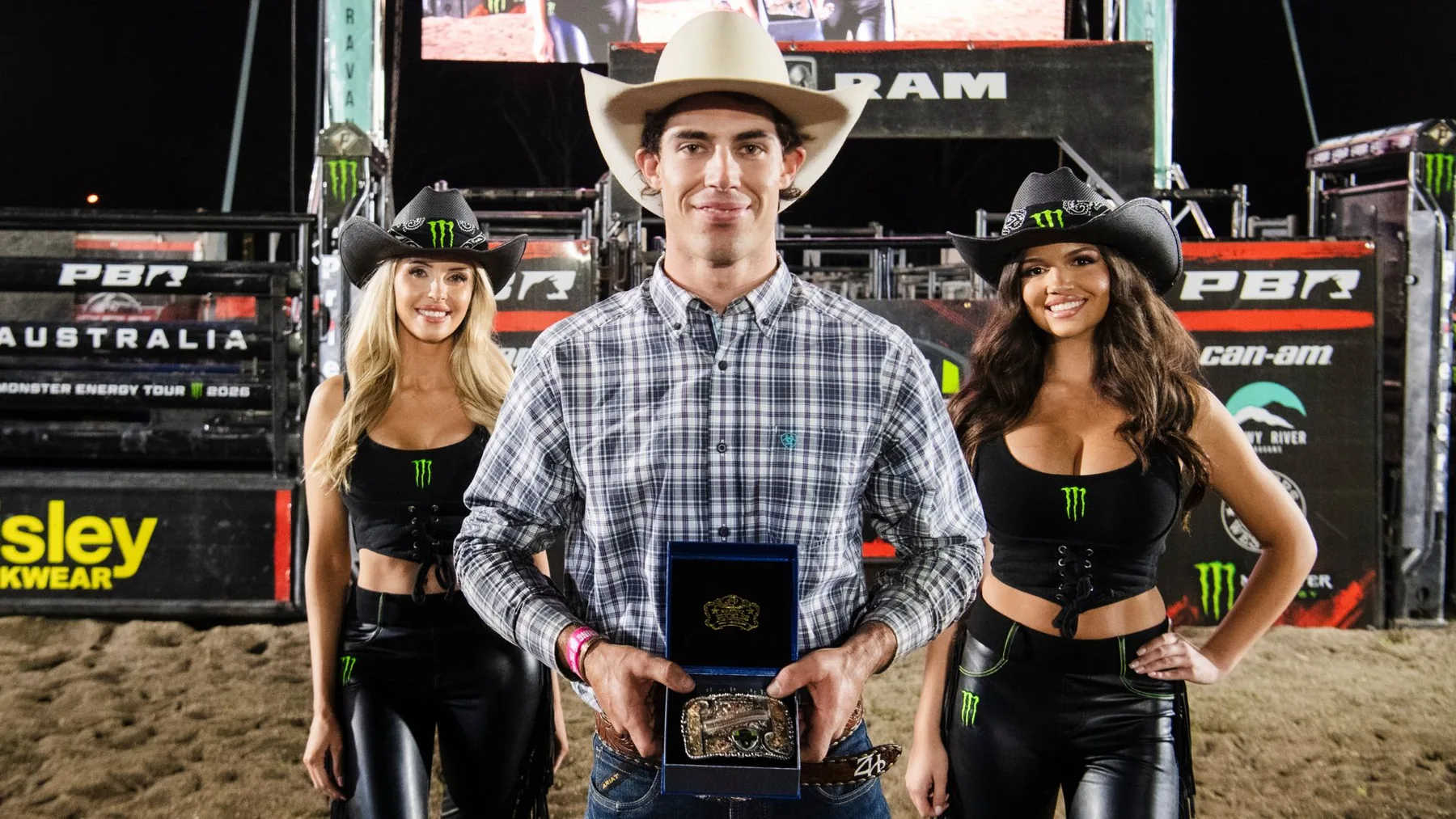
The subsequent Orange report described Shephard reclaiming No. 1. Reading those two dated reports together resolves the apparent contradiction between competing headlines. Both riders have led; the current table determines which one leads at the time of this preview.
The useful inference is that Hall has demonstrated the ability to finish an event cleanly and turn that into a major result. It is not that a past two-for-two night guarantees another one in Clermont or Townsville. Different bulls and new attempts make that an outcome to earn again. His recent results justify attention to the chase without making the remaining deficit disappear before he rides.
What the official injury update does and does not establish
Shephard's absence is a significant part of the race because Hall can add points while the leader is not riding. In its October 22 Tamworth preview, PBR Australia reported that Shephard had suffered multiple broken ribs at Mackay and would miss Tamworth. The article attributed to him a plan to rest and return for the Grand Finals.
That establishes an official account of the injury and the rider's intention at the time. A planned return is still different from a confirmed place in a future draw or an assessment of how he will perform. His Mackay win does not prove that he is ready for his next event, and a period out of competition does not establish that his title bid has ended.
The October 25 Tamworth recap subsequently confirmed his absence due to injury. Its competitive effect is measurable: Hall gained points while Shephard's total remained unchanged. There is no need to add a forecast about pain, strength or recovery speed to explain that movement. The championship arithmetic follows the points awarded, irrespective of how a future return might unfold.
The October 22 return plan also needs to be read alongside newer participation information. As the current Clermont daysheet discussed below shows, an earlier intention is not a permanent withdrawal announcement. Describe the injury report with its date, then distinguish a scheduled entry from a completed appearance. Neither an old absence nor a new listing provides an independent assessment of the rider's condition.
That leaves two distinct questions for supporters: how close Hall can get before the Grand Finals, and whether Shephard is confirmed to compete when they arrive. The first can be answered from event results and national points. The second needs current participation information. Keeping those questions separate makes the sporting consequences clear without guessing at the rider's medical condition.
How the remaining points can change the contest
PBR Australia's October 22 preview identified 280 points at each of the two remaining regular-season stops and 720 at the Grand Finals. Tamworth has now happened, leaving Clermont and Townsville in that published sequence. Those opportunities explain why a 156.50-point advantage cannot be treated as a settled national championship.
There is a qualification to using those totals as a shortcut. The earlier Mackay preview also referred to bonus points based on ride scores. The headline event totals provide useful scale, but they should not be turned into an improvised clinching formula that ignores bonuses. Use the actual points awards when results become available.
Read a points swing as a difference between riders
The calculation is the challenger's new points minus the leader's new points, applied to the existing gap. For example, if Hall added 200 while Shephard added none, the current deficit would become a 43.50-point Hall lead. If Hall added the same 200 while Shephard added 100, Shephard would instead remain ahead by 56.50. These are hypothetical awards showing the arithmetic, not forecasts of a particular finish.
This is why saying that Hall is less than an event win behind can be an incomplete description. It assumes something about Shephard's own points and about the award attached to the result. The Tamworth example worked cleanly because Shephard was absent and Hall's 159.50-point gain was confirmed. A future weekend needs its own result before the same subtraction can be performed.
Clermont can change who arrives at Townsville in front, but arriving in front is different from winning the title. The Grand Finals still offer substantial opportunities after the regular season ends. A rider who takes the lead at the last regular stop must still account for what the others can earn in November.
Keep the third contender in the calculation
Oliveira's 815-point deficit is a much steeper challenge than Hall's, but the remaining calendar is still relevant to it. As an illustration, a 280-point gain with no points added by Shephard would reduce that deficit to 535. It would leave a significant task in Townsville, rather than eliminate the need to ride well there. Oliveira would also have to deal with Hall's position, not only the leader's.
The distinction between a possible route and a likely outcome matters here. Having enough points available in principle does not mean a rider will collect them, and gaining on one opponent does not necessarily mean gaining on the other. Every serious title calculation needs the new totals of all riders still involved.
Pavlou's recent event victories are another reminder that the championship leaders will not ride in a private two-man contest. Another cowboy can win a round or the event and change the awards available to them. Follow Shephard and Hall closely, but keep the wider leaderboard open when assessing how either can reach the final buckle.
The dates and results that matter next
Clermont's October 31 main event is scheduled for 7:00 p.m. AEST, with gates at 5:00 p.m. The Grand Finals follow in Townsville on November 13-14. PBR Australia's current watch schedule lists both Townsville nights at 7:30 p.m. AEST. These Queensland times should not be confused with Tamworth's AEDT listings.
There is a further development beyond the October 22 injury report: the official Clermont daysheet, checked on October 31 before the scheduled start, lists both Shephard and Hall. Shephard is listed against I'm an Outlaw and Boogie & Coke; Hall against Silver Dollar and Dunno Yet. The page showed zero of 46 rides completed. This is a scheduled field, rather than evidence that either rider had already competed.
The listing changes how the older return plan should be read. It would be misleading to take the October 22 intention to rest until the Grand Finals as proof of a Clermont withdrawal when the current daysheet includes Shephard. Equally, a name on a draw is not a medical assessment or a guarantee of a completed ride. Follow the latest participation announcement and the actual results as competition begins.
Check the event result before updating the title story
After Clermont, compare the awarded national points and the updated standings before describing a new leader or a new gap. A preliminary list of bulls is not a points award. A single ride score also does not settle the aggregate or the championship contribution. The final event table supplies the missing link between the night's action and the title race.
Use the today's PBR events page to identify the competition you want to follow, and the results guide to locate completed scores. For streaming, confirm the specific event in the official Australian viewing listing; a Monster Energy Tour or Grand Finals pass should not be assumed to include a separate Touring Pro event without checking its coverage.
Until those rides are completed, the position remains a pre-Clermont lead of 156.50 for Shephard, a live challenge from Hall, and a bigger task for Oliveira. The next change must be earned in competition. Townsville is the destination, but the final regular-season result still matters to the numbers the contenders bring there.
Keep reading
Related PBR articles
Riders & Bulls
Jean Carlos Teodoro's 2026 PBR Teams Rookie Award: What He Won and Why It Matters
By PBR Schedule Editorial TeamRiders & Bulls
Jose Vitor Leme's 95th 90-Point Ride: The Record and the 2026 MVP Finish
By PBR Schedule Editorial TeamRiders & Bulls
Join the conversation
Comments
Comments are reviewed before publication. Keep the discussion useful, respectful and focused on bull riding.
Sign in with Google to comment
Your public comment shows your account name. Your email address is not displayed.
Commenting as
Loading comments…