Jean Carlos Teodoro's 2026 PBR Teams Rookie Award: What He Won and Why It Matters
Separate Teodoro's Teams rookie honor from Rizzo's UTB award, understand the official eligibility conditions and examine the rides that helped Texas.
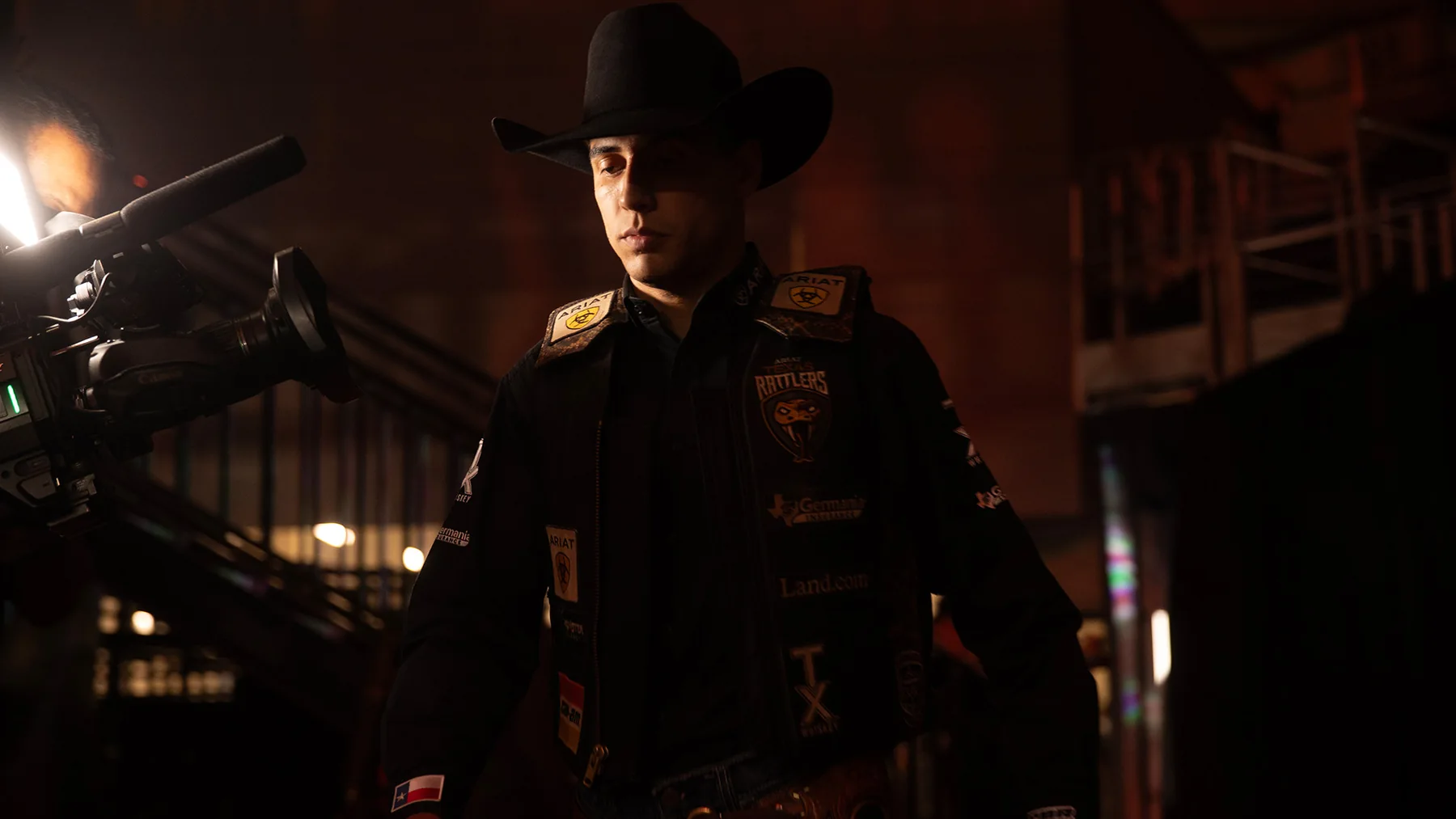
Jean Carlos Teodoro is the 2026 PBR Teams Rookie of the Year. The Texas Rattlers rider received the honor at the regular-season finale in Kansas City on October 25. His award belongs to the Teams competition, while Marco Rizzo's 2026 rookie honor belongs to Unleash The Beast.
That distinction explains the apparently competing headlines. Teodoro's season also raises more interesting questions than a winner's name alone: how limited previous Teams experience fits rookie eligibility, why two 90-point rides mattered in different game situations, and what his coaches were trying to improve. This guide follows the official award confirmation, current eligibility explanation and original game reports, with information checked October 31, 2026. The November team championship remains ahead.
What did Teodoro win at the regular-season finale?
Jean Carlos Teodoro of the Texas Rattlers was named the 2026 PBR Teams Rookie of the Year at the conclusion of the regular season in Kansas City on October 25. The league's original closing report confirmed the award alongside the final games and other regular-season honors. It is an individual achievement within the Teams competition.
The subsequent official feature published October 30 reported a $25,000 bonus. Publication date and award date should stay separate when sharing the story. An October 30 headline describes the honor settled at the earlier regular-season finale, rather than a new competition held that Friday.
One detail makes the result particularly useful for understanding season awards. Teodoro did not finish his final regular-season out with a score. The Kansas City results list a buckoff against Anvil at 3.50 seconds on Sunday, when Texas lost to Austin. His individual honor survived that unsuccessful attempt because the award described the season, rather than the winner of his last ride.
That does not make the failed out irrelevant. It belongs in any fair evaluation of the weekend, just as his best ride does. A fan looking only at the award might assume everything went right at the finale; a fan watching only Sunday might miss why the league recognized him. Keeping both pieces of evidence in view produces a much better picture of a developing rider.
The immediate significance for Texas is recognition of a contributor who could deliver valuable scores while still developing consistency. It does not convert a loss into a win, add a special bonus to the team's next game total or settle the postseason. The rookie trophy belongs to Teodoro; the Rattlers still have their own competitive work ahead. That distinction is especially helpful when short social clips place individual celebrations next to footage of a team walking out of the arena.
Why Teodoro and Marco Rizzo can both be 2026 rookies
Teams and Unleash The Beast have separate award races
Marco Rizzo also won a 2026 rookie title, in Unleash The Beast. PBR's May account of Rizzo's award describes that individual-season race concluding at the World Finals in Fort Worth. Teodoro's October award concerns the later PBR Teams regular season. The same year appears on both honors because two competitions completed their own award races.
That makes the competition name essential. A search for a general PBR rookie table may lead to the individual tour when the question concerns Teams. Likewise, a caption that shortens either award to just “Rookie of the Year” can leave readers with an apparent contradiction. Add “Teams” to Teodoro's title and “Unleash The Beast” to Rizzo's, and the two results fit their proper calendars.
Previous experience does not settle an award's eligibility
The official 2026 Teams rulebook rundown gives the relevant conditions. The award goes to the eligible rookie with the highest aggregate ride score during the regular season, with a minimum of 20 outs. Eligibility includes riders who have never competed in Teams and riders whose previous Teams participation amounted to fewer than 10 total outs.
Those are two different numerical tests. The earlier-career limit determines who can enter the rookie category. The current regular-season minimum determines whether a rider has enough opportunities to qualify for the award. An out is an attempt, so neither threshold means the rider must complete that many eight-second rides.
Consider the difference when reading a result sheet: a rider could take 20 outs and qualify on only some of them. Reaching the participation minimum would not itself give him 20 scoring rides. He would still need enough aggregate from his actual qualifications to lead the eligible category. Conversely, a few outstanding scores do not erase the minimum-out condition. Keeping participation and production separate makes the published rule much easier to apply correctly.
Teodoro's earlier connection with Arizona therefore does not itself disprove rookie eligibility. The official October feature acknowledges that experience while recognizing him as the Teams winner. It does not give the exact earlier out count, and there is no reason to invent one. The published rule explains how limited previous participation can coexist with the rookie designation.
For readers comparing awards, check the season, competition and metric before comparing names. Age, a new uniform or a first appearance in a particular city cannot substitute for those conditions. Our Teams explainer supplies the broader format. Here, the decisive distinction is that the rookie award uses an eligible group and season aggregate, rather than simply selecting the youngest rider or the highest single score.
The two 90-point rides that show his value to Texas
Yosemite Sam supplied an opening-weekend difference
The July 12 game report gives the first example. At Canvas Stadium in Fort Collins, Teodoro scored 90.40 on Yosemite Sam in the fourth frame as Texas beat Austin 265.55–257.45. Both teams qualified on three of five bulls. Texas won by 8.10 points, so the quality of its completed rides mattered when the number of qualifications was equal.
Teodoro's contribution arrived alongside scores from Brady Fielder and Daniel Keeping. That is the useful team perspective: his outstanding ride formed part of a three-score total. The performance was decisive without erasing the work needed from the rest of the lineup. Texas left the opening weekend 2–0, but that early table position was a snapshot of July, rather than its final regular-season record.
Wicked Solo turned the final weekend into a breakthrough
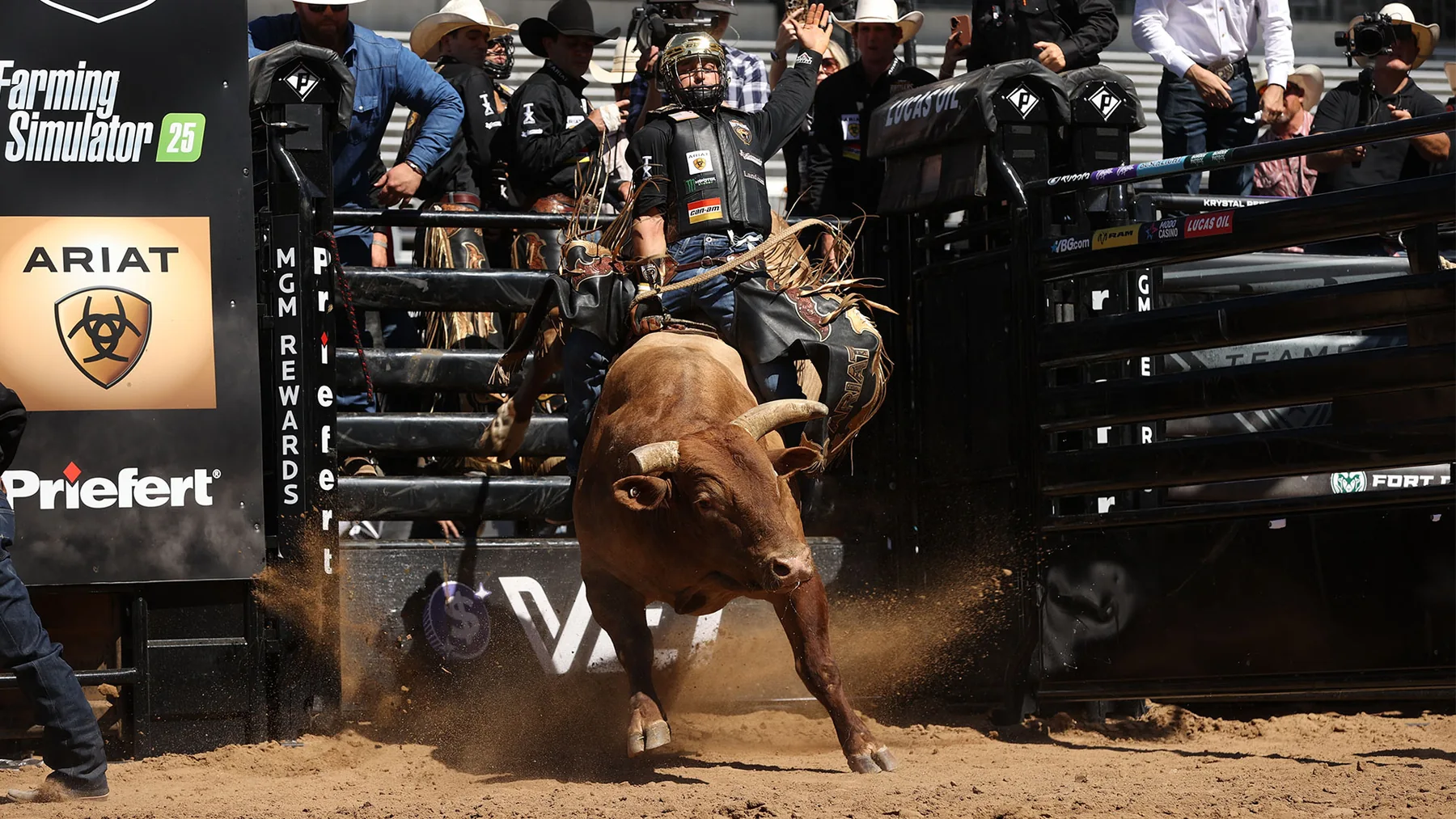
On October 24, the original Kansas City report lists Teodoro taking a re-ride after Tankums and scoring 91.05 on Wicked Solo. The official game results distinguish the initial re-ride entry from the successful replacement. The 91.05 is the score contributed to Texas' total; it should not be added to a second Teodoro score from Tankums.
Texas defeated Arizona 268.40–178.25, completing three rides to the Ridge Riders' two. Qynn Andersen supplied 90 on Huey and João Ricardo Vieira added 87.35 on Oreo Blast. Teodoro's score completed the winning total and gave Texas an additional successful ride. Here the important contrast with July is visible: the earlier game had equal qualification counts, whereas Kansas City's result also reflected an extra qualification.
The replacement entry also deserves attention when a broadcast moves quickly between riders. A re-ride is an officially granted opportunity under the rules, rather than a second try automatically offered after every buckoff. The recorded Tankums entry establishes that Teodoro received one here; the game sheet does not require viewers to invent a reason it was granted. Following the final accepted score is the practical way to reconcile the replay with the team total.
The difference between 90.40 and 91.05 is just 0.65 points, but the two performances met different game situations months apart. That is why the replay alone cannot explain their full value. Read the opponent's score, the other qualifications and the re-ride notation with the highlight. Those details show what Texas received from its rookie, while keeping a single outstanding performance in proportion to the five-rider contest.
Why the free arm became a coaching issue
The official rookie feature describes a costly slap against Wicked Solo in Anaheim and Cody Lambert's emphasis on body control, focus and posture. That provides a concrete reason to discuss the free arm. A rider can appear close to completing a difficult trip and still lose the score through disqualification.
Under PBR's published rules introduction, a qualified ride requires eight seconds without disqualification. Contact with the bull or the rider using the free hand before eight seconds results in no score. A slap on the bull is therefore a rules issue with a direct effect on the scoreboard, rather than a small style deduction from an otherwise completed ride.
This matters when watching a replay. Staying physically on the bull and earning a legal qualification are related but separate requirements. A dramatic final second cannot restore a score already lost to disqualifying contact. Fans frustrated by a no-score should first look for the reason recorded in the result, then examine footage of the relevant moment. A still photograph cannot establish whether the complete out satisfied every condition.
The judging total follows qualification. Up to 50 points come from the rider and 50 from the bull; the rider's control contributes to how the performance is assessed. Large arm movement is not an automatic route to a higher total. The useful viewing question is whether the rider maintains control while meeting the bull's challenge, rather than whether the movement looks unusually energetic.
That is also why the coaching story adds more than colorful locker-room detail. A correction that helps preserve a legal qualification can protect an entire score for the team and the season aggregate. Its value can be considerable even on a ride that finishes below 90. Our 2026 scoring guide explains the judging detail; Teodoro's season illustrates why the basic qualification conditions remain central.
His later successful meeting with Wicked Solo is evidence of a different result on a different day. It does not prove that the bull repeated precisely the same trip, or that one visible adjustment alone caused the improvement. The result supports appreciation of his response without requiring a claim about every technical detail hidden from a television angle.
How to read a rookie season beyond its best ride
The most revealing assessment uses more than the two standout replays. Teodoro's season included a prolonged run without a qualification, a successful response on home dirt and an unsuccessful final out after his best score in Kansas City. These game results show both his scoring ceiling and the challenge of delivering it repeatedly.
Separate peak quality from repeatable qualification
His two 90-point rides demonstrate a high scoring ceiling. Repeatability asks a different question: how often can an opportunity produce a legal, successful ride? A fair assessment keeps both dimensions in view. The highest score alone would exaggerate consistency; a compilation of buckoffs would hide the quality he contributed when he completed the trip. Neither selection tells the whole story.
An average of successful rides also needs careful interpretation whenever fans encounter one. It includes only the rides that qualified, whereas unsuccessful attempts still belong in an evaluation of reliability. Similarly, even a verified season percentage would describe a past sample rather than predict a fixed sequence for the next four attempts. The individual draw and the way the rider responds remain central to the next result.
A less spectacular score offers another revealing example. In the October 4 Rattler Days report, Teodoro ended a 10-out buckoff streak by scoring 88.10 on Corriente. Texas defeated Arizona 267.40–87.15. His score did not reach the 90-point highlight threshold, but it added a third consecutive qualification to the Rattlers' game.
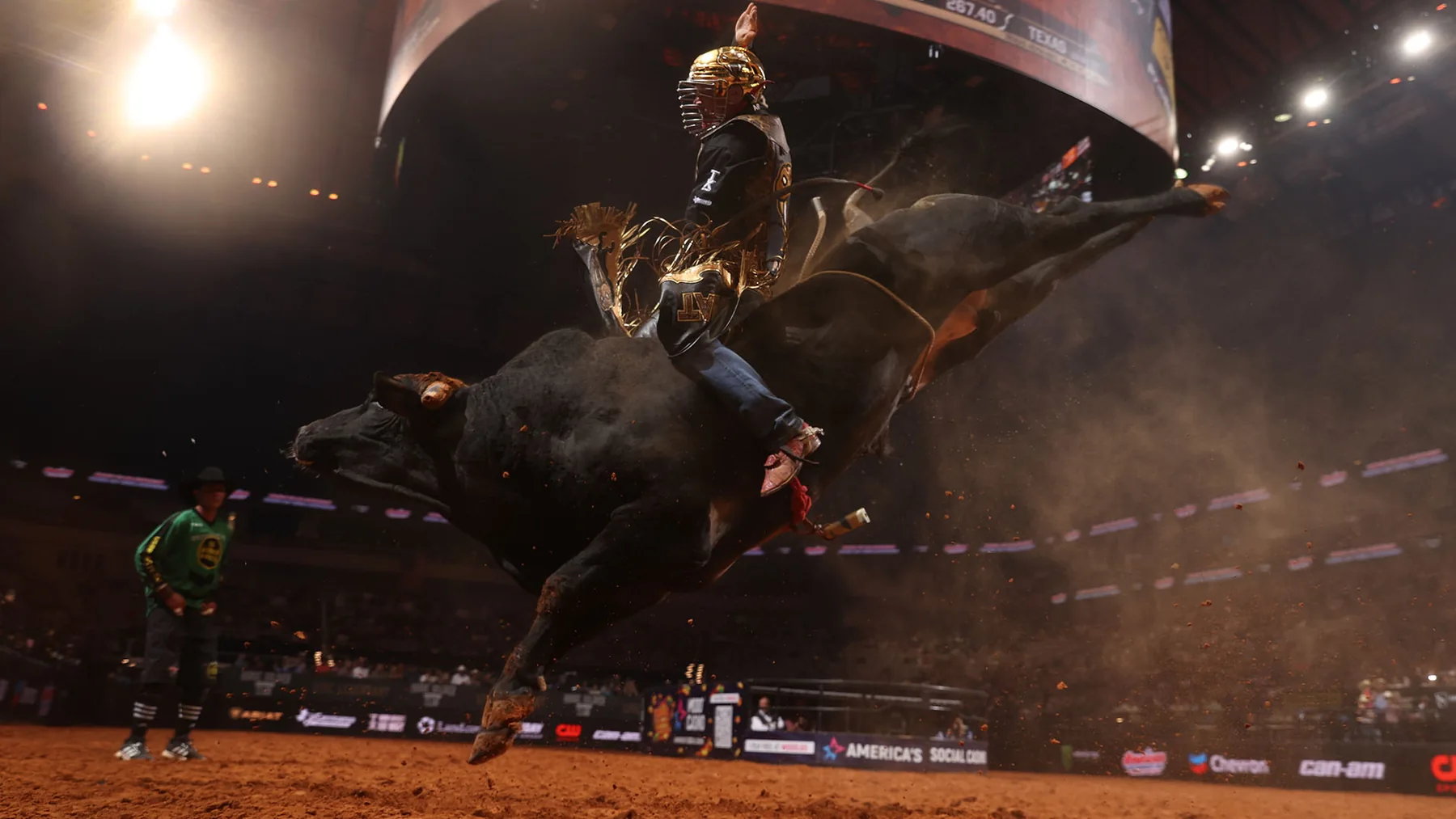
For a developing rider, an ordinary-looking qualification can therefore be a significant competitive contribution. Ending a run without scores gives the team something concrete to add, rather than merely a more encouraging replay. For viewers, it is a reminder to watch the less viral outs as carefully as the 90s.
The sequence also gives fans a better set of questions for future events. Is he completing a larger share of the opportunities he receives? Do successful rides arrive across different bulls and game situations? Does his contribution help the team when the opponent already has scores on the board? Those observations can reveal progress without requiring a new career high every weekend, and they leave room for development after a season that has already earned recognition.
The rookie title recognizes Teodoro within the award's eligible group. It does not mean he led every league statistic or won the overall MVP. His next useful step is visible in the contrast between his best scores and his unsuccessful opportunities: provide more legal qualifications while retaining the quality that made those two exceptional rides so valuable.
What the award changes for the Rattlers in Las Vegas
Texas finished fifth in the regular-season standings at 17–18. The 2026 Teams Championship is scheduled for November 6–8 at T-Mobile Arena in Las Vegas. The top three seeds receive a bye into Day 2; the fifth-seeded Rattlers must begin their tournament without that advantage.
Teodoro's award changes the attention on him. Viewers now have a named rookie winner to follow, with two very clear examples of the quality he can produce. It does not award Texas extra points in the bracket or guarantee him a successful out. The league has already recognized his regular season, while the team's postseason result remains undecided as of October 31.
A useful watchlist begins with the announced lineup and availability. Then look at the actual bull assigned, whether the ride earns a legal qualification and what the rest of the Rattlers contribute. Coaching decisions and game circumstances can change the role a rider fills. A season award does not replace those practical details or automatically lock a particular rider into every future lineup.
The score to value may be another 90, but it may also be an 88 that keeps Texas in a close game. The October Corriente ride is a good reminder of that. For a team trying to advance, an additional successful qualification can be more useful than an attempt to recreate a highlight that ends without a score. His strongest contributions so far show how quality and completion can work together.
Fans planning to watch or travel can use our Las Vegas guide, check today's events and follow the results page. Keep the venues straight when sharing footage: Kansas City's T-Mobile Center hosted the regular-season finale; Las Vegas' T-Mobile Arena hosts the championship. Teodoro reaches that next stage with an award already earned and a straightforward competitive task still ahead: turn the next opportunity into a score that helps Texas advance.
Keep reading
Related PBR articles
Riders & Bulls
PBR Australia 2026 Title Race: Shephard, Hall and the Run to Townsville
By PBR Schedule Editorial TeamRiders & Bulls
Jose Vitor Leme's 95th 90-Point Ride: The Record and the 2026 MVP Finish
By PBR Schedule Editorial TeamRiders & Bulls
Join the conversation
Comments
Comments are reviewed before publication. Keep the discussion useful, respectful and focused on bull riding.
Sign in with Google to comment
Your public comment shows your account name. Your email address is not displayed.
Commenting as
Loading comments…