10 Greatest PBR Bull Riders of All Time: Records and Ranking Criteria
An editorial top 10 grounded in individual championships, elite rides, longevity and World Finals records, with clear scope and a separate place for rodeo legends.
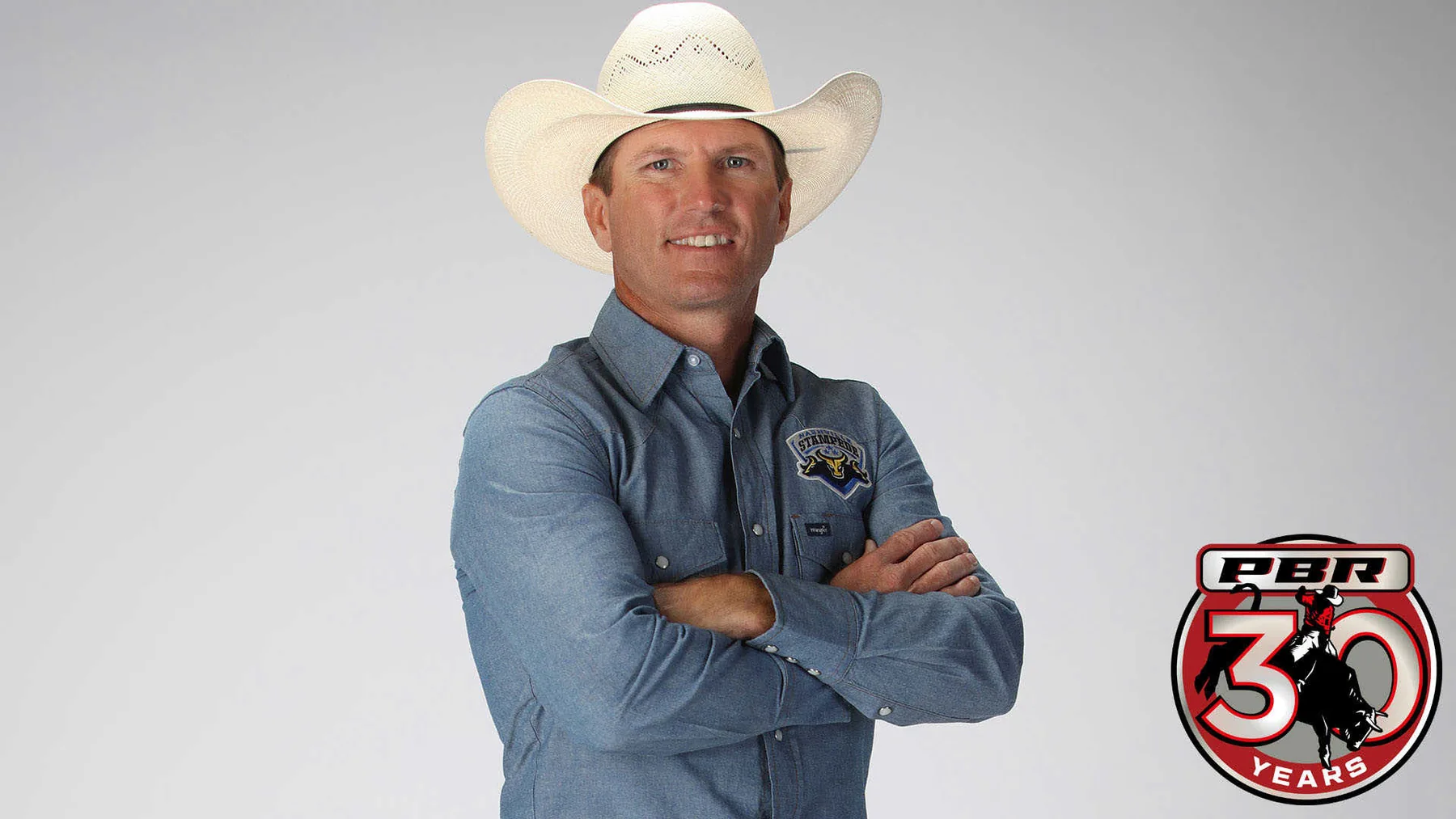
Jose Vitor Leme, Adriano Moraes, Silvano Alves and J.B. Mauney lead this editorial selection of the 10 greatest PBR bull riders of all time. Justin McBride, Chris Shivers, Jess Lockwood, Guilherme Marchi, Mike Lee and Robson Palermo complete the list. The order favors individual PBR championships, then weighs peak performance, longevity and World Finals achievements.
No single statistic settles this debate. Three gold buckles, a career full of qualified rides and one extraordinary confrontation with a famous bull represent different kinds of greatness. This ranking, checked against records and historical reporting on October 15, 2026, makes its priorities clear so you can agree, disagree and know why. It also keeps PBR achievements separate from the wider rodeo history that produced legends such as Lane Frost.
What earns a place among the greatest PBR riders?
Individual PBR world titles carry the greatest weight here because they reward a championship campaign against the elite field. Repeated premier-series success, unusually high scoring, a large body of qualified rides and major World Finals performances then help separate riders with different careers. Popularity and prize money inform the conversation, but neither determines the order.
| Editorial rank | Rider | Leading argument |
|---|---|---|
| 1 | Jose Vitor Leme | Three individual world titles and a remarkable competitive peak |
| 2 | Adriano Moraes | Three titles spanning the sport's first era |
| 3 | Silvano Alves | Three titles built on championship consistency |
| 4 | J.B. Mauney | Two titles and defining elite-bull matchups |
| 5 | Justin McBride | Two titles and a dominant run of event wins |
| 6 | Chris Shivers | Two titles and sustained high-scoring excellence |
| 7 | Jess Lockwood | Two titles achieved exceptionally young |
| 8 | Guilherme Marchi | A championship and extraordinary career volume |
| 9 | Mike Lee | A championship backed by a long elite career |
| 10 | Robson Palermo | A distinctive World Finals event record |
That is an editorial judgment, rather than an official standings table. PBR's 2023 Top 30 project placed Justin McBride first. A separate PBR-hosted 2025 countdown was explicitly its author's personal selection. Those projects illustrate how different priorities can produce different answers. A fan who values the best single-season prime above championship count can reasonably move McBride higher than this list does.
Statistical scope matters just as much as opinion. A premier-series qualified-ride total is not the same as a rider's total across every tour. A World Finals event victory is not automatically the season's World Championship. Historical names for the premier circuit also changed; a rider's Bud Light Cup or Built Ford Tough achievements still belong in the same broad elite individual history.
Finally, a ride score measures a partnership under pressure: the bull contributes difficulty and athleticism, while the rider contributes control. A high total is evidence of an exceptional matchup, not a pure isolated measure of rider talent. The strongest historical argument uses several kinds of evidence together, then explains what makes each athlete's career distinctive.
Three world titles set the highest benchmark
Leme, Moraes and Alves each won three individual PBR World Championships. Their equal title count creates the top tier in this selection, but their careers make different arguments. One produced a spectacular modern peak, another defined the original championship standard, and the third built a run around repeatedly supplying qualified scores.
1. Jose Vitor Leme: the peak and the comeback
Leme won the 2020, 2021 and 2025 titles. His 2021 campaign remains the clearest reason to put him first: 24 rides of at least 90 points, eight event wins and the extraordinary 98.75-point ride aboard Woopaa. That matchup was a display of both elite bull power and rider control. It gave fans a memorable single out within a season that had already demonstrated sustained dominance.
The third championship strengthened a different part of his case. He entered the 2025 World Finals ranked 18th after an injury-disrupted campaign and climbed to the title. PBR's historical account connects those achievements. In our judgment, the combination of an overwhelming prime and a championship recovery puts him ahead of the other three-time champions; that judgment does not diminish their longer or earlier contributions.
2. Adriano Moraes: the original standard
Moraes won the inaugural 1994 PBR World Championship, then won again in 2001 and 2006. The spread of those titles is central to his greatness. He remained capable of winning the season's largest individual honor while the organization, field and competitive environment evolved around him. His third buckle made him the first rider to reach that milestone.
His importance also extends beyond the title ledger. The National Cowboy Museum biography describes his role opening a path for Brazilian riders and mentoring athletes making the transition to the United States. That is not an extra championship in this ranking, but it gives the record its historical meaning. Moraes helped establish that PBR's highest stage could belong to riders from beyond the American rodeo circuit.
3. Silvano Alves: championship consistency
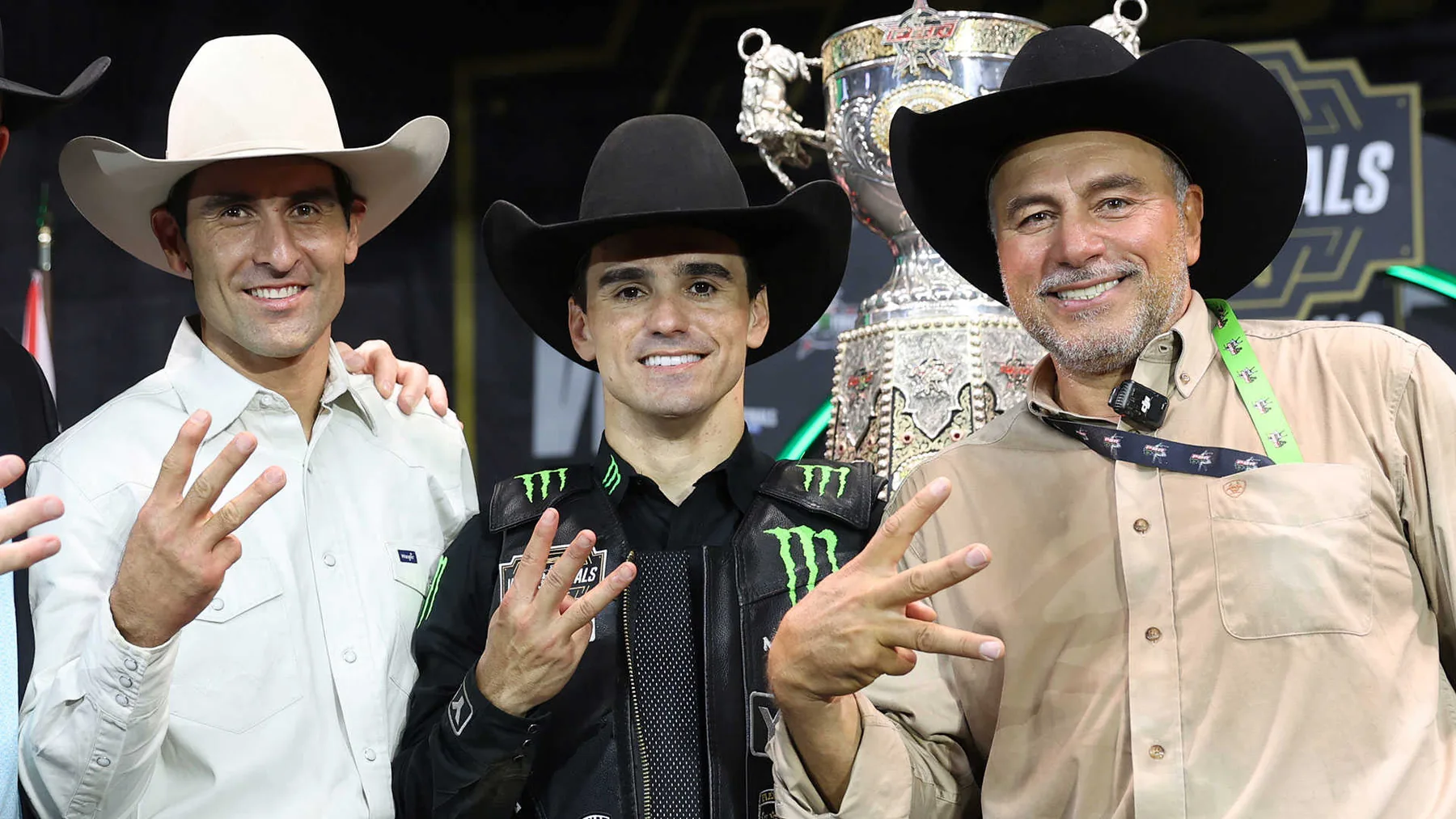
Alves won in 2011, 2012 and 2014, becoming the first rider to take back-to-back PBR world titles. His famous 24-ride premier-series streak extended from 2014 into 2015. It represents a kind of excellence that a highlight-only ranking can overlook: repeatedly meeting the qualification standard while the draw keeps changing.
Consistency did not mean avoiding a demanding bull. At the 2014 Finals, Alves rode Asteroid for 87.25 points, ending the bull's streak of 30 consecutive buckoffs. The record-streak account also explains the re-ride decisions inside that run. His case is strongest when a fan considers qualification, championship strategy and pressure together, rather than assuming the most spectacular score always makes the greatest champion.
Four two-time champions with different claims
Two world titles establish that a rider's championship success was repeatable. They do not make four careers identical. Mauney's defining matchups, McBride's victories, Shivers' scoring and Lockwood's early championships give this group several distinct routes into an all-time debate.
4. J.B. Mauney: elite bulls and championship nerve
Mauney won the 2013 and 2015 World Championships, but the out many fans remember first happened in Tulsa. On August 17, 2013, he rode Bushwacker for 95.25 points and ended the bull's streak of 42 consecutive premier-series buckoffs. The number describes the scale of the challenge; the video shows why making the buzzer against that bull became a landmark.
That ride alone would not justify a top-four place. The two championship campaigns give it a larger competitive frame. Mauney's case combines the ability to beat exceptional stock with the capacity to turn success into season-defining results. We place the three-time champions ahead because of our title weighting, while recognizing that a fan who places famous difficult-bull encounters first may rank him higher.
5. Justin McBride: wins and a defining prime
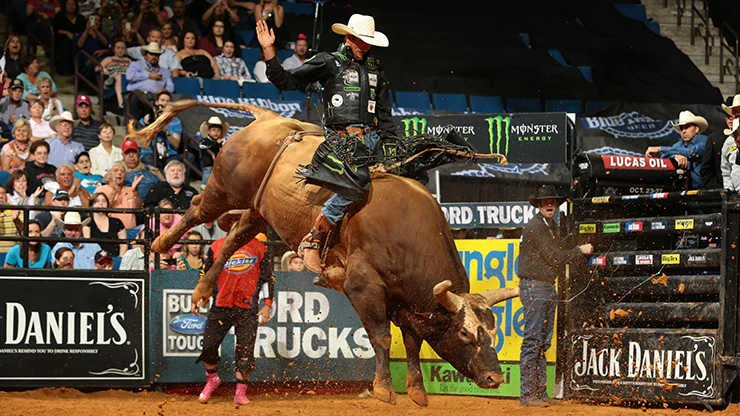
McBride won the 2005 and 2007 titles and accumulated 32 premier-series event victories. Eight came in his 2007 championship season. Winning that often against the elite field makes a strong argument for his prime: it combines successful qualification with the scores and round execution needed to beat the rest of the draw.
His position here is lower than in PBR's 2023 Top 30, which named him first. That difference comes from our heavier emphasis on three world titles at the top of the list. The McBride feature also captures the difficulty of comparing generations. For a fan building a list around the strongest sustained winning prime, he is an obvious candidate to move upward.
6. Chris Shivers: the 90-point standard
Shivers won world titles in 2000 and 2003 and recorded 94 rides scoring at least 90 points. That career figure gives his style a statistical foundation. His two 96.5-point rides, on Jim Jam and Dillinger, belong to the period when that score stood at the summit of PBR's high-mark history. They should be appreciated in that era rather than described as today's highest score.
PBR's Shivers retrospective makes high scoring central to his legacy. For viewers, the useful distinction is between the bull's available difficulty and how effectively a rider matches it. A career full of large scores is more persuasive than one spectacular out, especially when it is supported by two championships.
7. Jess Lockwood: championships at a young age
Lockwood became PBR World Champion at 20 in 2017 and won again at 22 in 2019. Those ages describe achievement, not potential projected into the future. His second title came with a 5-for-6 World Finals performance containing four 90-point rides, so youth was accompanied by substantial competitive evidence.
The 2019 title report documents that pressure-filled finish. Lockwood earns this place for what he won, rather than for an imagined uninterrupted career. That distinction protects an all-time ranking from rewarding hypothetical titles and gives his actual championship performances the attention they deserve.
Longevity belongs in the argument
A career can be great because its best years were overwhelming, or because high-level success continued across an extraordinary number of outs. Marchi and Lee make the second argument particularly well. Their place here also depends on a championship, so longevity is supporting evidence rather than a substitute for winning at the highest level.
8. Guilherme Marchi: 600 premier-series rides
Marchi reached 600 qualified rides on the elite series in 2017 and finished his premier career with 635. The Hall of Fame record identifies the scale clearly: these are qualified elite-series rides, not every practice out or appearance across all levels. Keeping that definition matters when comparing him with athletes whose biographies count a wider set of competitions.
He also supplied a tremendous championship season. PBR's retirement-era account records a 74-for-102, 72.55% riding performance in 2008. That is quality within volume: a large number of attempts accompanied by a high qualification rate. His title prevents the career-total argument from becoming merely a celebration of endurance.
The ninth-place-versus-eighth-place distinction below is close, while the gap to riders with multiple individual championships reflects our stated priorities. A fan emphasizing sustained qualification could move Marchi higher. Watching his historical rides is a useful reminder that staying centered and making the whistle repeatedly can be as impressive as the isolated giant score that dominates a highlight reel.
9. Mike Lee: a title and a long body of work
Lee won both the 2004 World Championship and that year's World Finals event. Those are two different achievements secured in the same campaign. The official event results show a 621.75 aggregate and a 93.75-point final-round score; the championship report identifies the bull in that final ride as Mudslinger.
His broader career crossed the 500-qualified-ride threshold on the premier circuit, another reason he belongs in a serious discussion. A long career creates opportunities, but it also exposes an athlete to many changing bulls and repeated demands on timing and balance. Lee's record combines that accumulation with proof that he could close a championship race.
Our ordering rewards Marchi's larger elite ride total while keeping Lee's dual 2004 achievement in view. Neither career should be reduced to one number. The point of placing them together is to show fans what longevity contributes to a ranking, alongside the title count and competitive peak that put the earlier names higher.
10. Robson Palermo: a World Finals specialist
Palermo is the exception to the individual-world-title emphasis that shapes the rest of this list. He won the World Finals event in 2008, 2011 and 2012, becoming the first three-time winner of that event and the first to win it in consecutive seasons. He did not win the individual PBR World Championship.
Those statements can coexist because the Finals event and the season title measure different achievements. Winning an event rewards performance within that competition; a World Championship depends on the season's championship structure and accumulated position. PBR's Palermo assessment makes the distinction explicit. His three Finals wins give him an unusually strong record at the largest individual season-ending occasion, even without the season buckle.
We place him tenth because repeatedly winning that event deserves a place beside title-winning longevity. It is a deliberate exception, not a claim that championships suddenly stop mattering. A narrower list restricted to individual World Champions would necessarily exclude him and could include another deserving champion instead.
Palermo's record also helps fans ask a better question when watching the Finals. Is the rider competing to win this event, to finish a championship campaign, or to accomplish both? Those goals may align, but they are not synonyms. Keeping them separate gives Palermo credit for what he achieved and avoids awarding him a title he never won. It also leaves room to appreciate the event specialists whose great weeks become part of the sport's history.
Where Lane Frost and other rodeo legends fit
Lane Frost belongs in the wider history of great bull riders, but a list based on PBR competition cannot credit him with PBR results. The ProRodeo Hall of Fame identifies him as the 1987 world bull riding champion and records his death on July 30, 1989. PBR was founded in 1992. The timeline is decisive: he could not have competed in the organization.
This is a boundary of the question, rather than a judgment against his legacy. The same care applies to other riders whose reputations include PRCA championships, all-around success, founding contributions or influential careers before PBR's premier series. Those achievements matter, but they should retain their correct names. A broader “best bull riders ever” list may reasonably look different from this PBR individual selection.
Ten places also leave deserving PBR names outside the table. Fans can make serious cases for Tuff Hedeman, Troy Dunn, Jim Sharp, Ty Murray and others depending on how they value peak ability, influence and competition across organizations. A useful disagreement identifies that priority. It does not require changing somebody's documented title count or turning admiration into an invented record.
Use the list to watch the sport more closely
The most rewarding way to use an all-time list is to connect it to the next ride you watch. Ask whether the rider is repeatedly qualifying, producing exceptional scores on difficult stock, or turning one weekend into a championship opportunity. Marchi's volume, Shivers' scoring and Palermo's Finals performances show why those questions reveal different strengths.
Some of these historical careers also remain visible through coaching. Nashville's current team information identifies McBride and Alves as its coaches. That gives a fan another reason to understand their competitive backgrounds when following the Teams format. Their earlier achievements do not become new individual titles when a team succeeds, but their experience becomes part of the modern competition's story.
Use the TV schedule to choose an event and the results to follow its outcome. Compare the attempt with the bull's difficulty and the competition's objective. That makes a historical ranking useful beyond debate: the names provide examples of what high-level bull riding can accomplish, while the current riders supply the next chapter on the dirt.
Keep reading
Related PBR articles
Riders & Bulls
PBR Australia 2026 Title Race: Shephard, Hall and the Run to Townsville
By PBR Schedule Editorial TeamRiders & Bulls
Jean Carlos Teodoro's 2026 PBR Teams Rookie Award: What He Won and Why It Matters
By PBR Schedule Editorial TeamRiders & Bulls
Join the conversation
Comments
Comments are reviewed before publication. Keep the discussion useful, respectful and focused on bull riding.
Sign in with Google to comment
Your public comment shows your account name. Your email address is not displayed.
Commenting as
Loading comments…