How Much Do PBR Riders Make? Prize Money, Team Pay and Sponsorships
Understand how PBR rider earnings combine event prizes, Teams agreements and sponsorship, what public money lists exclude, and the announced 2026–2027 bonuses.

PBR riders do not all receive one standard public salary. Their income can combine competition winnings, a PBR Teams agreement, sponsorship and other compensation. The official prize-money leaderboard shows an important part of that picture, but it does not reveal every rider's complete income or the money left after expenses.
That distinction matters when you see a winner collecting a large check, a star announcing a multiyear contract, or a familiar name well down an annual money list. Each headline describes a different kind of payment. This guide explains how to read those numbers, what has been announced for the 2026–2027 competition cycle, and why claims about an average monthly bull-riding salary often promise more certainty than the public evidence allows. Figures and announcements below were checked on October 14–15, 2026; an ongoing season's totals can change.
PBR rider salary is not one public number
The useful starting point is the payment, rather than the athlete's job title. A prize is earned through a competition's payout rules. A team agreement is a contract with its own terms. A sponsor pays for an agreed commercial relationship. Those streams can coexist, and a rider's success on the dirt does not tell you the value or timing of every agreement away from it.
This is why an internet answer such as “PBR riders make a certain amount per year” needs close examination. Does it describe a particular athlete, a completed season, a group of full-time competitors, or everybody who entered a PBR event? A champion and a rider trying to build enough results to reach the premier tour are not interchangeable examples. Nor does dividing one organization's total compensation by an estimated head count produce a meaningful wage for either athlete.
What the official earnings table actually includes
PBR's annual rider earnings table records appearance and prize money from sanctioned and partner events. Its explanation explicitly excludes sponsorship, special-event compensation and PBR Teams rider endorsement-agreement compensation. A rider's listed total therefore cannot be presented as his complete annual income.
| Payment | What it tells a fan | What it does not establish |
|---|---|---|
| Competition winnings | Money earned under the event's payout structure | A guaranteed wage for every future appearance |
| Team agreement | A commercial commitment if its terms are announced | Every rider's salary or a universal pay scale |
| Personal sponsorship | A relationship between athlete and brand | A publicly disclosed cash amount |
| Career money | Accumulated earnings across recorded competition | Net worth, annual salary or take-home pay |
The annual table also follows a competition window around the World Finals, rather than automatically using January through December. On the check date, the default display covered May 18, 2026 through May 17, 2027. An October snapshot of that window is an unfinished total. Calling it somebody's full 2026 salary would misstate both the calendar and the scope.
Keep these distinctions beside the event results. A result explains what happened at one competition; the money table explains payments within its stated coverage. Together they give a fan much more useful information than a dollar figure stripped of its date and definition.
How event prize money and season bonuses work
A qualified ride is not a fixed paycheck
Eight seconds produces a score only when the ride satisfies the qualification rules. That score includes the bull's performance as well as the rider's. It then has meaning within a round, an event aggregate or a team game. It is not a universal invoice worth the same amount every time the buzzer sounds.
A rider can win a round without winning the whole event. Another can build a better event total through several qualified rides. A special elimination contest can create a different path again. Before asking how much a rider earned “per ride,” identify which competition he entered and whether the reported check combines multiple awards. Dividing a winner's final prize by his successful rides creates an arithmetic average; it does not describe a rate available to every rider in the draw.
A useful historical example comes from PBR's July 2024 payout report. Ezekiel Mitchell earned $61,000 at Last Cowboy Standing in Cheyenne, while Luciano De Castro collected $74,562 across Big Sky and Cheyenne. Those are documented outcomes from particular events, not current entry guarantees. The example also shows why calling every non-premier event a small payday can mislead: format and purse matter alongside tour label.
The new 2026–2027 annual bonuses
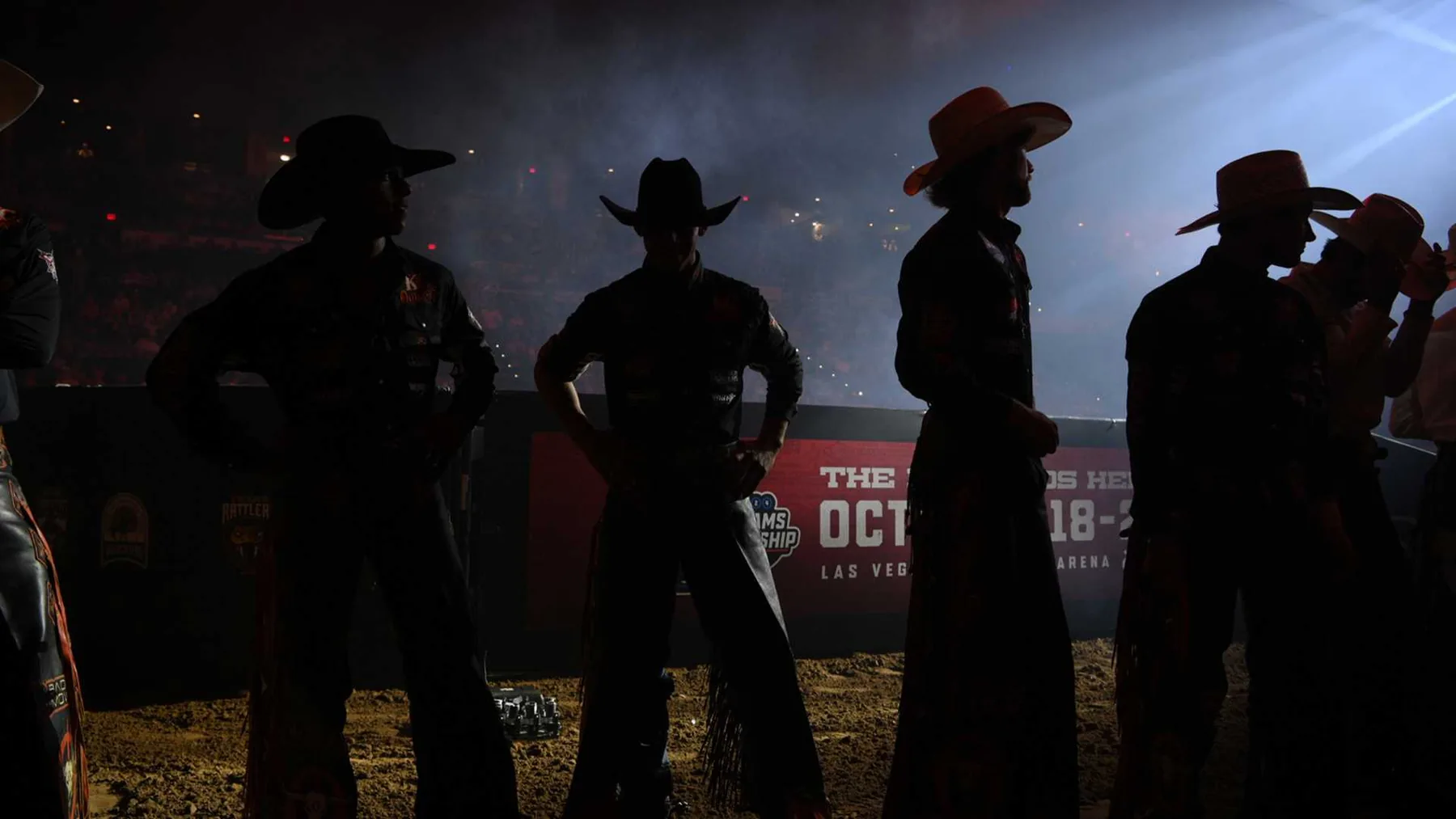
For the competition cycle beginning after the May 17, 2026 World Finals, PBR announced two aggregate-score bonus programs. One rewards eligible newer riders; the other rewards veterans. Each has a $410,000 purse and pays five places. Together they add $820,000 in announced annual awards, rather than a flat increase in every rider's salary.
| Finish in either category | Announced bonus |
|---|---|
| First | $300,000 |
| Second | $50,000 |
| Third | $30,000 |
| Fourth | $20,000 |
| Fifth | $10,000 |
The official announcement says a rider can be eligible for only one of those categories. Its rookie program is also separate from the $50,000 PBR Teams Rookie of the Year honor. Similar award names do not make the competitions or qualifications identical.
For a fan, the design introduces a reason to follow consistency across a longer window. A spectacular winning out remains valuable, but accumulated scores can create another earnings opportunity beyond one weekend's prize. Use the PBR schedule to identify the competition and the results to understand the ride sequence before attaching a financial conclusion to it.
How PBR Teams changes a rider's income
PBR Teams adds an organizational relationship to a sport traditionally followed through individual standings. Coaches choose lineups, riders contribute to head-to-head results, and an athlete can be valuable because of how consistently he supplies a score in a particular role. The financial picture also expands beyond the event check: a rider's team endorsement agreement is a separate piece of the relationship.
The 2026 Teams rulebook rundown describes reserve riders being paid by PBR for appearances and results under the league's minimum-compensation memo. It does not publish a complete salary chart in that article. Fans should therefore avoid treating a reserve appearance, a protected roster position and a star's multiyear agreement as equivalent financial arrangements.
Why a headline contract is not a yearly wage
John Crimber provides a concrete example of what is public and what remains private. Florida announced a two-year extension on September 2, 2026, keeping him with the Freedom through the 2029 Teams season. The extension announcement establishes duration and commitment. It does not give a dollar figure or payment schedule. It cannot support a claim about his annual wage.
Even when another contract's total value is disclosed, dividing it by the number of years would only create an average of that announced value. It would not reveal signing payments, conditional incentives, guaranteed portions or when the money arrives. Those details require the actual disclosed terms. Fans can celebrate a long-term signing without filling in missing financial clauses.
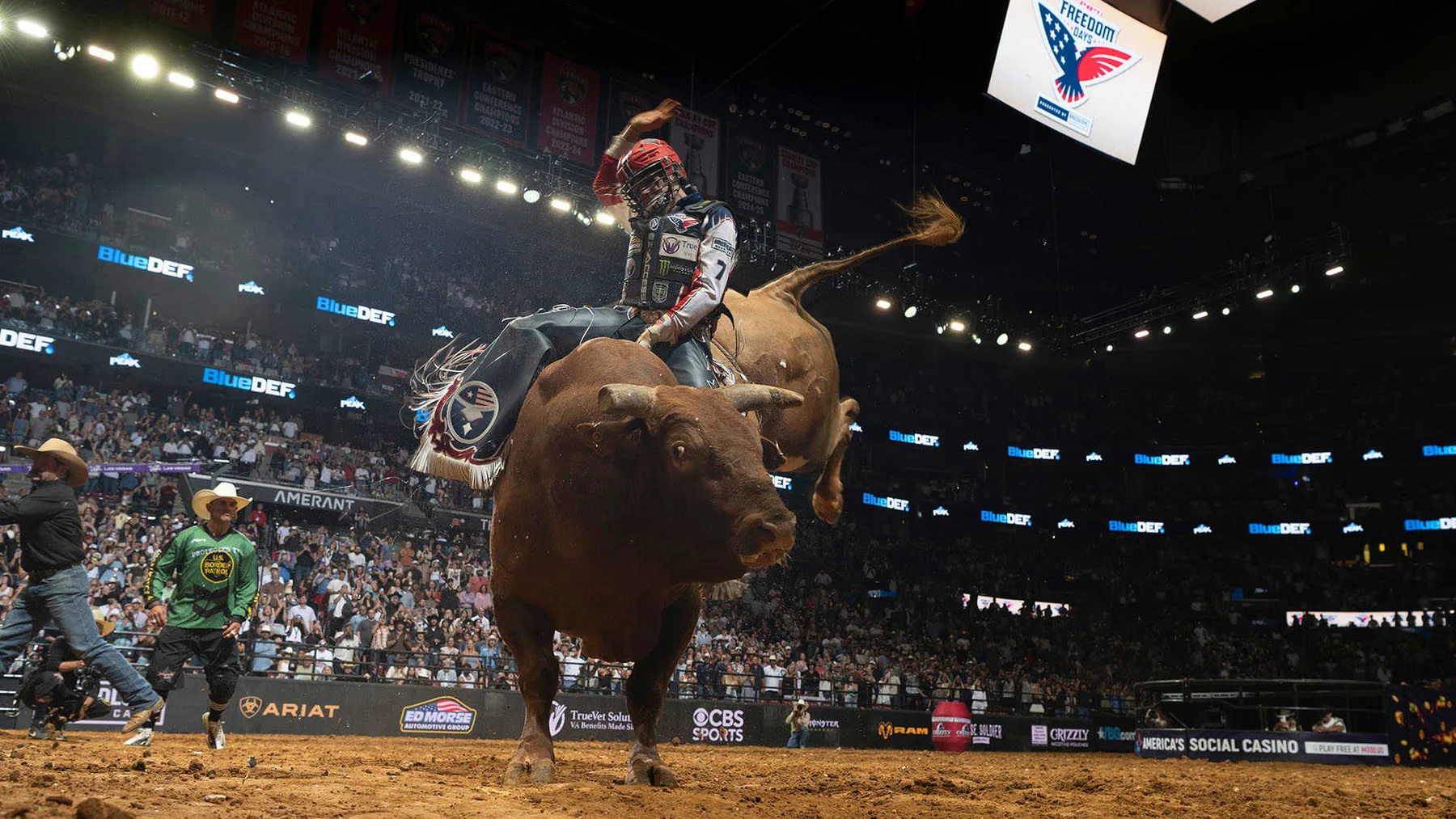
Team-specific incentives can add another layer. Oklahoma announced a $1 million bonus for a Wildcatters rider who finishes first in the official regular-season Teams MVP standings. That is a contingent prize attached to a stated performance target. It is neither a universal Teams payment nor money every Wildcatters rider automatically receives. The difference is especially useful during an MVP race: an award can be a major opportunity while still being unearned.
When a signing or bonus story appears beside a team result, ask two separate questions: what has the organization promised, and what has the athlete actually earned? The Teams format guide helps connect a rider's contribution to the competition without assuming that every score has the same contractual value.
Sponsorship adds income the leaderboard cannot show
A rider's vest can tell you who wants to be associated with him; it cannot tell you his bank balance. Sponsorship is a commercial relationship, and the value of that relationship depends on its terms. The public money list expressly leaves personal sponsorship out, so it is reasonable to expect some successful riders to earn more than their displayed competition total. It is not reasonable to invent the missing amount.
Jose Vitor Leme is a documented example of a rider with a major brand relationship. Monster Energy's April 2026 coverage of Leme discusses him alongside other athletes in its bull-riding program. That establishes an identifiable relationship. It does not disclose his endorsement pay, and it does not turn the other sponsored athletes into members of his PBR competition team.
Brand relationships also happen at different levels. Florida's July 2026 TWO SVGE agreement described team vest branding, digital content and fan engagement. A league partner, a team partner and a personal athlete sponsor are not automatically paying the same recipient. An arena advertisement cannot be used as proof that every rider receives a personal endorsement check from that company.
This distinction makes sponsorship stories more interesting to follow. A rider's competitive reputation can support a commercial identity; appearances, content and a recognizable style can extend that identity beyond an eight-second out. But the particular obligations and payment structure still belong to the disclosed agreement. Cash, equipment and promotional activity should not be treated as interchangeable just because they appear under the broad word “sponsor.”
When comparing two riders, acknowledge the missing information instead of manufacturing a ranking of total income. A prize-money leader is leading the recorded prize-money category. Another athlete may have a substantial private contract or endorsement portfolio. Both observations can be true. Following the competition does not require pretending that every off-arena commercial detail is public.
Who are the highest paid PBR riders?
Career money is a historical comparison
If “highest paid” means the largest recorded career earnings, PBR provides a direct leaderboard. At the October 15, 2026 check, Jose Vitor Leme led that list ahead of J.B. Mauney and Silvano Alves. The following five figures reproduce the displayed career totals, rounded by the official page to whole dollars.
| Rider | Official recorded career earnings |
|---|---|
| Jose Vitor Leme | $8,486,827 |
| J.B. Mauney | $7,419,475 |
| Silvano Alves | $6,792,340 |
| Guilherme Marchi | $5,338,428 |
| Justin McBride | $5,186,799 |
These are competition earnings figures, not estimates of wealth. An athlete's assets, liabilities, household spending and undisclosed commercial agreements are different questions. A career earnings total should not be relabeled “net worth,” even when it appears beside a recognizable name.
It also does not provide a perfectly neutral comparison of riding ability across generations. Larger purses and additional competition opportunities change how money accumulates. Career length matters too. The table is compelling evidence of sustained earning success, but a historical best-rider debate should also consider championships, qualified rides, elite bull matchups and the competition each athlete faced.
Annual money needs a date and a competition window
An annual ranking answers a narrower question: how much recorded money has been earned within the chosen season's coverage? Check that window before comparing two screenshots. A full season, a partial season and a calendar-year article may be measuring different periods. The name at the top can also change after a major event, without any corresponding change to a private salary agreement.
Leme's 2025 World Finals illustrates how concentrated a payday can be. PBR's championship recap reported $1,632,666.67 for his Championship performance and title. That was a specific earned result. It was not a promise that he would receive the same check every month, nor a typical payday for the field.
The sensible fan comparison therefore names the category alongside the person: career money leader, season money leader, event winner or recipient of an announced contract. “Highest paid bull rider” is too broad if the available figures exclude contracts and endorsements. Giving the category makes the answer clearer, and it prevents an outstanding championship performance from becoming an invented industry-wide wage benchmark.
What separates gross earnings from take-home pay
A check announced after a competition is a gross amount, not a household budget. Travel, accommodation, food, equipment and other participation costs belong in the wider picture. Who pays which expense can depend on the athlete's arrangements, so an article should not assume that every rider personally covers every item or that a team covers everything.
PBR's 2025 membership agreement specifically addressed participation expenses and accident-insurance responsibilities. That dated document is useful evidence that competing carries obligations. It should not be treated as a current 2026 insurance quote or fee schedule. A public prize total alone cannot tell a fan the amount remaining after the athlete's own costs.
Availability can change earning opportunities as well. A qualified ride does not guarantee a healthy return for the next round. PBR's May 2026 Daylon Swearingen report described him making eight seconds aboard Tecovas Triple Aught before a serious wreck and hospital evaluation; he missed Championship Sunday. That specific episode illustrates the physical uncertainty without requiring speculation about his current recovery, treatment bills or private contract protection.
Reading a rider's payday without inventing a salary
Start by identifying what the headline measures. Then check whether it reports an earned result or an opportunity still conditional on future performance. Finally, keep its time period attached. These small steps are enough to distinguish a championship check from a contract announcement and an incomplete seasonal leaderboard.
- Name the category. Is the number an event purse, rider winnings, team agreement, sponsor payment or career total?
- Keep the date. A dated example demonstrates what happened then; it does not promise today's payout.
- Check the period. A May-to-May competition season differs from a calendar year.
- Separate offered from earned. A performance bonus is not paid merely because it was announced.
- Leave private information private. Missing endorsement terms and expenses cannot be solved with an unsupported average.
That approach also improves the viewing experience. When the broadcast discusses a round win, an MVP race or a large bonus, you can follow the relevant competition and understand why the moment matters financially. Check the TV and streaming schedule for the event you want to watch, then judge the rider's performance in its proper context. A hard-earned payday remains impressive without being stretched into a salary claim the evidence cannot support.
Keep reading
Related PBR articles
Riders & Bulls
PBR Australia 2026 Title Race: Shephard, Hall and the Run to Townsville
By PBR Schedule Editorial TeamRiders & Bulls
Jean Carlos Teodoro's 2026 PBR Teams Rookie Award: What He Won and Why It Matters
By PBR Schedule Editorial TeamRiders & Bulls
Join the conversation
Comments
Comments are reviewed before publication. Keep the discussion useful, respectful and focused on bull riding.
Sign in with Google to comment
Your public comment shows your account name. Your email address is not displayed.
Commenting as
Loading comments…